
Dear friends,
The Asian Human Rights Commission (AHRC) has learned that a mechanic died violently in the custody of Ramna Police in Dhaka, shortly after he refused to continue paying bribes. The police reportedly started extorting money from the victim after the Rapid Action Battalion seized the auto-rickshaw that he operated and the two men he hired to drive it, and detained them illegally. The man was delivered dead to a hospital shortly after police picked him up, and he bears signs of torture. Various fabrications have taken place in the case, including in the case records, and the hospital in question has refused to release his medical records.
The case offers an extremely detailed example of the freedom with which Bangladeshi police are able to trade on justice, to arrest persons at will and to kill with impunity. The AHRC believes that unless extra measures are taken the current probe investigation will be impeded by police and political figures. The wife and the nephew of the dead man have been threatened repeatedly by the officers involved in the case, and need immediate state protection.
CASE DETAILS:
Extortion, abduction and custodial death:
According to information we have received from witnesses, case documents and the family members of the victim, on the morning of 18 June a man claiming to represent Sub Inspector (SI) Mr. Altaf Hossain of the Ramna police, arrived at the home of Babul Kazi. He claimed that that a paramilitary Rapid Action Batalion team (RAB-3) had seized an auto-rickshaw that he operated, and the two men who drove it on shifts, and that it would cost him BDT 200,000 (USD 2900) in bribes for their release from Ramna police custody. (Details of the men’s false arrest and detainment by a large team from the paramilitary Rapid Action Batalion (RAB) can be found below in Background Information; five young rickshaw drivers had been arrested during the operation.)
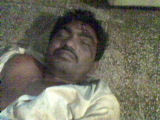 Babul paid BDT 13,000 to the police at around 2pm but the men (Md. Karim and Md. Momin) and the auto-rickshaw (Dhaka Metro No. THA–13–0041) were not released. Over the next few days bargaining commenced in person between SI Altaf and Babul. On 21 June, SI Altaf received BDT 20,000 from Babul, followed by BDT 30,000 on 24 June. We are told that the police continued to request more money.
On 28 June Babul had reportedly managed to collect another BDT 20,000, but argued with SI Altaf, demanding that the men and the rickshaw be released. Babul went home without handing over the cash, where he told the story to his wife, Mrs. Nasima Begum (cited in documents as Ms. Shuvo Akter). At around 5pm Babul went to a garage with a fellow mechanic, Mr. Masud.
We are told that at around 10:30pm SI Altaf, two police constables and an Ansar (a form of village defence force) member arrived at the workshop and demanded money; Babul did not pay it, and was seen being pushed into the police van, which drove off.
The witnesses, Mr. Masud and Mr. Badal, told Babul’s wife at 11pm, after which she and her nephew Sohel Shikder went to the Ramna police station. There they were told by the duty officer that Babul had been arrested, but had sustained head injuries when he tried to jump from the vehicle. They were told look for him at the Dhaka Medical College Hospital (DMCH).
At the DMCH SI Altaf told the Nasima that she would find her husband at the morgue. He repeated the escape story, and said that Babul had been dead on arrival at the hospital. To hear more on the case from Sohel Shikder, please click the video below:
At the morgue Sohel and Nasima saw several marks on the body, including a hole of around an inch in diameter on his forehead; there were marks on his back, both sides of his head were swollen and the left side of his face was bruised. They report that he was covered in sand.
Intimidation and fabrication:
We are told that an argument took place between Babul’s relatives and SI Altaf, who insisted that they go with police to the Ramna police station. Arriving there at 3am, they claim that they were forced to sign blank pieces of paper. Although they initially refused, they say that they were physically dragged into another room, surrounded by around 10 policemen and threatened with torture. Nasima later asked for the BDT 20,000 and a cell phone that Babul had with him at the time of his death. SI Altaf allegedly admitted that both were in his custody but only returned the phone set. At 4am, after an influential friend of the family intervened, they were able to leave the station.
To hear about the ordeal in Bangla from Nasima Begum, please click the video clip below:
Early on the morning of 29 June, the Ramna police registered an Unnatural Death case (No. 20/10) for Babul Kazi, with SI Altaf as complainant of the case. According to assignment copy CC 1410/10 Ansar had been ordered to arrest Babul for a case involving a stolen auto-rickshaw (No. 36, dated 17 June 2010, filed by RAB-3 DAD Golam Mostofa), and apprehended him in Noya Tola, adjacent to the T & T Colony at 11:30pm with two police constables. Babul injured himself while trying to escape from the police van, and was declared dead at the emergency unit of the DMCH by the duty doctor at 12:15AM.
Since then we are told that DMCH staff have refused to release information about Babul’s death to his relatives. Staff members, requesting anonymity, have informed us that the hospital director – who is a Brigadier General in the Bangladesh Army – has directed as such. We are also told that the time of death has not yet been recorded in the official records; the column is still blank. However the hospital record asserts that Babul was dead on arrival at the unit.
On 29 June we are told that a Dr. Pradip Bishwas, a Lecturer of the Forensic Medicine Department of the Dhaka Medical College, conducted the post-mortem, and that the body was handed over to the relatives at around 6:30pm.
Corruption:
We are told that Sohel returned to the police station during the day on 29 June to question the officers involved, and to try and file a murder case against them. He reports that police refused, and that a large group of officers tried to pull him towards a cell. He warned that he would inform the media, and was able to leave the station.
As can be read here, the FIR (First Information Report) contradicts the official story released by police. It was claimed in a press release issued on 3 July 2010 by the DMP, signed by an additional deputy commissioner of its media and community service department that a Ramna patrol team led by SI Altaf Hoosain recovered the stolen auto-rickshaw (Registration No. Dhaka Metro – THA – 13 – 0041) from Noya Tola area on 28 June at 11:30pm. Yet the FIR filed by the RAB-3 DAD Warrant Officer Mr. Golam Mostofa claims that the RAB team seized the auto-rickshaw on 17 June.
Since Babul’s death we are told that ruling party politicians, including particular public representatives of the area, have regularly approached the relatives to persuade them not to take the case public. The most commonly used argument is that as a poor widow, Nasima is not being realistic in expecting to win a fight against the police, and that that such a fight will not bring back her husband.
Attempts at redress:
On 5 July a Public Interest Litigation (PIL) was filed by two human rights organizations with the High Court Division of the Supreme Court regarding three custodial deaths, including Babul’s, that took place in Dhaka within one week. A Division Bench responded by directing the Ministry of Home Affairs to form probe committees that excluded police members, to investigate the incidents.
We are told that on the same day at around 10pm a group of policemen went first to Nasima’s house, then located her at the house of a neighbour, Ms. Dunia Begum on Moghbazar Chairman Lane. The police, who we found out later were led by an SI Enamul Haque, insisted that she go to the office of the Deputy Commissioner (DC) in Motijheel. In his office Nasima claims that DC Mr. Krishna Pada Roy threatened her with torture. She refused to sign a blank piece of paper, and was allegedly detained until midnight and repeatedly questioned about the organizations that she had spoken with, and the actions being taken. Nasima claims that SI Altaf told her that he had impunity, and warned her not to speak with any media.
ADDITIONAL INFORMATION:
The intimidation of Nasima by the DC is unfortunately a stock response among Bangladeshi law enforcers, rather than an exception; it is also typical of Mr. Roy’s work ethic. We have information that on a number of occasions this particular DC has summoned victims of torture to his office on the pretext of an inquiry, before verbally insulting and threatening them. Few victims of torture or relatives of those executed have the means or the extraordinary courage needed to pursue such complaints. This pattern can be seen in various cases reported on by the Asian Human Rights Commission, among them recently BANGLADESH: A group of policemen torture and detain a man after a traffic accident, while negotiating his bribe payment) and BANGLADESH: Detective Branch Police forced businessman to pay ransom after kidnapping and torture- victim goes into hiding due to threats after filing complaint). In each we were told that DC Mr. Krishna Pada Roy sent notices asking the victims and their witnesses to give statements, yet when the victims and witnesses arrived at the station, he and his colleagues, including the alleged perpetrators, seriously intimidated them.
On 3 July the DMP formed an inquiry committee to look into this case, headed by the Additional Deputy Commissioner Mr. Seyed Nurul Islam and comprising Assistant Commissioner Ms. Monalisa Begum of the of Motijheel Zone of the DMP. However the AHRC has no faith in the motives or the mandate of this team. Based on past experience we assert that it will be used to exhaust, intimidate and quiet the victims in the face of any other more credible investigation, conducted by probe committees, human rights organizations or media.
BACKGROUND INFORMATION:
The chain of events leading to Babul’s death started on 17 June 2010, when a team of RAB-3 personnel, named below, arrested five persons with three auto-rickshaws from a workshop in Boromoghbazar, Dhaka. The RAB is a paramilitary force composed of personnel recruited from the armed forces, border security force and the police, to keep law and order in parallel with the regular police.
This particular group reportedly comprised the Deputy Assistant Director (DAD) of the RAB-3 Mr. Golam Mostofa, originally a Warrant Officer (Badge No. BGO 44024) of the Bangladesh Army, Assistant Sub Inspector (ASI) Mr. Md. Saiful Islam, Corporal Mr. Md. Iqbal Hossain (Badge No. 4007621), Constables Mr. Md. Mahbubur Rahman (Badge No. 1917), Mr. Md. Zahidul Islam (Badge No. 187), and Mr. Md. Nizam Uddin (Badge No. 4032518), a soldier. The RAB-3 has alleged that the three seized auto-rickshaws were stolen and the the arrested persons were responsible; DAD Golam Mostofa filed a case (No. 36, dated 17 June 2010) against them with the Ramna police under Sections 379 and 411 of the Penal Code-1860.
The arrested men were Mr. Md. Alamgir Hossain, 26, Mr. Md. Ishaq Ali, 48, Mr. Md. Karim, 25, Mr. Md. Momin, 28 and Mr. Md. Faruque Hossain, 28. All were firstly detained by the RAB-3 and remain in police custody. The three auto-rickshaws bear registration numbers: Dhaka Metro – THA -13 – 4012; Dhaka Metro – THA – 13 – 4015; and Dhaka Metro – THA – 13 – 0041.
SUGGESTED ACTION:
Please write to the authorities below insisting that immediately intervene to ensure that this case of extrajudicial execution is thoroughly and transparently investigated by the judicial probe committee, without police interference or impediment. Those found to have been involved in the litany of crimes attached to this case must be prosecuted without delay. The family of the victim and the witnesses must be afforded adequate state protection from further harassment and threats.
Please note that the Asian Human Rights Commission has written a separate letter to the UN Special Rapporteurs on Extrajudicial, Summary and Arbitrary Executions requesting their prompt interventions in this case.
To support this case, please click here: SEND APPEAL LETTER
SAMPLE LETTER
Dear __________,
BANGLADESH: A man dies in police custody after refusing to pay bribes; his relatives are warned not to pursue the case
Name of the victim of custodial death: Mr. Babul Kazi, an auto-rickshaw operator cum mechanic by profession, son of late Mr. Rupai Kazi, living in a rented house at House No. 327/A, Noyatola of Baramoghbazar, under the jurisdiction of the Ramna police station of the Dhaka Metropolitan City
Name of the alleged perpetrators:
1. Mr. Altaf Hossain, Sub Inspector of Police
2. Mr. Hiron Mian, Police Constable (Badge No. 6998)
3. Mr. Seraj, Police Constable (Badge No. 27761)
4. Mr. Shibli Noman, Police Inspector and Officer-in-Charge (OC)
5. Mr. Enamul Haque, Sub Inspector of Police
All are attached to the Ramna Police Station of the Dhaka Metropolitan Police
6. Mr. Nannu Mian, Member of AnsarI (Village Defence Party) (Badge No. 23509), assigned to assist the Ramna police
7. Mr. Krishna Pada Roy, Deputy Commissioner (DC) of Motijheel Zone, Dhaka Metropolitan Police
Place of incident: Ramna police custody
Date of Incident: 28 June 2010
I am writing to express my extreme concern over the custodial death of Mr. Babul Kazi, allegedly due to torture by the police officers of the Ramna police station of the Dhaka Metropolitan Police (DMP) on 28 June 2010.
As detailed below, the police reportedly started extorting money from the victim after the Rapid Action Battalion seized the auto-rickshaw that he operated and the two men he hired to drive it, and detained them illegally. The man was delivered dead to a hospital shortly after police picked him up, and he bears signs of torture. Various fabrications have taken place in the case, including in the case records, and the hospital in question has refused to release his medical records.
The case offers an extremely detailed example of the freedom with which Bangladeshi police are able to trade on justice, to arrest persons at will and to kill with impunity. I am demanding the thorough investigation of the case by competent judicial officials immediately, followed by the prosecution of the police officers for the litany of crimes they have committed. The family and relatives of the deceased have been receiving serious intimidation and threats from the police officers as well as by the local politicians of the ruling political party. It must be stopped and adequate protection must be ensured for the victims.
According to information I have received from witnesses, case documents and the family members of the victim, on the morning of 18 June a man claiming to represent Sub Inspector (SI) Mr. Altaf Hossain of the Ramna police, arrived at the home of Babul Kazi. He claimed that that a paramilitary Rapid Action Batalion team (RAB-3) had seized an auto-rickshaw that he operated, and the two men who drove it on shifts, and that it would cost him BDT 200,000 (USD 2900) in bribes for their release from Ramna police custody.
Babul paid BDT 13,000 to the police at around 2pm but the men (Md. Karim and Md. Momin) and the auto-rickshaw (Dhaka Metro No. THA–13–0041) were not released. Over the next few days bargaining commenced in person between SI Altaf and Babul. On 21 June, SI Altaf received BDT 20,000 from Babul, followed by BDT 30,000 on 24 June. I am told that the police continued to request more money.
I have learned that on 28 June Babul had reportedly collected another BDT 20,000, but argued with SI Altaf, demanding that the men and the rickshaw be released. Babul went home without handing over the cash, where he told the story to his wife, Mrs. Nasima Begum (cited in documents as Ms. Shuvo Akter).
I am told that at around 10:30pm SI Altaf, two police constables and an Ansar (Village Defence Party) member arrived at the garage and demanded money; Babul did not pay it, and was seen by other mechanics that he was being pushed into the police van, which drove off.
The witnesses, Mr. Masud and Mr. Badal, told Babul’s wife at 11pm, after which she and her nephew Sohel Shikder went to the Ramna police station. There they were told by the duty officer that Babul had been arrested, but had sustained head injuries when he tried to jump from the vehicle. They were told look for him at the Dhaka Medical College Hospital (DMCH).
At the DMCH SI Altaf told the Nasima that she would find her husband at the morgue. He repeated the escape story, and said that Babul had been dead on arrival at the hospital. At the morgue Sohel and Nasima saw several marks on the body, including a hole of around an inch in diameter on his forehead; there were marks on his back, both sides of his head were swollen and the left side of his face was bruised. They report that he was covered in sand.
I am told that an argument took place between Babul’s relatives and SI Altaf, who insisted that they go with police to the Ramna police station. Arriving there at 3am, they claim that they were forced to sign blank pieces of paper. Although they initially refused, they say that they were physically dragged into another room, surrounded by around 10 policemen and threatened with torture. Nasima later asked for the BDT 20,000 and a cell phone that Babul had with him at the time of his death. SI Altaf allegedly admitted that both were in his custody but only returned the phone set. At 4am, after an influential friend of the family intervened, they were able to leave the station.
I am aware that early on the morning of 29 June, the Ramna police registered an Unnatural Death case (No. 20/10) for Babul Kazi, with SI Altaf as complainant of the case. According to assignment copy CC no. 1410/10 Ansar had been ordered to arrest Babul for a case involving a stolen auto-rickshaw (No. 36, dated 17 June 2010, filed by RAB-3 DAD Golam Mostofa), and apprehended him in Noya Tola, adjacent to the T & T Colony at 11:30pm with two police constables. Babul injured himself while trying to escape from the police van, and was declared dead at the emergency unit of the DMCH by the duty doctor at 12:15AM.
Since then the DMCH staff have refused to release information about Babul’s death with his relatives. Staff members, requesting anonymity, have informed us that the hospital director – who is a Brigadier General in the Bangladesh Army – has directed as such. We are also told that the time of death has not yet been recorded in the official records; it is still blank. However the hospital record asserts that Babul was dead on arrival at the unit.
According to the information, on 29 June Dr. Pradip Bishwas, a Lecturer of the Forensic Medicine Department of the Dhaka Medical College, conducted the post-mortem, and that the body was handed over to the relatives at around 6:30pm.
I am told that Sohel returned to the police station during the day on 29 June to question the officers involved, and to try and file a murder case against them. He reports that police refused, and that a large group of officers tried to pull him towards a cell. He warned that he would inform the media, and was able to leave the station.
As I have seen in documents made available to me, the FIR (First Information Report) contradicts the official story released by police. It was claimed in a press release issued on 3 July 2010 by the DMP, with the signature of an Additional Deputy Commissioner of its Media and Community Service that a patrol team of the Ramna police led by SI Altaf Hoosain recovered stolen auto-rickshaw (Registration No. Dhaka Metro – THA – 13 – 0041) from Noya Tola area on 28 June at 11:30pm. Yet the FIR (First Information Report) filed by the RAB-3 DAD Warrant Officer Mr. Golam Mostofa, claims that the RAB’s team seized the auto-rickshaw on 17 June.
Since Babul’s death I am told that ruling party politicians, including particular public representatives of the area, have regularly approached the relatives to persuade them not to take the case public. The most commonly used argument is that as a poor widow, Nasima is not being realistic in expecting to win a fight against the police, who cannot be controlled, and that such a fight will not bring back her husband.
I have received information that on 5 July a Public Interest Litigation (PIL) was filed by two human rights organizations with the High Court Division of the Supreme Court regarding three custodial deaths, including Babul’s, that took place in Dhaka within one week. A Division Bench responded by directing the Ministry of Home Affairs to form probe committees, excluding police members, to investigate the incidents.
I am told that on the same day at around 10pm, a group of policemen went first to Nasima’s house, then located her at the house of a neighbor, Ms. Dunia Begum on Moghbazar Chairman Lane. The police, who we found out later were led by an SI Enamul Haque, insisted that she go to the office of the Deputy Commissioner (DC) in Motijheel. In his office Nasima claims that DC Mr. Krishna Pada Roy threatened her with torture. She refused to sign a blank piece of paper, and was allegedly detained until the midnight, and repeatedly questioned about the organizations that she had spoken with, and the actions being taken. Nasima claims that SI Altaf told her that he had impunity, and warned her not to speak with any media.
I am aware that on 3 July the DMP formed an inquiry committee to look into this case, headed by the Additional Deputy Commissioner Mr. Seyed Nurul Islam and comprising Assistant Commissioner Ms. Monalisa Begum of the of Motijheel Zone of the DMP. However the victims and human rights organizations have no faith in the motives or the mandate of this team. Based on similar cases in the past I assert that it will be used to exhaust, intimidate and quiet the victims in the face of any other more credible investigation, conducted by probe committees, human rights organizations or media.
I call on you to punish the perpetrators, protect the victim and initiate the required reforms. I will follow this case with close interest and urge your prompt intervention.
Yours sincerely,
—————
PLEASE SEND YOUR LETTERS TO:
1. Mrs. Sheikh Hasina
Prime Minister
Government of the People’s Republic of Bangladesh
Office of the Prime Minister
Tejgaon, Dhaka
BANGLADESH
Fax: +880 2 811 3244 / 3243 / 1015 / 1490
Tel: +880 2 882 816 079 / 988 8677
E-mail: pm@pmo.gov.bd or ps1topm@pmo.gov.bd or psecy@pmo.gov.bd
2. Mr. Mohammad Rezaul Karim
Chief Justice
Supreme Court of Bangladesh
Supreme Court Building
Ramna, Dhaka-1000
BANGLADESH
Fax: +880 2 956 5058 /+880 2 7161344
Tel: +880 2 956 2792 +880 2 956 2792/+880 2 956 2792
E-mail: chief@bdcom.com or supremec@bdcom.com
3. Barrister Shafique Ahmed
Minister
Ministry of Law, Justice & Parliamentary Affairs
Bangladesh Secretariat
Dhaka-1000
BANGLADESH
Tel: +880 2 7160627 +880 2 7160627 / +880 2 7160627 (O)
Fax: +880 2 7168557 (O)
Email: info@minlaw.gov.bd
4. Ms. Sahara Khatun MP
Minister
Ministry of Home Affairs
Bangladesh Secretariat
Dhaka-1000
BANGLADESH
Tel: +880 2 7169069 +880 2 7169069 / +880 2 7169069 (O)
Fax: +880 2 7160405, 880 2 7164788 (O)
E-mail: minister@mha.gov.bd
5. Mr. Mahbubey Alam
Attorney General of Bangladesh
Office of the Attorney General
Supreme Court Annex Building
Ramna, Dhaka-1000
BANGLADESH
Fax: +880 2 956 1568
Tel: +880 2 956 2868 +880 2 956 2868/ +880 2 956 2868
6. Prof. Mizanur Rahman
Chairman
National Human Rights Commission
6/3 Lalmatia, Block-D
Dhaka-1207
BANGLADESH
Tel: +880 2 9137740 +880 2 9137740+880 2 9137740 +880 2 9137740
Fax: +880 2 9137743
E-mail: nhrc.bd@gmail.com
7. Mr. Nur Mohammad
Inspector General of Police (IGP)
Bangladesh Police
Police Headquarters’
Fulbaria, Dhaka-1000
BANGLADESH
Fax: +880 2 956 3362 / 956 3363
Tel: +880 2 956 2054 +880 2 956 2054 +880 2 956 2054 +880 2 956 2054 / 717 6451 / 717 6677
E-mail: ig@police.gov.bd
8. A K M Shahidul Hoque
Commissioner
Dhaka Metropolitan Police
DMP Headquarter
36, Shahid Captain Monsur Ali Road
Ramna, Dhaka-1000
BANGLADESH
Fax: +880 2 8322746
Tel: +880 2 9331555 +880 2 9331555 +880 2 9331555 +880 2 9331555 /+880 2 8322746 +880 2 8322746 +880 2 8322746 +880 2 8322746
Mobile: +8801711538313
E-mail: complain@dmp.gov.bd / emergency@dmp.gov.bd / commissioner@dmp.gov.bd
Thank you.
Urgent Appeal Programme
Asian Human Rights Commission (ua@ahrc.asia)
