
Dear friends,
The Asian Human Rights Commission (AHRC) has received information that PG Amila Tharanga Thilakaratne (14) a Year 9 student of Mahanama College Geatambe in the Kandy District was severely tortured by his teacher, a Buddhist monk. Amila was persecuted on a religious basis and is thus a victim of religious intolerance. Amila has been raised Catholic, but attends a school in a predominantly Buddhist area, where the majority of students are practicing Buddhists. Amila was questioned by the Venerable Rahula Thero on Buddhist history, and when he told him that he followed the Christian faith, the monk beat him severely. He was admitted to the Kandy Teaching Hospital to receive treatment for his injuries, and is currently recovering in Ward 18 of the hospital. Corporal punishment is banned in all schools, remand centers and prisons in Sri Lanka. This act of brutality is a gross violation of Amila Thilakaratne’s human rights.
NARRATIVE:
According to information that the Asian Human Rights Commission (AHRC) has received, PG Amila Tharanga Thilakaratne (14) a Year 9 student attending Mahanama College Geatambe in the Kandy District was tortured by his teacher, who is also a Buddhist monk, because he professed a belief in the Christian faith. His permanent address is: No: 28/1, Sarasavigama Mahakande, Hindagala, Kandy.
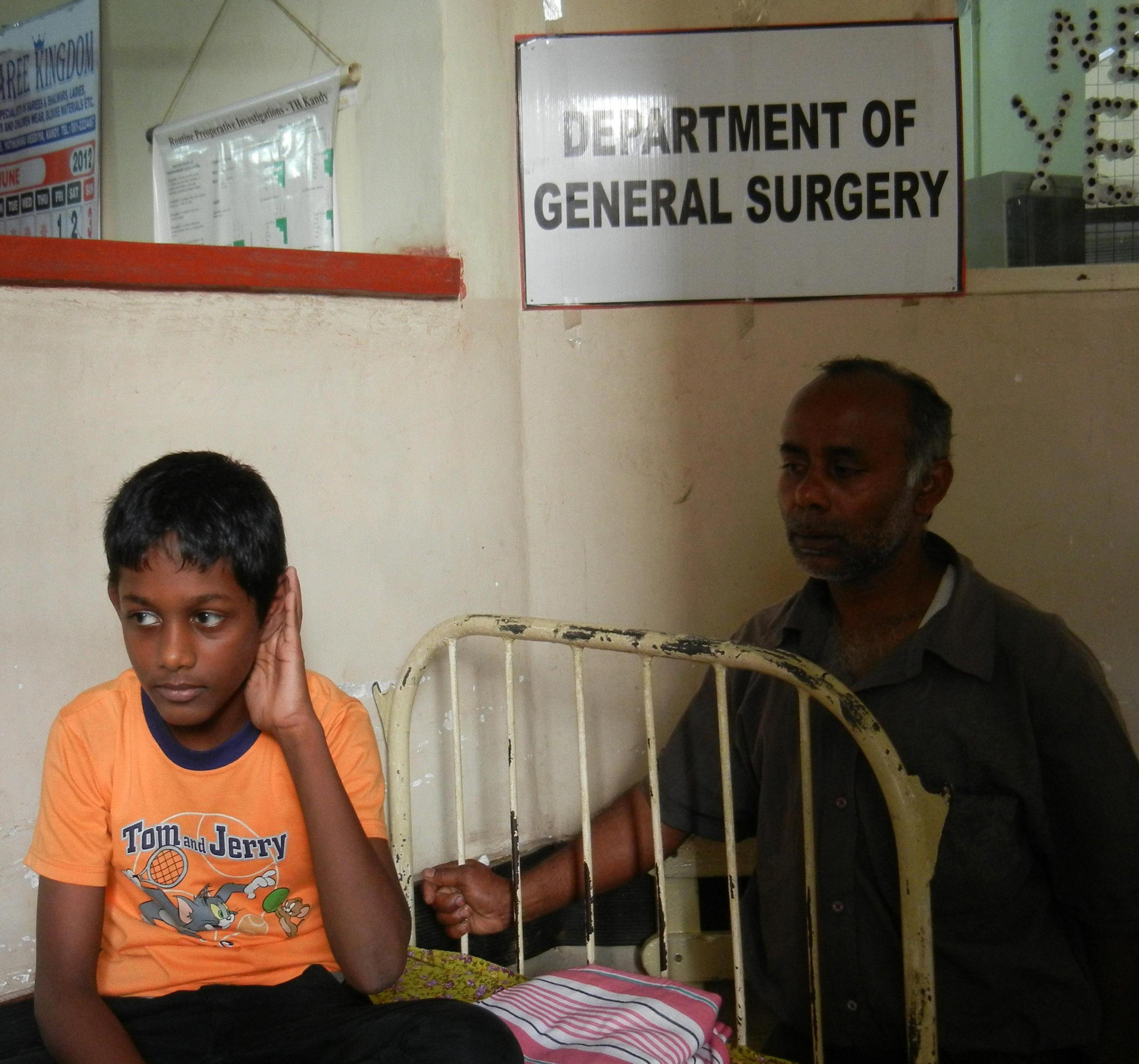 Amila Tharanga has five older brothers and one younger sister. His father is a mason working in building construction, and his mother is a homemaker. Amila Tharanga has been attending Mahanama College Kandy since Year One; his brothers have attended the same school. Mahanama College Kandy is a Buddhist school, and only Buddhism is taught in the school.
Although the state education department has ruled that children of faiths other than the predominant religion should have the right to learn their own religious teachings, abide by the codes of their religious practices and sit for school exams (circular 2009/10), these rights are often not respected and religious minorities, such as Catholics and Christians, are forced to learn Buddhism. Amila Tharanga and his older brother, Gashan, are discriminated against at school because they are not Buddhist.
On 11 June 2012, a Buddhist monk named Rahula Thero came to Amila’s class to teach Buddhism. Since Amila was the only non-Buddhist student in the class, he moved to the back row for the duration of the lesson. However, the monk has forced him to sit in the front row and asked him to recite the names of the Buddha’s parents. Amila replied that he is a Catholic. The monk told him that he should learn Buddhist teachings even though he is a Catholic, and severely assaulted Amila until the young boy was bleeding from his left ear. Rahula Thero and another teacher, Mrs Kokila, told Amila not to tell anyone about the assault.
For the rest of the day, Amila had to bear the pain without recourse to medical treatment. When Amila’s brother Gashan heard about the assault, he went to his brother’s classroom, but Mr. Thero saw Gashan and threatened to beat him if he entered the room.
After school, Amila went home and went to sleep for fear of informing anyone about the brutal assault. He began to vomit at around 7pm, and he told his father, P.G. Thilakaratne what had happened at school. The next morning, Amila’s father took his son to hospital. According to Mr. Thilakaratne, Mr. Thero threatened them with violence if they revealed what had happened to higher authorities.
Amila was placed in Ward 10 of the hospital. The next day, he was transferred to Ward 18. The officers at the hospital’s police post obtained a statement from Amila on June 13. Amila’s father, Mr. Thilakaratne filed a complaint with the Kandy Police (WCIB 1/84/16,) but so far, no investigation has been initiated.
Mr. Thilakaratne fears that his complaint will go unheard in a country in which Buddhist monks enjoy impunity for violent actions. He worries that Amila will not be able to regain his hearing, and will be expelled from his school for reporting the incident to the police. Mr. Thilakaratne seeks justice and redress for the violation of his child’s right to practice the religious faith of his choice. He seeks protection for his son and for witnesses of the crime by the state.
ADDITIONAL COMMENTS:
The Asian Human Rights Commission has reported innumerable cases of in which students have been tortured in different schools across Sri Lanka. It is illegal under local and international law to physically harm any child.
The state of Sri Lanka signed and ratified the Convention Against Torture (CAT) on 3 January 1994. Following state obligations, the Sri Lankan Parliament adopted Act No. 22 of 1994, making torture a crime that is punishable for a minimum of seven years and not less than ten years if the suspect is proven guilty. The Attorney General of Sri Lanka is suppose to file indictments in cases where credible evidence has been found of people being tortured by state officers.
SUGGESTED ACTION:
Please send a letter to the authorities listed below expressing your concern about this case and requesting an immediate investigation into the allegation of torture by the perpetrator, and the prosecution of those proven to be responsible under the criminal law of the country for misusing powers of a state. The officer involved must also be subjected to internal investigations for the breach of the department orders as issued by the Educational Department.
Please note that the AHRC has also written a separate letter to the Special Rapporteur on torture and other cruel, inhuman or degrading treatment or punishment on this regard.
To support this appeal, please click here:
To support this case, please click here: SEND APPEAL LETTER
SAMPLE LETTER
Dear ________,
SRI LANKA: 14-years-old student was tortured by a Buddhist monk for not learning Buddhism in School
Name of the victim: PG Amila Tharanga Thilakaratne (14) a student of Year 09 of Mahanama College Geatambe in Kandy District
Alleged perpetrator: Ven. Rahula Thero of Mahanama College Geatambe in Kandy District
Date of incident: 11 June 2012
Place of incident: Mahanama College Geatambe in Kandy District
I am writing to express my serious concern over the case of PG Amila Tharanga Thilakaratne (14) a Year 9 student attending Mahanama College Geatambe in the Kandy District who was tortured by his teacher, who is also a Buddhist monk, because he professed a belief in the Christian faith. His permanent address is: No: 28/1, Sarasavigama Mahakande, Hindagala, Kandy.
Amila Tharanga has five older brothers and one younger sister. His father is a mason working in building construction, and his mother is a homemaker. Amila Tharanga has been attending Mahanama College Kandy since Year One; his brothers have attended the same school. Mahanama College Kandy is a Buddhist school, and only Buddhism is taught in the school.
Although the state education department has ruled that children of faiths other than the predominant religion should have the right to learn their own religious teachings, abide by the codes of their religious practices and sit for school exams (circular 2009/10), these rights are often not respected and religious minorities, such as Catholics and Christians, are forced to learn Buddhism. Amila Tharanga and his older brother, Gashan, are discriminated against at school because they are not Buddhist.
On 11 June 2012, a Buddhist monk named Rahula Thero came to Amila's class to teach Buddhism. Since Amila was the only non-Buddhist student in the class, he moved to the back row for the duration of the lesson. However, the monk has forced him to sit in the front row and asked him to recite the names of the Buddha’s parents. Amila replied that he is a Catholic. The monk told him that he should learn Buddhist teachings even though he is a Catholic, and severely assaulted Amila until the young boy was bleeding from his left ear. Rahula Thero and another teacher, Mrs Kokila, told Amila not to tell anyone about the assault.
For the rest of the day, Amila had to bear the pain without recourse to medical treatment. When Amila's brother Gashan heard about the assault, he went to his brother’s classroom, but Mr. Thero saw Gashan and threatened to beat him if he entered the room.
After school, Amila went home and went to sleep for fear of informing anyone about the brutal assault. He began to vomit at around 7pm, and he told his father, P.G. Thilakaratne what had happened at school. The next morning, Amila’s father took his son to hospital. According to Mr. Thilakaratne, Mr. Thero threatened them with violence if they revealed what had happened to higher authorities.
Amila was placed in Ward 10 of the hospital. The next day, he was transferred to Ward 18. The officers at the hospital’s police post obtained a statement from Amila on June 13. Amila’s father, Mr. Thilakaratne filed a complaint with the Kandy Police (WCIB 1/84/16,) but so far, no investigation has been initiated.
Mr. Thilakaratne fears that his complaint will go unheard in a country in which Buddhist monks enjoy impunity for violent actions. He worries that Amila will not be able to regain his hearing, and will be expelled from his school for reporting the incident to the police. Mr. Thilakaratne seeks justice and redress for the violation of his child’s right to practice the religious faith of his choice. He seeks protection for his son and for witnesses of the crime by the state.
I request your urgent intervention to ensure that the authorities listed below instigate an immediate investigation into the allegations of torture by the perpetrators, and the prosecution of those proven to be responsible under the criminal law of the country. The officers involved must also be subjected to internal investigations for the breach of the department orders as issued by the education department.
Yours sincerely,
---------------------
PLEASE SEND YOUR LETTERS TO:
1. Mr. N K Illangakoon
Inspector General of Police
New Secretariat
Colombo 1
SRI LANKA
Fax: +94 11 2 440440 / 327877
E-mail: igp@police.lk
2. Ms. Eva Wanasundara
Attorney General
Attorney General's Department
Colombo 12
SRI LANKA
Fax: +94 11 2 436421
E-mail: ag@attorneygeneral.gov.lk
3. Secretary
National Police Commission
3rd Floor, Rotunda Towers
109 Galle Road
Colombo 03
SRI LANKA
Tel: +94 11 2 395310
Fax: +94 11 2 395867
E-mail: npcgen@sltnet.lk or polcom@sltnet.lk
4. Secretary
Sri Lanka Human Rights Commission
No. 108
Barnes Place
Colombo 07
SRI LANKA
Tel: +9411 2694925, +9411 2685980, +9411 2685981
Fax: +9411 2694924 (General) +94112696470 (Chairman)
E-mail: sechrc@sltnet.lk
Thank you.
Urgent Appeals Programme
Asian Human Rights Commission (ua@ahrc.asia)
