
Dear friends,
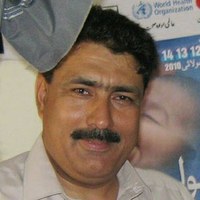 The Asian Human Rights Commission (AHRC) has received information that a doctor who helped the American forces to locate Osama Bin Laden, the former chief of the Al-Qaida terrorist group in Pakistan, was illegally arrested and tortured to confess that he was working as a spy for the USA. He was held incommunicado for one year and first sentenced on the charges of spying for the CIA. However, after pressure from the US Pakistan altered the decision of the sentence to the subversive activities and collusion with a banned organization. That same banned organization has now issued a Fatwa (edict) that he should be killed. (photo source: Dawn.com)
He has been intentionally shifted to Peshawar jail where the hard criminal prisoners from banned terrorist organizations are already detained. The family members of Dr. Shakeel are in hiding and receiving death threats from banned Muslim groups after the first decision of a tribal court, they have appealed to US government to save them.
CASE NARRATIVE:
Dr. Shakil Afridi was arrested a few days after the arrest and killing of Osama Bin Laden (OBL) by the American forces from Abbotabad city, Khyber Pakhtoonkha province, close to a military training center. Dr. Afridi was abducted by persons from the military intelligence for providing information to the American CIA about the hiding place of OBL through the cover up mission of providing Polio vaccinations. Dr. Afridi was accused of helping the CIA use a vaccination campaign to try to collect DNA samples from people who lived in OBL’s compound. He was held incommunicado for one year and tortured by the persons from the Pakistan military to extract a confessional statement that he was spying for CIA. They also tried to force him to implicate some government personnel who attempted to defame and embarrass the Pakistan army and its intelligence agencies.
After his arrest on May 24, 2011 for five days he was handed over to a joint interrogation team, mostly consisted of persons from the Army and its intelligence agencies. On May 29, 2011 the accused was then transferred to Military intelligence without a proper official handover. However, exactly after one year after this transfer a tribal court decided that the transfer was done properly.
On May 23, 2012, the tribal court of the Assistant Political Agent, Mr. Nasir Khan, announced a hurriedly made decision for his punishment of 33 years and a fine of Rs 320,000/= for working against the state, conspiracy or attempt to wage war against Pakistan and working against the country’s sovereignty, according to the AFP news agency. Dr. Afridi was tried in absentia and was not given a chance to defend himself. Under the tribal system he would not have access to a lawyer.
The tribal court’s decision was announced on the occasion when the civilian and elected president of the country was on an official visit to Chicago to attend a conference of NATO countries. The attempt was to sabotage the visit in a campaign against the USA as the Pakistan Army was not happy with the incident at the Salala check post where, through the bombardment of USA forces, more than 25 Pakistani soldiers and officers were killed. The Pakistan army wanted an apology from the USA and pressured the government and parliament to pass a resolution for such apology.
There was a strong reaction from the US and the senate cut the aid to Pakistan by US$ one million as a symbolical protest against the sentence. There was also the introduction of two bills in the US senate suggesting to strip all foreign aid to Pakistan until Dr. Afridi’s sentence is overturned and this compelled the Pakistan army, who actually runs the country’s foreign policy, to change the decision by implicating him in subversive activities and links with militant organizations. On May 29, the tribal court changed its previous decision and announced that a four member tribal court had convicted Dr. Afridi on charges of colluding with the banned Lashkar-e- Islam and its wanted leader Mr. Muslim Bagh. According to Daily Dawn (Pakistan), the four-member tribal court did not entertain evidence relating to Dr Shakil Afridi`s involvement with the CIA, citing lack of jurisdiction as the main reason and recommended that he be produced before the relevant court for further proceedings under the law, leaving the option open for his trial under the treason law.
However, he was sentenced to 33 years in prison and fined under various clauses of the British-era Frontier Crimes Regulation.
Dr. Afridi has been shifted to Peshawar prison in a very critical condition. He still bears torture marks on his body and suffers from the effects of the mental torture he faced during the one year of his illegal detention in unknown places. He has been kept in prison where more than 3000 prisoners are detained and among them are 250 terrorists belonged to banned Muslim groups. The provincial government of Khyber Pakhtoonkha (KP) has appealed to federal government to shift Dr. Afridi from Peshawar prison as it is feared that he would be killed there.
Still no reaction has been seen from the federal government which does not have any influence on the cases of terrorism because it is the exclusive matter of Pakistan military. In the middle of the May a Bannu jail was attacked by the militants, they remained there for hours and released terrorists. The Pakistani Taliban vowed on Thursday to kill Dr. Afridi. In a statement a spokesman for the militant group, Ehsanullah Ehsan, told CNN. “We will cut him into pieces when we find him……..He spied for the U.S. to hunt down our hero Osama bin Laden.”
The jailed doctor’s brother told CNN he fears for Afridi’s safety and called on the United States to help obtain his freedom. He told the reporters that he and all family members are in hiding after receiving threats. Dr. Afridi’s brother says that after the first decision of the court declaring him as the CIA agent and anti state element his life and those of his family are in danger and at any point they might be killed.
ADDITIONAL INFORMATION:
The case of Dr. Afrida has also exposed the working of the judicial system in Pakistan which is still a poodle of the military even though the judiciary claims that it is independent after its struggle in 2007 for the restoration of chief justice of Pakistan. The introduction of passing ‘short orders’ has been introduced by the ‘’independent judiciary’’ in the very recent past. The detail judgement comes very late during which period the media the Muslim fundamentalists and their cronies are allowed to discuss the decision and influence the detail judgment. The same thing happened with Dr. Afridi’s case that original decision was changed on the pressure from USA for suspending the aid.
In a militant infested tribal region it is rare to see a member of an outlawed group or terrorist organisation being tried or convicted. However, Dr Afridi was sentenced to such a harsh jail term, not for involvement in any act of terrorism, but on the charge of having links with Mangal Bagh. Until now officials have been vaguely saying that he was convicted on charges of involvement in anti-state activities and that was taken to believe that he had been sentenced for helping the CIA in its Abbottabad raid.
He was tried in tribal areas of the country which is totally against fair justice where he was not allowed to defend himself nor he was produced before the court. He was living in Abbottabad, KP province but he was tried in tribal court which has no jurisdiction to try a person from Pakistan territory.
According to Daily Dawn,a judicial commission headed by Justice (retd) Javed Iqbal has already recommended Dr Afridi`s trial under the treason law, though no formal charge has so far been brought against him for helping the CIA in a fake vaccination campaign to nail down Bin Laden to his abode in the scenic northern city of Abbottabad.
SUGGESTED ACTION:
Please write the letters to the given below addresses calling them to provide the life protection to Dr. Shakil Afridi and his family members. Please urge them to release him unconditional and make arrangement for his asylum out of the country as there no mechanism is existing for providing protection to such cases particularly after the threats from terrorist groups. Please also urge the authorities to prosecute the four member tribunal who sentenced him for 33 years first, on the charges anti-state activities and spying for CIA but later on changed and he was sentenced for collaborating with Muslim terrorists. Also call for providing medical treatment to him.
The AHRC is writing a separate letter to the UN Special Rapporteur on the Question of arbitrary arrest calling for his intervention into this matter. To send an appealing letter, click here:
To support this case, please click here: SEND APPEAL LETTER
SAMPLE LETTER
Dear ___________,
PAKISTAN: The life of Dr. Shakil Afridi, who assisted in the raid on Osama Bin Laden's compound, is in danger after Muslim fundamentalist have issued a Fatwa against him
Name of victim:
Dr. Shakil Afridi
Detained in Peshawar prison, Khyber Pakhtoonkha province
Names of alleged perpetrators:
Mr. Nasir Khan of Assistan Political Agent, tribal area of Pakistan and other four members of tribal court
Date of incident: May 23, 2012
Place of incident: Tribal Area of Pakistan
I am writing to voice my deep concern regarding the safety of Dr. Shakil Afridi who was arrested a few days after the arrest and killing of Osama Bin Laden (OBL) by the American forces. Dr. Afridi was abducted by persons from the military intelligence for providing information to the American CIA about the hiding place of OBL through the cover up mission of providing Polio vaccinations. He was accused of helping the CIA use a vaccination campaign to collect DNA samples from people who lived in OBL's compound.
It is appalling that Dr. Afridi was held incommunicado for one year and tortured by persons from the Pakistan military to extract a confessional statement that he was spying for the CIA. They also tried to force him to implicate some government personnel who attempted to defame and embarrass the Pakistan army and its intelligence agencies.
After his arrest on May 24, 2011 for five days he was handed over to a joint interrogation team, mostly consisting of persons from the Army and its intelligence agencies. On May 29, 2011 the accused was then transferred to Military intelligence without a proper official handover. However, exactly after one year after this transfer a tribal court decided that the transfer was done properly.
On May 23, 2012, the tribal court of the Assistant Political Agent, Mr. Nasir Khan, announced a hurriedly made decision for his punishment of 33 years and a fine of Rs 320,000/= for working against the state, conspiracy or attempt to wage war against Pakistan and working against the country’s sovereignty, according to the AFP news agency.
However, in a mockery of justice the charges were changed. First he was charged with spying for the CIA and working against the sovereignty of the country. Then after pressure from the USA to suspend aid to Pakistan the charges were changed to having links with militant groups and banned Islamic organisations.
I understand that the first sentence on May 23 was given purposely to sabotage the visit of the President of Pakistan to the USA to attend a NATO conference. This shows the influence of invisible forces on the judiciary.
I am most concerned that he is now being held in Peshawar prison along with 3,000 other prisoners amongst whom more than 250 are hardened terrorists who are sympathetic to al Qaeda. There is a very real threat to his life. This is especially so after the Pakistani Taliban vowed to kill Dr. Afridi. In a statement a spokesman for the militant group, Ehsanullah Ehsan, told CNN. "We will cut him into pieces when we find him........He spied for the U.S. to hunt down our hero Osama bin Laden."
It is unacceptable in a country that claims to have an independent judiciary that Dr. Afridi was tried in absentia and was not given a chance to defend himself. Under the tribal system he would not have access to a lawyer.
Dr. Afridi still bears torture marks on his body and suffers from the effects of the mental torture he faced during the one year of his illegal detention in unknown places and there has still been no reaction from the federal government which does not have any influence on the cases of terrorism because it is the exclusive matter of Pakistan military.
I therefore urge you to provide protection to Dr. Afridi and also to his brother and members of his family who are now in hiding after receiving death threats. Dr. Afridi should be released immediately and given a fair trial in a civilian court. He should be provided medical treatment for the injuries he has suffered through the torture and regardless of the outcome of the subsequent trial suitable compensation must be given. The members of the tribal court should be prosecuted for carrying out an unfair trial and making their decision purely on political considerations and pressure from unseen forces.
Yours sincerely,
----------------
PLEASE SEND YOUR LETTERS TO:
1. President Barack Obama,
President of USA,
White House, Washington DC
president@messages.whitehouse.gov
2. Mr. Asif Ali Zardari
President of Pakistan
President's Secretariat
Islamabad
PAKISTAN
Tel: +92 51 9204801-9214171
Fax +92 51 9207458
Email: publicmail@president.gov.pk
3.President Barack Obama,
President of USA,
White House, Washington DC
president @messages.whitehouse.gov
4. Mr. Syed Yousaf Raza Gilani
Prime Minister
Prime Minister House
Islamabad
PAKISTAN
Fax: +92 51 922 1596
Tel: +92 51 920 6111
E-mail: secretary@cabinet.gov.pk or pspm@pmsectt.gov.pk
5. Mr. Rehman Malik
Minister for Interior
R Block Pak Secretariat
Islamabad
PAKISTAN
Tel: +92 51 9212026
Fax: +92 51 9202624
E-mail: ministry.interior@gmail.com or interior.complaintcell@gmail.com
6. Federal Minister for Human Rights
Ministry of Human Rights
Old US Aid building
Ata Turk Avenue
G-5, Islamabad
PAKISTAN
Fax: +92 51 9204108
Email: sarfraz_yousuf@yahoo.com
7. Dr. Faqir Hussain
Registrar
Supreme Court of Pakistan
Constitution Avenue, Islamabad
PAKISTAN
Fax: +92 51 9213452
Email: mail@supremecourt.gov.pk
8. Mr. Amir Haider Khan Hoti
Chief Minister
Government of Khyber Pakhtunkha Province
Peshawar
PAKISTAN
Fax: +92 91 9210707
9. Mr. Basheer Ahmed Bilor
Senior minister
Government of Khyber Pakhtunkha Province
Peshawar
PAKISTAN
Fax: +92 91 921 2533
Thank you.
Urgent Appeals Programme
Asian Human Rights Commission (ua@ahrc.asia)
