
Dear friends,
The Asian Human Rights Commission (AHRC) has received updated information that the Paikgachha police have arrested Mr. Muzibur Rahman, a man who was previously arbitrarily arrested, detained and tortured by the army in Khulna district, and held incommunicado The whereabouts of Mr. Muzibur are unknown. His relatives are afraid that hey may again be tortured and is at risk of being killed under the pretext of a ‘crossfire’ incident, which is a common method of extrajudicial killing by law-enforcement agents in Bangladesh. Please call for the immediate release of information about his detention, and for his swift, safe release to his family.
UPDATED INFORMATION:
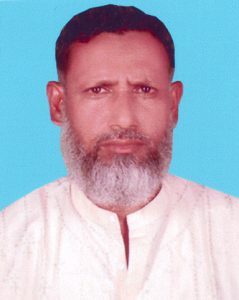 On 13 November 2009 at around 10am a police team led by Sub Inspector Mr. Aminul Islam of the Paikgachha police station picked up Mr. Muzibur Rahman from his shrimp farm without a warrant of arrest. According to our reports he was detained at Paikgachha police station for around two hours, but police did not allow his relatives or lawyers to meet with him.
At around 12 noon Muzibur was taken away in a police vehicle, under the supervision of Sub Inspector Mr. Momin Uddin of the Paikgachha police. Nothing has been heard of him since.
After repeated enquiries from local human rights defenders, the Officer-in-Charge (OC) of Paigkachha police station Mr. Badrul Alam announced that they had orders to send Muzibar to the Office of the Deputy Inspector General of Police, given by the Additional Superintendent of the Khulna. However no further explanation has been given and no warrant of arrest has been issued against him by any of the courts in the area. The police will not say where he is being held.
The family members and relatives of Muzibur are highly concerned about his welfare and safety, and believe that his detention could be in retaliation to remarks he has made since, about his ordeal; or for the purpose of bribery. Muzibar has chosen not to pursue a case against his torturers, believing the Bangladesh system incapable of delivering a just verdict. The chances of him being injured or killed in custody are high. Please see our previous urgent appeals for more information on the case: UP-033-2007; UP-019-2007; UP-015-2007; UP-011-2007; UA-367-2006; UP-232-2006).
SUGGESTED ACTION:
Please write to the relevant Bangladesh authorities listed below and call for the immediate safe release, and for those who have illegally arrested him to be held accountable.
The AHRC has written to the UN Special Rapporteur on Torture and to the UN Working Group on Arbitrary Detention informing them of this case.
To support this case, please click here: SEND APPEAL LETTER
SAMPLE LETTER
Dear __________,
BANGLADESH: A torture victim is missing after being picked up by police
Name of the victims:
1. Mr. Muzibur Rahman, aged 40, a businessman, son of Mr. Munsop Sana, living in a house at the Court Road in the Paikgachha town under the Paikgachha police station in Khulna
Alleged perpetrators:
1. Mr. Aminul Islam, Sub Inspector of Police
2. Mr. Momin Uddin, Sub Inspector of Police
3. Mr. Md. Aslam Hossain, Inspector of Police and Officer-in-Charge (OC)
4. Mr. Ramesh, Constable of Police
All are attached to the Paikgachha police station of the Khulna district
Place of incident: Paikgachha police station in Khulna distirct
Date of the incident: 13 November, 2009
I writing to register my serious concern for the condition of Mr. Muzibur Rahman, whose whereabouts have been unknown since the Paikgachha police arrested him from his shrimp farm at 10am today (13 November 2009). The police officers have declined to explain the reasons behind his arrest, and there is no warrant of arrest or complaints pending against him.
I have heard that the Officer-in-Charge (OC) of the Paikgachha police station has claimed that an Additional Superintendent of Police of the Khulna district asked him to arrest Mr. Muzibur Rahman and send to the office of the Deputy Inspector General of Police in Khulna. However no further explanation has been given, and documents have been shown to his family or local professionals and human rights defenders.
I am aware that Mr. Muzibur was arbitrarily detained and tortured by the police and army on several occasions a few years ago without any lawful reason. His relatives are highly concerned about his welfare and safety, and believe that his detention could be in retaliation to remarks he has made since about his ordeal; or for the purpose of bribery. Mr. Muzibar has chosen not to pursue a case against his torturers, believing the Bangladesh system incapable of delivering a just verdict. I am told that the chances of him being injured or killed in custody are high.
I request that you intervene into the case immediately, to ensure that Mr. Muzibur Rahman is released swiftly and safely to his family, and protected from any harm while in custody. His whereabouts during detention must be exposed and those who arbitrarily and illegally detained him held accountable for their actions under the law.
Yours sincerely,
—————
PLEASE SEND YOUR LETTERS TO:
1. Mrs. Sheikh Hasina
Prime Minister
Government of the People’s Republic of Bangladesh
Office of the Prime Minister
Tejgaon, Dhaka
BANGLADESH
Fax: +880 2 811 3244 / 3243 / 1015 / 1490
Tel: +880 2 882 816 079 / 988 8677
E-mail: pm@pmo.gov.bd or ps1topm@pmo.gov.bd or psecy@pmo.gov.bd
2. Mr. M. M. Ruhul Amin
Chief Justice
Supreme Court of Bangladesh
Supreme Court Building
Ramna, Dhaka-1000
BANGLADESH
Fax: +880 2 956 5058
Tel: +880 2 956 2792
3. Barrister Shafique Ahmed
Minister
Ministry of Law, Justice & Parliamentary Affairs
Bangladesh Secretariat
Dhaka-1000
BANGLADESH
Tel: +880 2 7160627
Fax: +880 2 7168557
E-mail: info@minlaw.gov.bd
4. Ms. Sahara Khatun MP
Minister
Ministry of Home Affairs
Bangladesh Secretariat
Dhaka-1000
BANGLADESH
Tel: +880 2 7169069
Fax: +880 2 7160405, 880 2 7164788
Email: minister@mha.gov.bd
5. Mr. Mahbubey Alam
Attorney General of Bangladesh
Office of the Attorney General
Supreme Court Annex Building
Ramna, Dhaka-1000
BANGLADESH
Fax: +880 2 956 1568
Tel: +880 2 956 2868
6. Justice Amirul Kabir Chowdhury
Chairman
National Human Rights Commission
6/3 Lalmatia, Block-D
Dhaka-1207
BANGLADESH
Telefax: +880 2 9137743
7. Mr. Nur Mohammad
Inspector General of Police (IGP)
Bangladesh Police
Police Headquarters’
Fulbaria, Dhaka-1000
BANGLADESH
Fax: +880 2 956 3362 / 956 3363
Tel: +880 2 956 2054 / 717 6451 / 717 6677
E-mail: ig@police.gov.bd
8. Deputy Inspector General of Police (DIG)
Khulna Range
Office of the DIG of Khulna Range
Khulna
BANGLADESH
Fax: +880 41 761300
Tel: +880 41 761823
E-mail: digkhulna@police.gov.bd?lt;/span>
Thank you.
Urgent Appeal Programme
Asian Human Rights Commission (ua@ahrc.asia)
