
Dear friends,
On 2 August 2012 around 3,000 people from Thambutthegama took part in a demonstration in front of the Thambuththegama Police Station. The demonstrators were carrying the dead body of a lady and blamed the police for bailing out a drunken driver of the vehicle that was responsible for the death of the lady. Later there was an exchange of stones between the police and the demonstrators. After that the police arrested ten persons including Mr. Randunu Pathiranalage Susil Priyankara Seneviratne accusing them of taking part in the demonstration. Priyankara was brutally assaulted and later the police officers filed a fabricated case against him, accusing him of damaging state property.
CASE NARRATIVE:
Mr. Randunu Pathiranalage Susil Priyankara Seneviratne (27) of No 411/3, Nawa Theldeniya, Galadivulwewa in Anuradhapura District is a Businessman and owns a communication center in Thambuththegama Town.
The day following the demonstration, 3 August 2012, when Priyanka opened his shop at 9 am about 10 police officers traveling in a police jeep and on several motorcycles arrived. Six of them entered Priyankara’s shop. One officer by the name of Jagath caught Priyankara by his neck while another officer grabbed Priyankara’s hands from behind. Then other officers, namely Prasanna Karunajeewa, Upali, Abey, Karunathilake and Wijethunga started to brutally assault Priyankara with their helmets and fists.
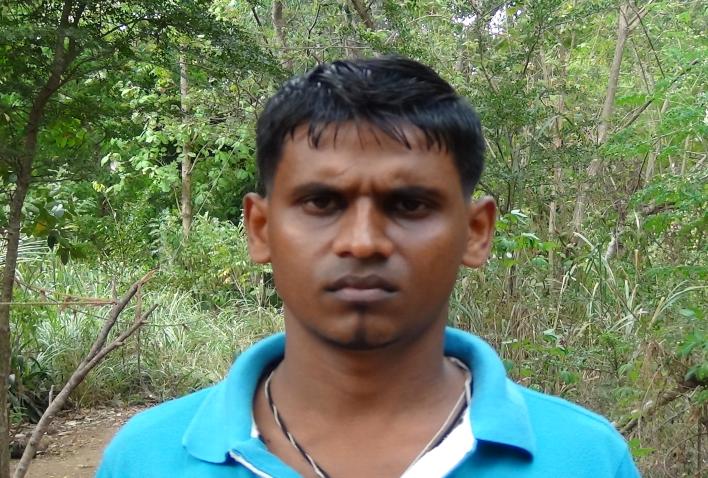 When Priyankara asked them the reason for the assault one officer told him, “You assaulted police with stones” (referring to the demonstration of the previous day). Priyankara replied that he had not been anywhere and had stayed in the shop the whole day. He told them they could ask the neighbouring shop keepers for confirmation of this. The officers told him rudely, “We know everything”. Then they dragged Priyankara along the floor as they continued to assault him. Priyankara suffered enormous pain and continuously pleaded with the officers to stop. The adjoining shop keepers came out and while watching scene, they told the police officers that on the day of the demonstration Priyankara had been in the shop for the whole day. They further explained to the officers that he did not go anywhere. But the police officers did not listen and pushed Priyankara in to the police jeep. In the jeep Priyankara observed that the officers had arrested three more persons from the Kuda Bilibawa, Pahalagama areas and they were also in the police jeep. They all were brought to the Thambuththegama Police Station and locked up inside a cell. The police officers ordered Priyankara to sign documents which were already written and which he was not allowed to read. Priyankara did so out of fear of further torture.
Then Priyankara was produced before the Thambuthegama Magistrate where he learned that the police had filed a fabricated case against him accusing him of damaging state property. When he was produced he denied the charges in front of the Magistrate. The Magistrate granted him bail with the condition of two surety bonds of Rs.100,000.00 each.
After he returned home Priyankara’s health condition worsened and he was admitted to the Thambuththegam Government Hospital. After his admission he was transferred to the Teaching Hospital of Anuradhapura for treatment. Priyankara was treated as in door patient for three days and on 7 August 2012. During that time the Judicial Medical Officer (JMO) examined him.
Before the arrest and the torture by the police officers Priyankara was in good health. However, following the brutal and inhumane assault by the police officers he is now suffering various health ailments and has difficulty in performing his daily activities. He is still undergoing treatment. One of the injuries resulted in damage to his left ear and he is now short of hearing. He is going to get further treatment for this from the consultant medical practitioner.
Priyankara complained to the Inspector General of Police (IGP), National Police Commission (NPC), Senior Superintendent of Police (SSP) North Central Province, Assistant Superintendent of Police (ASP), Officer-in-Charge of the Police Station Thambuththegama, Director Special Investigating Unit (SIU) of Criminal Investigation Department (CID) of the Sri Lanka Police and the Attorney General (AG) regarding the violations of his rights. None of these authorities have started any investigation into his complaint. He states that his right to have his complaint investigated has been violated and he seeks justice from the state of Sri Lanka.
ADDITIONAL COMMENTS:
The Asian Human Rights Commission has reported innumerable cases of torturing innocent by the Sri Lankan police which are illegal under international and local law which have taken place at different Police Station in the country over the past few years.
The State of Sri Lanka sign and ratified the CAT on 3 January 1994. Following state obligations Sri Lanka adopted Act number 22 of 1994 the law adopted by the Sri Lankan parliament making torture a crime that can be punishable for minimum seven years and not less than ten years on being proven guilty. The Attorney General of Sri Lanka is suppose to file indictments in the case where credible evidence were found on torturing people by state officers.
SUGGESTED ACTION:
Please send a letter to the authorities listed below expressing your concern about this case and requesting an immediate investigation into the allegations of illegal arrest, illegal detention, torturing by the police perpetrators, and the prosecution of those proven to be responsible under the criminal law of the country for misusing powers of a state. The officers involved must also be subjected to internal investigations for the breach of the department orders as issued by the police department. Further, please also request the NPC and the IGP to have a special investigation into the malpractices of the police officers for abusing the state officers’ powers.
Please note that the AHRC has also written a separate letter to the Special Rapporteur on torture and other cruel, inhuman or degrading treatment or punishment on this regard.
To support this appeal, please click here:
To support this case, please click here: SEND APPEAL LETTER
SAMPLE LETTER
Dear ________,
SRI LANKA: Yet another innocent man was illegally arrested, tortured and forced to sing fraudulent documents after being accused of participating in a demonstration
Name of the victim: Mr Randunu Pathiranalage Susil Priyankara Seneviratne of No 411/3, Nawa Theldeniya, Galadivulwewa in Anuradhapura District
Alleged perpetrators:
1. Police officer Prasanna Karunajeewa
2. Police officer Upali
3. Police officer Abey
4. Police officer Karunathilaka
5. Police officer Jagath and
6. Police officer Wijethunga
All attached to the Police Station of Thambuththegama
Date of incident: 3 August 2012
Place of incident: Thambuththegama Police Station
I am writing to express my serious concern over the case of Mr. Randunu Pathiranalage Susil Priyankara Seneviratne (27) of No 411/3, Nawa Theldeniya, Galadivulwewa in Anuradhapura District. Priyankara is a Businessman and owns a communication center in Thambuththegama Town.
The day following the demonstration, 3 August 2012, when Priyankara opened his shop at 9 am about 10 police officers traveling in a police jeep and on several motorcycles arrived. Six of them entered Priyankara's shop. One officer by the name of Jagath caught Priyankara by his neck while another officer grabbed Priyankara's hands from behind. Then other officers, namely Prasanna Karunajeewa, Upali, Abey, Karunathilake and Wijethunga started to brutally assault Priyankara with their helmets and fists.
When Priyankara asked them the reason for the assault one officer told him, "You assaulted police with stones" (referring to the demonstration of the previous day). Priyankara replied that he had not been anywhere and had stayed in the shop the whole day. He told them they could ask the neighbouring shop keepers for confirmation of this. The officers told him rudely, "We know everything". Then they dragged Priyankara along the floor as they continued to assault him. Priyankara suffered enormous pain and continuously pleaded with the officers to stop. The adjoining shop keepers came out and while watching scene, they told the police officers that on the day of the demonstration Priyankara had been in the shop for the whole day. They further explained to the officers that he did not go anywhere. But the police officers did not listen and pushed Priyankara in to the police jeep. In the jeep Priyankara observed that the officers had arrested three more persons from the Kuda Bilibawa, Pahalagama areas and they were also in the police jeep. They all were brought to the Thambuththegama Police Station and locked up inside a cell. The police officers ordered Priyankara to sign documents which were already written and which he was not allowed to read. Priyankara did so out of fear of further torture.
Then Priyankara was produced before the Thambuthegama Magistrate where he learned that the police had filed a fabricated case against him accusing him of damaging state property. When he was produced he denied the charges in front of the Magistrate. The Magistrate granted him bail with the condition of two surety bonds of Rs.100,000.00 each.
After he returned home Priyanka's health condition worsened and he was admitted to the Thambuththegam Government Hospital. After his admission he was transferred to the Teaching Hospital of Anuradhapura for treatment. Priyankara was treated as in door patient for three days and on 7 August 2012. During that time the Judicial Medical Officer (JMO) examined him.
Before the arrest and the torture by the police officers Priyankara was in good health. However, following the brutal and inhumane assault by the police officers he is now suffering various health ailments and has difficulty in performing his daily activities. He is still undergoing treatment. One of the injuries resulted in damage to his left ear and he is now short of hearing. He is going to get further treatment for this from the consultant medical practitioner.
Priyankara complained to the Inspector General of Police (IGP), National Police Commission (NPC), Senior Superintendent of Police (SSP) North Central Province, Assistant Superintendent of Police (ASP), Officer-in-Charge of the Police Station Thambuththegama, Director Special Investigating Unit (SIU) of Criminal Investigation Department (CID) of the Sri Lanka Police and the Attorney General (AG) regarding the violations of his rights. None of these authorities have started any investigation into his complaint. He states that his right to have his complaint investigated has been violated and he seeks justice from the state of Sri Lanka.
I request your urgent intervention to ensure that the authorities listed below instigate an immediate investigation into the allegations of illegal arrest, illegal detention, torture by the police perpetrators, and the prosecution of those proven to be responsible under the criminal law of the country for misusing powers of state officers and for wrongful prosecution. The officers involved must also be subjected to internal investigations for the breach of the department orders as issued by the police department.
Yours sincerely,
---------------------
PLEASE SEND YOUR LETTERS TO:
1. Mr. N K Illangakoon
Inspector General of Police
New Secretariat
Colombo 1
SRI LANKA
Fax: +94 11 2 440440 / 327877
E-mail: igp@police.lk
2. Mr. Sarath Palith Fernando
Attorney General
Attorney General's Department
Colombo 12
SRI LANKA
Fax: +94 11 2 436421
E-mail: ag@attorneygeneral.gov.lk
3. Secretary
National Police Commission
3rd Floor, Rotunda Towers
109 Galle Road
Colombo 03
SRI LANKA
Tel: +94 11 2 395310
Fax: +94 11 2 395867
E-mail: npcgen@sltnet.lk or polcom@sltnet.lk
4. Secretary
Sri Lanka Human Rights Commission
No. 108
Barnes Place
Colombo 07
SRI LANKA
Tel: +9411 2694925, +9411 2685980, +9411 2685981
Fax: +9411 2694924 (General) +94112696470 (Chairman)
E-mail: sechrc@sltnet.lk
Thank you.
Urgent Appeals Programme
Asian Human Rights Commission (ua@ahrc.asia)
