
Dear friends,
Ms. K K Neesha Chaturangi (17) of Ambalantota, Baragama, Arawanamulla in Hambantota District was a student of a Ambalantota Kuda Bolana Pajjaseeha Maha Vidyalaya. On 2 June 2012 she ate some cashew nuts after school before taking her lunch. Then she complained of stomach pain. When she was brought to Hambantota General Hospital doctors accused her for eating “Kaneru” (Nerium oleander) which is deadly poisonous. She continuously explained to the doctors that she was well aware of what Kaneru was and she had never eaten it. The doctors gave her medicine and an injection. She vehemently denied that she had consumed Kaneru and did not want the injection. However, the doctors forcefully injected her and forced her to take the medicine. Later her condition worsened and she was transferred to the Teaching Hospital of Matara. At this hospital she was declared dead on arrival.
In order to cover up the truth the doctors at Hambantota General Hospital made a false story and telecast it over the Swarnawahini Television Network that she had committed suicide. The relatives made complaints to the police against these illegalities but the police refused to investigate the crime. Neesha’s parents have complained to the relevant authorities about the irresponsible actions of the doctors at the Hambantota General Hospital but justice has been denied. This illustrates how, in similarity with the Sri Lanka Police the medical authorities refuse to take action against their own.
The doctors at Hambantota General Hospital did not take appropriate measures to save Neesha’s life.
CASE NARRATIVE:
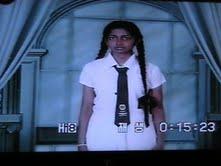 Ms. K K Neesha Chaturangi (17) of Ambalanthota, Baragama, Arawanamulla in Hombantota District was a student of a Ambalanthota Kuda Bolana Pagnaseeha Maha Vidyalaya.
On the 2 June 2012, Neesha was returning from school at about 2.10pm in the afternoon, without taking lunch, she had eaten cashew-nuts with her younger sister. A few minutes after eating cashew Neesha had vomited. At about 4pm she was taken to Udabaragama Government Hospital.
A lady doctor after examining Neesha, told her parents, if she has taken cashew not to worry, but the vomiting is may be due to an empty stomach, and in any case to take her to General Hospital of Hambantota for further treatments.
Then her parents brought her to the General Hospital of Hambanthota. After the admission the doctor examined her and she was admitted to Ward No.2 for further treatments.
She walked to the ward herself without any difficulty. It was about 5.30 pm. After that two doctors and a nurse asked Neesha about her problem. Neesha explained them that she ate cashew, without taking lunch, then after some time she vomited.
The doctors after examining her had told her that “Everyone comes to this place with stories like that, but these days, girls before they reach their age, they get hot headed ideas. You have eaten “Kaneru” (Nerium oleander) not cashew.”
Neesha told them that “I did not eat kaneru, I do not have any reason to eat kaneru, I started vomiting, and that is why my parents brought me here.” Neesha explained that she was well aware of the dangers of Kaneru and could easily identify it.
When the nurse tried to give Neesha some medicine, Neesha begged the nurse and told her that “I did not eat Kaneru, I do not want to take any medicine”.
Then the nurse went and told the doctors that “This girl refuses to take medicine”. Then the doctors told her parents “In your presence this girl is not telling the truth and refuses to take medicine .So you can go out”.
Then Neesha’s parents went away and waited about 25-30 feet away from the scene watching what was going on. Then the nurse and the doctors threatened Neesha and forced some medicine into her mouth.
Then after some time the doctors tried to give her an injection but Neesha tried to run away but the doctors caught her and injected her. Neesha’s parents watched all these things.
After some time Neesha cried complaining of stomach ache. The parents came close to her bed. Neesha seeing the parents cried saying “Please save me I did not eat Kaneru”. Then it was obvious that she was close to losing consciousness. The doctors and the nurse seeing the changes in her condition were worried and tried to contact some doctors over the phone.
Then the same night between 8.30 and 9pm a lady doctor of the ward called Neesha’s mother Walakada Arachchige Sriyani and had told her that further treatment was required for Neesha and to take her to either Teaching Hospital of Matara or Teaching Hospital of Karapitiya.
That lady doctor gave the mother a paper to sign to signify that they are removing Neesha on their own and again the doctors got Sriyani to sign on another blank paper also. They did not know what it was for. Sriyani was in mental anguish at the worsening of Neesha’s condition and signed all the documents that doctors requested.
Later on Neesha was sent to Matara General Hospital. Parents insisted to go in the ambulance with Neesha, but they were not allowed.
Neesha’s parents went by bus to Matara and reached Matara hospital by 12.00 mid night. When they reached the Matara General Hospital the officers on duty informed them that Neesha was found dead on arrival.
On the 3 June 2012, an officer from the Ambalantota Police Station and the Judicial Medical Officer (JMO) held the post mortem and some parts were removed for further investigation.
Neesha’s burial was on the 6 June 2012.
Suppressing the truth by the perpetrators:
Six days after the burial, on 12 June 2012, the 8 pm main news on Swarnavahini Telivision Channel telecasted a report regarding the death of Neesha. In that news item, one boy by the name of Ajith Kumara, came on the scene and said that he was the boy friend of Neesha, and they were had an affair for the last 3 years.
When their love affair was revealed to the Neesha’s parents they ill treated her and as she could not bear it any longer she had swallowed Kaneru and had committed suicide. According to Ajith Kuamara before committing suicide Neesha had telephoned him and informed him of the situation. On hearing this he too tried to commit suicide by swallowing Panadol and was admitted to Hambanthota General Hospital and warded in Ward No.01 bed no.42.
On the 13 June 2012, Neesha’s father and one of his relatives Nilantha managed to find this Ajith Kumara. They met him inside a shop in front of the General Hospital of Hambantota.
Then they questioned Ajith for the reasons to make such an awful statement regarding the death of their daughter. Then he admitted that statement he made on Swarnavahini News Channel was false. He further stated that doctors made this story and they forced him to do this at the Hambanthota General Hospital. He further revealed that this video was recorded inside the room of the hospital and the doctors arranged the news reporters also from Swarnawahini News Channel.
After that Ajith Kumara was taken Ambalantota Police Station and in front of the Officer in Charge (OIC) of Ambalanthota Police Station Ajith Kumara confessed that the statement he made on TV news was false. Then the OIC and the officers in duty recorded a statement from Ajith regarding making false story.
He confessed that he does not either know Neesha or has ever seen her. He had said that the doctors of Ward No.01 took him to an adjoining room in the ward and got him to make this false statement which was recorded by Swarnavahini in the same room.
When informed to Swarnvahini News Channel about the incident by Nilantha, Swarnavahini News Institute sent a reporter to Hambantota Headquarters Police Station. Then those news reporters were able to record a true statement from Ajith Kumara at the police station.
Then Ajith Kuamra was taken to Hambantota General Hospital, by two police officers from the police station. There Ajith Kumara was able to identify one of the doctors, who got him to make the false statement and also was able to point out the room where it was recorded.
Then the police officers wanted to record a statement from that doctor. While the police officers were recording the statement from the particular doctor, a number of other doctors came to the room. Then police officers ordered the father of Neesha to leave the room. Then they closed the door of the room and the father observed that they engaged in a long discussion.
Later police officers report back to the police station. They bought the father of Neesha and Ajith also along with them. Then after statement from Neesha’s father was recorded he and Ajith Kumara were released by the police.
Neesha’s father made a comprehensive complaint to the Hambantota Headquarters Police Station regarding the death of Neesha by the malicious negligence of doctors at the Hambantota General Hospital and the making a false news report to cover up their negligence. Even after gathering so much evidence police did not continue with the investigation and report the matter to the court. No suspects so far have been arrested.
On 20 June 2012 Neesha’s father made a complaint to the Human Rights Commission of Sri Lanka (HRCSL). The reference No: HRC/2264/2012 was provided by the officers at the HRCSL.
Then he made written complaints to the Inspector General of Police (IGP), Deputy Inspector General (IGP) Southern Province, Headquarters Inspector of Police (HQI) of the Headquarters Police Station of Hambanthota, National Child Protection Authority of Sri Lanka (NCPSL), Attorney General (AG), Medical Council of Sri Lanka (MCSL) regarding the crimes committed by the doctors of General Hospitals of Hambantota and requested authorities to investigate the death of his daughter due to gross negligence.
He further maintains that the state of Sri Lanka have an obligation to ensure him a fair trial and justice regarding the violations of his rights.
The government of Sri Lanka must do all they can to investigate the crime and bring the perpetrators before justice. Further the state of Sri Lanka is bound to provide the highest attainable medical facilities to its citizens. This includes investigating of complaints on illegalities and malpractices of its medical practitioners.
ADDITIONAL COMMENTS:
State obligation for highest attainable standard for physical and mental health:
The State of Sri Lanka has signed the International Covenant on Economic, Social and Cultural Rights (ICESCR) on 28 Sep 1976 and made its Accession on 27 Apr 1977. Following that the state of Sri Lanka is suppose to fulfill its obligations within Article 2 of the convention undertakes to take steps, individually and through international assistance and co-operation, especially economic and technical, to the maximum of its available resources, with a view to achieving progressively the full realization of the rights recognized in the present Covenant by all appropriate means, including particularly the adoption of legislative measures. Further to that the state of Sri Lanka has undertaken to guarantee that the rights enunciated in the ICESCR Covenant will be exercised without discrimination of any kind as to race, colour, sex, language, religion, political or other opinion, national or social origin, property, birth or other status.
According to the Article 12 of the ICESCR the state of Sri Lanka recognizes the right of everyone to the enjoyment of the highest attainable standard of physical and mental health. Furthermore the state of Sri Lanka is obligated to take steps to achieve the full realization of the rights envisage in ICESCR. This includes the prevention, treatment and control of epidemic, endemic, occupational and other diseases. Further the creation of conditions which would assure to all medical services and medical attention in the event of sickness.
Necessary legal enactments:
Recalling the section 59 of the General Comment 14 we appeal that the state of Sri Lanka should adopted a domestic law enabling its citizens or group victim of a violation of the right to health should have access to effective judicial or other appropriate remedies at both national and international levels. All victims of such violations should be entitled to adequate reparation, which may take the form of restitution, compensation, satisfaction or guarantees of non-repetition. National ombudsmen, human rights commissions, consumer forums, patients’ rights associations or similar institutions should address violations of the right to health.
Right to information of the Patient:
We recall the rights of the patients’ emphasis by the World Health Organization and stressed those rights to be protected for all the citizen of the country.
SUGGESTED ACTION:
Please send a letter to the authorities listed below expressing your concern about this case and requesting an immediate investigation into the allegations neglectful conduct of the medical doctors at General Hospital of Hambantota, and the prosecution of those proven to be responsible under the criminal law of the country. The officers involved must also be subjected to internal investigations for the breach of the department orders as issued by the Health Department. Further, please also request the IGP to have a special investigation into the conduct of the medical doctors.
The Asian Human Rights Commission has written a separate letter to the Special Rapporteur on the Right of Everyone to the Enjoyment of the Highest Attainable Standard of Physical and Mental Health.
To support this appeal, please click here:
To support this case, please click here: SEND APPEAL LETTER
SAMPLE LETTER
Dear ___________,
SRI LANKA: Doctor's negligence results a death of young girl in Hambantota
Name of the victim: Ms. K K Neesha Chaturangi (17) of Ambalanthota, Baragama, Arawanamulla in Hombantota District
Alleged perpetrator:
1. Doctors attached to the General Hospital of Hambantota
2. Health authorities of Sri Lanka
Place of incident: General Hospital Hambantota
Date of the Incident: 13 June 2012
I am writing to bring to your attention the situation regarding Ms. K K Neesha Chaturangi (17) of Ambalanthota, Baragama, Arawanamulla in Hombantota District. Neesha was a student of a Ambalanthota Kuda Bolana Pagnaseeha Maha Vidyalaya.
On the 2 June 2012, Neesha was returning from school at about 2.10pm in the afternoon, without taking lunch, she had eaten cashew-nuts with her younger sister. A few minutes after eating cashew Neesha had vomited. At about 4pm she was taken to Udabaragama Government Hospital.
A lady doctor after examining Neesha, told her parents, if she has taken cashew not to worry, but the vomiting is may be due to an empty stomach, and in any case to take her to General Hospital of Hambantota for further treatments.
Then her parents brought her to the General Hospital of Hambanthota. After the admission the doctor examined her and she was admitted to Ward No.2 for further treatments.
She walked to the ward herself without any difficulty. It was about 5.30 pm. After that two doctors and a nurse asked Neesha about her problem. Neesha explained them that she ate cashew, without taking lunch, then after some time she vomited.
The doctors after examining her had told her that "Everyone comes to this place with stories like that, but these days, girls before they reach their age, they get hot headed ideas. You have eaten "Kaneru" (Nerium oleander) not cashew."
Neesha told them that "I did not eat kaneru, I do not have any reason to eat kaneru, I started vomiting, and that is why my parents brought me here." Neesha explained that she was well aware of the dangers of Kaneru and could easily identify it.
When the nurse tried to give Neesha some medicine, Neesha begged the nurse and told her that "I did not eat Kaneru, I do not want to take any medicine".
Then the nurse went and told the doctors that "This girl refuses to take medicine". Then the doctors told her parents "In your presence this girl is not telling the truth and refuses to take medicine .So you can go out".
Then Neesha’s parents went away and waited about 25-30 feet away from the scene watching what was going on. Then the nurse and the doctors threatened Neesha and forced some medicine into her mouth.
Then after some time the doctors tried to give her an injection but Neesha tried to run away but the doctors caught her and injected her. Neesha's parents watched all these things.
After some time Neesha cried complaining of stomach ache. The parents came close to her bed. Neesha seeing the parents cried saying "Please save me I did not eat Kaneru". Then it was obvious that she was close to losing consciousness. The doctors and the nurse seeing the changes in her condition were worried and tried to contact some doctors over the phone.
Then the same night between 8.30 and 9pm a lady doctor of the ward called Neesha's mother Walakada Arachchige Sriyani and had told her that further treatment was required for Neesha and to take her to either Teaching Hospital of Matara or Teaching Hospital of Karapitiya.
That lady doctor gave the mother a paper to sign to signify that they are removing Neesha on their own and again the doctors got Sriyani to sign on another blank paper also. They did not know what it was for. Sriyani was in mental anguish at the worsening of Neesha's condition and signed all the documents that doctors requested.
Later on Neesha was sent to Matara General Hospital. Parents insisted to go in the ambulance with Neesha, but they were not allowed.
Neesha's parents went by bus to Matara and reached Matara hospital by 12.00 mid night. When they reached the Matara General Hospital the officers on duty informed them that Neesha was found dead on arrival.
On the 3 June 2012, an officer from the Ambalantota Police Station and the Judicial Medical Officer (JMO) held the post mortem and some parts were removed for further investigation.
Neesha's burial was on the 6 June 2012.
Six days after the burial, on 12 June 2012, the 8 pm main news on Swarnavahini Telivision Channel telecasted a report regarding the death of Neesha. In that news item, one boy by the name of Ajith Kumara, came on the scene and said that he was the boy friend of Neesha, and they were had an affair for the last 3 years.
When their love affair was revealed to the Neesha's parents they ill treated her and as she could not bear it any longer she had swallowed Kaneru and had committed suicide. According to Ajith Kuamara before committing suicide Neesha had telephoned him and informed him of the situation. On hearing this he too tried to commit suicide by swallowing Panadol and was admitted to Hambanthota General Hospital and warded in Ward No.01 bed no.42.
On the 13 June 2012, Neesha's father and one of his relatives Nilantha managed to find this Ajith Kumara. They met him inside a shop in front of the General Hospital of Hambantota.
Then they questioned Ajith for the reasons to make such an awful statement regarding the death of their daughter. Then he admitted that statement he made on Swarnavahini News Channel was false. He further stated that doctors made this story and they forced him to do this at the Hambanthota General Hospital. He further revealed that this video was recorded inside the room of the hospital and the doctors arranged the news reporters also from Swarnawahini News Channel.
After that Ajith Kumara was taken Ambalantota Police Station and in front of the Officer in Charge (OIC) of Ambalanthota Police Station Ajith Kumara confessed that the statement he made on TV news was false. Then the OIC and the officers in duty recorded a statement from Ajith regarding making false story.
He confessed that he does not either know Neesha or has ever seen her. He had said that the doctors of Ward No.01 took him to an adjoining room in the ward and got him to make this false statement which was recorded by Swarnavahini in the same room.
When informed to Swarnvahini News Channel about the incident by Nilantha, Swarnavahini News Institute sent a reporter to Hambantota Headquarters Police Station. Then those news reporters were able to record a true statement from Ajith Kumara at the police station.
Then Ajith Kuamra was taken to Hambantota General Hospital, by two police officers from the police station. There Ajith Kumara was able to identify one of the doctors, who got him to make the false statement and also was able to point out the room where it was recorded.
Then the police officers wanted to record a statement from that doctor. While the police officers were recording the statement from the particular doctor, a number of other doctors came to the room. Then police officers ordered the father of Neesha to leave the room. Then they closed the door of the room and the father observed that they engaged in a long discussion.
Later police officers report back to the police station. They bought the father of Neesha and Ajith also along with them. Then after statement from Neesha's father was recorded he and Ajith Kumara were released by the police.
Neesha's father made a comprehensive complaint to the Hambantota Headquarters Police Station regarding the death of Neesha by the malicious negligence of doctors at the Hambantota General Hospital and the making a false news report to cover up their negligence. Even after gathering so much evidence police did not continue with the investigation and report the matter to the court. No suspects so far have been arrested.
On 20 June 2012 Neesha's father made a complaint to the Human Rights Commission of Sri Lanka (HRCSL). The reference No: HRC/2264/2012 was provided by the officers at the HRCSL.
Then he made written complaints to the Inspector General of Police (IGP), Deputy Inspector General (IGP) Southern Province, Headquarters Inspector of Police (HQI) of the Headquarters Police Station of Hambanthota, National Child Protection Authority of Sri Lanka (NCPSL), Attorney General (AG), Medical Council of Sri Lanka (MCSL) regarding the crimes committed by the doctors of General Hospitals of Hambantota and requested authorities to investigate the death of his daughter due to gross negligence.
He further maintains that the state of Sri Lanka have an obligation to ensure him a fair trial and justice regarding the violations of his rights.
The government of Sri Lanka must do all they can to investigate the crime and bring the perpetrators before justice. Further the state of Sri Lanka is bound to provide the highest attainable medical facilities to its citizens. This includes investigating of complaints on illegalities and malpractices of its medical practitioners.
I request your urgent intervention to ensure that the authorities listed below instigate an immediate investigation into the allegations of negligent work in treatments by medical staff of General Hospital of Hambantota, and the prosecution of those proven to be responsible under the criminal law of the country. The doctors involved must also be subjected to internal investigations for the breach of their professional conduct.
Yours sincerely,
----------------
PLEASE SEND YOUR LETTERS TO:
1. Mr. Maithripala Sirisena
Minister of Health
Ministry of Healthcare & Nutrition,
No: 385,
Ven. Baddegama Wimalawansa Thero Mawatha,
Colombo 10
SRI LANKA
Tel: + 94 11 2685663/ + 94 11 2694132
Fax: + 94 11 2694227
E-mail: minister@health.gov.lk
2. Dr. T. R. C. Ruberu
Secretary
Ministry of Healthcare & Nutrition,
No: 385,
Ven. Baddegama Wimalawansa Thero Mawatha,
Colombo 10
SRI LANKA
Tel: + 94 11 2698511/+ 94 11 2698517
Fax: + 94 11 2692913
Email: secretary@health.gov.lk / secretary.health.sl@gmail.com
3. Dr. U.A. Mendis
Director General of Health Services
Ministry of Healthcare & Nutrition,
No: 385,
Ven. Baddegama Wimalawansa Thero Mawatha,
Colombo 10
SRI LANKA
Tel: + 94 11 2694860
Fax: + 94 11 2693869
Email: dghs@health.gov.lk
4. Mr. N K Illangakoon
Inspector General of Police
New Secretariat
Colombo 1
SRI LANKA
Fax: +94 11 2 440440 / 327877
E-mail: igp@police.lk
5. Mr. Sarath Palitha Fernando
Attorney General
Attorney General's Department
Colombo 12
SRI LANKA
Fax: +94 11 2 436421
E-mail: ag@attorneygeneral.gov.lk
6. Secretary
National Police Commission
3rd Floor, Rotunda Towers
109 Galle Road
Colombo 03
SRI LANKA
Tel: +94 11 2 395310
Fax: +94 11 2 395867
E-mail: npcgen@sltnet.lk or polcom@sltnet.lk
7. Secretary
Sri Lanka Human Rights Commission
No. 108
Barnes Place
Colombo 07
SRI LANKA
Tel: +9411 2694925, +9411 2685980, +9411 2685981
Fax: +9411 2694924 (General) +94112696470 (Chairman)
E-mail: sechrc@sltnet.lk
Thank you.
Urgent Appeals Programme
Asian Human Rights Commission (ua@ahrc.asia)
