
Dear friends,
The Asian Human Rights Commission (AHRC) has received information that Mr. Priyashantha, a married bako operator with a young daughter, was publicly and brutally assaulted by the Officer in Charge (OIC) of the Vanathavilluwa Police Station for a crime that he did not commit. Mr. Priyashantha attended a musical show in which his friend’s daughter sang a song with their family and some friends. A few days later, he was called in for questioning to the Vanathavilluwa Police Station regarding a dispute that occurred at the show. Even though Mr. Priyashantha was not involved and did not witness the dispute in question, he went to the police station as requested. Mr. Priyashantha was accused of bribing people with drugs and alcohol and beaten severely by the OIC in front of a roomful of people. None of the police officers questioned him. A statement was recorded only after the assault had taken place. Mr. Priyashantha was admitted to Maravila Government Hospital for treatment of the injuries he sustained during the assault. However, he is still experiencing pain and is unable to work as normal. Mr. Priyashantha has filed a complaint with the Human Rights Commission of Sri Lanka, as well as the National Police Commission, but both organizations have yet to initiate a credible investigation into the case. This case is yet another illustration of the exceptional collapse of the rule of law in the country.
CASE NARRATIVE:
According to information that the Asian Human Rights Commission (AHRC) has received, Mr. Yapa Mudiyanselage Chaminda Priyashantha (35) of No: 83 Watthe, Bandaranayakapura, Vanathavilluwa in Puttalam District was brutally assaulted in front of a roomful of people by the OIC of Vanathavilluwa Police Station for a crime that he did not commit.
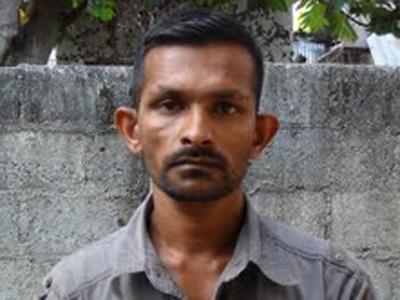 Mr. Priyashantha is married with one child. He works as a bako operator in Vanathavilluwa Gampaha in Puttalam. On 17 March 2012, Mr. Priyashantha visited a friend, Jayantha, at Jayantha’s residence after he had finished work. Mr. Priyashantha and Jayantha went with their families to see a musical show at 16 Miles Stone in which Mr. Priyashantha and Jayantha’s daughter were performing a song.
After the show, the two families returned to Jayantha’s residence, and at about 1:30am, Mr. Priyashantha and his family arrived home. The next day, Jayantha told Mr. Priyashantha that he had heard that there had been a dispute between a group of people from Puliyankulama and 16 Mile Stone at the musical show.
On 20 March at about 10:30am, Mr. Priyashantha was working when he received a call from someone who identified himself as Gihan. Gihan said that he was calling from the local police station about the dispute that occurred at the musical show. He went on to say that the Officer in Charge (OIC) at the Vanathavilluwa Police Station had called Mr. Priyashantha in for questioning, and that he should come to the police station immediately with his friend, Rahula. When Mr. Priyashantha asked why he was being called in for questioning, Gihan said that one of the parties involved in the dispute had said that Mr. Priyashantha incited the dispute and ensuing assault.
Mr. Priyashantha and Rahula went to the police station with their friend, Dilanka. They arrived at the police station and were sitting on a bench waiting for an officer to attend to them when a woman who was later identified as Mrs. Kaluwa, pointed to Mr. Priyashantha and said that he had encouraged people to beat their children. Mr. Priyashantha denied this allegation, and said that he was with his friends and family at the musical show, supporting his daughter.
The officers called Mr. Priyashantha, Rahula and Dilanka into a room in which the OIC, Gihan, Mrs. Kaluwa and several other police officers were waiting.The OIC asked Gihan to explain why Mr. Priyashantha was present, and in response, Mrs. Kaluwa cried and told the officers that Mr. Priyashantha had bribed a number of people with drugs and alcohol, and urged them to beat their children. The OIC then began to beat Mr. Priyashantha in front of the others in the room Mr. Priyashantha insisted that he was innocent of the crime which he had been accused of, but the OIC continued to beat him. The OIC then told the police officers to put Mr. Priyashantha, Kanishka and Rahula in a jail cell. After about two hours, the three men were released from the cell and taken to the complaint desk. There, they met Gihan and his associates, who said that they did not want the case to go to court, and would like to settle the case. Mr. Priyashantha recorded and signed a statement and they left.
Mr. Priyashantha has categorically stated that he has never been engaged in any illegal activity. He said that he was not questioned about the incident by police officers at any time. He said that he did not know who Mrs. Kaluwa was. He believes that he was publicly assaulted to fulfill the whim of an unknown third party. Rather than investigating the dispute using procedural legal provisions, he was tortured.
As the result of the assault, Mr. Priyashantha experienced pain in his head, ears and legs, and found it difficult to carry out his daily work as normal. On one occasion, he fainted. He was admitted to Ward No. 3 of Maravila Government Hospital for treatment of his injuries. The hospital police recorded Mr. Priyashantha’s statement on 23 March, and he was discharged on 24 March. He was told to visit the clinic at Chilaw Basic Hospital for treatment of his earache, and a clinic at Maravila Government Hospital for further treatment.
Mr. Priyashantha has filed a complaint with the Human Rights Commission of Sri Lanka (HRCSL), and the National Police Commission (NPC) regarding the fundamental violation of his rights by the OIC of the Vanathavilluwa Police Station. However, neither the HRCSL nor the NPC has taken any step to instigate a credible, impartial investigation process so as to prosecute the perpetrators of this crime and bring the police officers to justice. Chaminda seeks redress of the gross violation of his rights enshrined in the Constitution of Sri Lanka.
ADDITIONAL COMMENTS:
The Asian Human Rights Commission has reported innumerable cases of torture and other acts which can be classified as cruel, inhuman and degrading treatment committed by the Sri Lankan police. These acts, which have taken place at different police stations across the country, are illegal under local and international law.
The Inspector General of Police (IGP) is the head of the police department of Sri Lanka. He is responsible for the command and conduct of his junior officers. He is supposed to investigate allegations of crimes committed by police officers across the country, and report these crimes to the criminal courts of the country.
The Attorney General of Sri Lanka is supposed to file indictments in cases where credible evidence is found of grievous crimes having been committed. Despite these legal provisions, The Asian Human Rights Commission has observed countless occasions in which the law of the country has not been appropriately implemented by law enforcement officers.
The National Police Commission of Sri Lanka is constitutionally responsible for the discipline of junior police officers. Furthermore, the NPC has been given the power to take action against police officers who have committed crimes and breached local and international disciplinary law. Despite these significant responsibilities, the Asian Human Rights Commission has repeatedly noted the lethargic approach of the NPC to its constitutional duties.
SUGGESTED ACTION:
Please send a letter to the authorities listed below expressing your concern about this case and requesting an immediate investigation into the allegations of torturing a innocent by the police perpetrators, and the prosecution of those proven to be responsible under the criminal law of the country for misusing powers of a state. The officers involved must also be subjected to internal investigations for the breach of the department orders as issued by the police department. Further, please also request the NPC and the IGP to have a special investigation into the malpractices of the police officers for abusing the state officers’ powers.
To support this appeal, please click here:
To support this case, please click here: SEND APPEAL LETTER
SAMPLE LETTER
Dear ________,
SRI LANKA: The OIC of Vanathavilluwa Police Station publicly tortures an innocent man
Name of the victim: Mr. Yapa Mudiyanselage Chaminda Priyashantha (35) of No: 83 Watthe, Bandaranayakapura, Vanathavilluwa in Puttalam District
Alleged perpetrator: The OIC Manohara of Vanathavilluwa Police Station
Date of incident: 20 March 2012
Place of incident: Vanathavilluwa Police Station
I am writing to express my serious concern over the case of Mr. Yapa Mudiyanselage Chaminda Priyashantha (35) of No: 83 Watthe, Bandaranayakapura, Vanathavilluwa in Puttalam District who was brutally assaulted in front of a roomful of people by the OIC of Vanathavilluwa Police Station for a crime that he did not commit.
Mr. Priyashantha is married with one child. He works as a bako operator in Vanathavilluwa Gampaha in Puttalam. On 17 March 2012, Mr. Priyashantha visited a friend, Jayantha, at Jayantha's residence after he had finished work. Mr. Priyashantha and Jayantha went with their families to see a musical show at 16 Miles Stone in which Mr. Priyashantha and Jayantha's daughter were performing a song.
After the show, the two families returned to Jayantha's residence, and at about 1:30am, Mr. Priyashantha and his family arrived home. The next day, Jayantha told Mr. Priyashantha that he had heard that there had been a dispute between a group of people from Puliyankulama and 16 Mile Stone at the musical show.
On 20 March at about 10:30am, Mr. Priyashantha was working when he received a call from someone who identified himself as Gihan. Gihan said that he was calling from the local police station about the dispute that occurred at the musical show. He went on to say that the Officer in Charge (OIC) at the Vanathavilluwa Police Station had called Mr. Priyashantha in for questioning, and that he should come to the police station immediately with his friend, Rahula. When Mr. Priyashantha asked why he was being called in for questioning, Gihan said that one of the parties involved in the dispute had said that Mr. Priyashantha incited the dispute and ensuing assault.
Mr. Priyashantha and Rahula went to the police station with their friend, Dilanka. They arrived at the police station and were sitting on a bench waiting for an officer to attend to them when a woman who was later identified as Mrs. Kaluwa, pointed to Mr. Priyashantha and said that he had encouraged people to beat their children. Mr. Priyashantha denied this allegation, and said that he was with his friends and family at the musical show, supporting his daughter.
The officers called Mr. Priyashantha, Rahula and Dilanka into a room in which the OIC, Gihan, Mrs. Kaluwa and several other police officers were waiting.The OIC asked Gihan to explain why Mr. Priyashantha was present, and in response, Mrs. Kaluwa cried and told the officers that Mr. Priyashantha had bribed a number of people with drugs and alcohol, and urged them to beat their children. The OIC then began to beat Mr. Priyashantha in front of the others in the room Mr. Priyashantha insisted that he was innocent of the crime which he had been accused of, but the OIC continued to beat him. The OIC then told the police officers to put Mr. Priyashantha, Kanishka and Rahula in a jail cell. After about two hours, the three men were released from the cell and taken to the complaint desk. There, they met Gihan and his associates, who said that they did not want the case to go to court, and would like to settle the case. Mr. Priyashantha recorded and signed a statement and they left.
Mr. Priyashantha has categorically stated that he has never been engaged in any illegal activity. He said that he was not questioned about the incident by police officers at any time. He said that he did not know who Mrs. Kaluwa was. He believes that he was publicly assaulted to fulfill the whim of an unknown third party. Rather than investigating the dispute using procedural legal provisions, he was tortured.
As the result of the assault, Mr. Priyashantha experienced pain in his head, ears and legs, and found it difficult to carry out his daily work as normal. On one occasion, he fainted. He was admitted to Ward No. 3 of Maravila Government Hospital for treatment of his injuries. The hospital police recorded Mr. Priyashantha's statement on 23 March, and he was discharged on 24 March. He was told to visit the clinic at Chilaw Basic Hospital for treatment of his earache, and a clinic at Maravila Government Hospital for further treatment.
Mr. Priyashantha has filed a complaint with the Human Rights Commission of Sri Lanka (HRCSL), and the National Police Commission (NPC) regarding the fundamental violation of his rights by the OIC of the Vanathavilluwa Police Station. However, neither the HRCSL nor the NPC has taken any step to instigate a credible, impartial investigation process so as to prosecute the perpetrators of this crime and bring the police officers to justice. Chaminda seeks redress of the gross violation of his rights enshrined in the Constitution of Sri Lanka.
I further request your urgent intervention to ensure that the authorities listed below instigate an immediate investigation into the allegations of torture by the police perpetrators, and the prosecution of those proven to be responsible under the criminal law of the country for misusing powers of state officers and for wrongful prosecution. The officers involved must also be subjected to internal investigations for the breach of the department orders as issued by the police department.
Yours sincerely,
---------------------
PLEASE SEND YOUR LETTERS TO:
1. Mr. N K Illangakoon
Inspector General of Police
New Secretariat
Colombo 1
SRI LANKA
Fax: +94 11 2 440440 / 327877
E-mail: igp@police.lk
2. Ms. Eva Wanasundara
Attorney General
Attorney General's Department
Colombo 12
SRI LANKA
Fax: +94 11 2 436421
E-mail: ag@attorneygeneral.gov.lk
3. Secretary
National Police Commission
3rd Floor, Rotunda Towers
109 Galle Road
Colombo 03
SRI LANKA
Tel: +94 11 2 395310
Fax: +94 11 2 395867
E-mail: npcgen@sltnet.lk or polcom@sltnet.lk
4. Secretary
Sri Lanka Human Rights Commission
No. 108
Barnes Place
Colombo 07
SRI LANKA
Tel: +9411 2694925, +9411 2685980, +9411 2685981
Fax: +9411 2694924 (General) +94112696470 (Chairman)
E-mail: sechrc@sltnet.lk
Thank you.
Urgent Appeals Programme
Asian Human Rights Commission (ua@ahrc.asia)
