
Dear friends,
The Asian Human Rights Commission (AHRC) has received information that a 16-year-old boy died in custody in unclear circumstances in Rupendehi District. Dharmentra Barai. The boy was arrested by the police and brought to Khajuriya Police Post regarding a lethal bicycle accident. He was taken dead to the hospital in the early morning of 4 July, some hours after he was removed from the police station. The circumstances surrounding his death are yet to be clarified and hospital records report various injuries on his body. Although an investigation team has been set up to probe into the death, strong doubts have arisen regarding its impartiality.
CASE NARRATIVE:
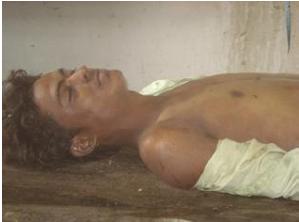 Dharmendra Barai was 16 years old and was a seventh grader at Gargatti High School, Gonaha VDC-8, Rupendehi, close to where he lived (more details can be found in the letter below). According to the information we have received from Advocacy Forum, an NGO, the boy was arrested by the police at around 12.30pm on 3 July 2010 regarding his alleged involvement in a bicycle collision in which a man had died a day earlier. We are told that police had already arrested and interrogated Dharmendra’s elder brother Mahendra Barai that morning.
ASI Nar Bahadur Khatri, in charge of Khajuriya Police Post, and two plain clothed policemen were present at Dharmendra’s arrest, and various local villagers witnessed it. He was taken to Khajuriya Police Office and kept in a detention cell along with a Parsuram Pasi, who had been arrested at 10am that day regarding the same incident. According to Parsuram Pasi, that evening the police took Dharmendra to a separate room for about one hour, but it is unknown what happened during this time.
We are told that later that evening 20 to 25 villagers – including members of Dharmendra’s family – visited the police office to ask for his release, stressing that he was firstly a minor, and secondly, had not committed a crime. They were able to visit Dharmendra, who was in tears, and who told them that the police had aimed their rifles at him and threatened to shoot him. An ASI Nar Bahadur Khatri reportedly announced that the boy would be released at 8am the next day and told the visitors to return then; they left at around 10.30pm. We are unable to determine what happened to the boy after this. However shortly after midnight, and after the evening meal, Dharmendra asked to be brought out from the cell claiming that he was dizzy, had a headache and felt that he might die; Parsuram also reports feeling that he might lose consciousness. After some timeone hour ASI Kahtri allowed the boy out of the cell, who reportedly fell to the ground, frothing from the mouth. The two detainees were taken from the station to Bhim Hospital Bhairahawa at around 1am.
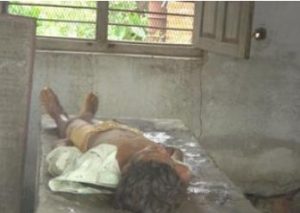 At around 4am ASI Khatri called Dharmendra’s family to tell them that he had been admitted to the Bhim Hospital in Bhairahawahospital. On arrival shortly after they found that the boy was already dead. The hospital records read ‘Brought Dead’, and also note that the body had an abrasion on left palm, bruising on his right sole and a two to three inch wound on his right arm, which have as yet been unexplained, these can be seen here, here and here. His family fear that he was tortured.
According to one hospital source, the police had admitted Dharmendra at 2.35 am, and at 3 am Dr. Ruchi Hamal prepared the medical report and entered the case in the Death Register in the hospital record book.
A four-member investigation team has been formed under the coordination of Assistant CDO Pitamber Ghimire to probe into the death. Nevertheless, the investigation team is comprised exclusively of police officers, rather than members of civil society or representatives of the victim’s family have been included, raising questions about its impartiality.
The villagers and his relatives have staged a street demonstration with the boy’s corpse to demand a credible investigation, and compensation for the family. Inspector Surendra Raj Adhikari, who was in charge of guarding the dead body in the hospital, has reportedly been suspended for not performing his duties properly. We are told that ASI Khatri is currently posted at the Zonal Police Office. The District Administration Office has reportedly provided the family with NRs 20.000 to cover the cremation expenses. The postmortem report has not yet been made available.
BACKGROUND INFORMATION:
Torture of juveniles remains a serious concern in Nepal. On the occasion of the 2010 International Day in favour of the victims of Torture, Advocacy Forum released a report ‘Torture of Juveniles in Nepal’ which highlights that ‘Despite some improvement after the introduction in 2006 of the Juvenile Justice Regulations, juvenile detainees are still more frequently tortured than adults in Nepal’. Between April 2009 and March 2010 Advocacy Forum interviewed 957 juveniles in detention: 22.3% – or almost one child out of four – reported having been subjected to ‘torture or other ill-treatment at the time of arrest and/or during detention’. For more detailed information about the trends of juvenile torture in Nepal, please visit the Advocacy Forum website.
Article 37 of UN Convention on the Rights of the Child concerns the rights of juveniles deprived of their liberty. Sub-clause A reads: ‘No child shall be subjected to torture or other cruel, inhuman or degrading treatment or punishment’.
Furthermore, according to international standards minors deprived of their liberties should be kept in separate detention facilities from adults. Sub-clause C of the UN CRC reads ‘Every child deprived of liberty shall be treated with humanity and respect for the inherent dignity of the human person, and in a manner which takes into account the needs of persons of his or her age. In particular, every child deprived of liberty shall be separated from adults unless it is considered in the child’s best interest not to do so.’ The national legislation also includes similar provisions: according to the article 42-2 section a-b of the Children Act 1992, the child who is to be imprisoned, for investigation, adjudication or punishment, shall be kept in the Children’s Rehabilitation Home.
In 2005 the Concluding Observations of the Committee on the Rights of Child on Nepal’s Second Periodic report expressed concerns about conditions of detention, in which ‘persons under 18 are in most cases not separated from adults while in detention due to lack of juvenile detention facilities’ and recommends that the government ‘ensure that detained persons below 18 years are always separated from adults, and that deprivation of liberty is used only as a last resort, for the shortest appropriate time and in appropriate conditions’
ADDITIONAL COMMENTS:
Although allegations of torture and other ill-treatment are numerous in Nepal, most of them have not lead to an independent and impartial investigation followed by the prosecution of the perpetrators. In addition to torture not being criminalized, there is not any independent mechanism by which to investigate allegations of torture. Therefore it is common to have cases in which allegations of torture are investigated by police officers belonging to the same police station as the alleged perpetrators (please refer to AHRC-UAU-028-2008 and AHRC-UAU-010-2008); in which the police have threatened torture victims into withdrawing their complaints (please refer to AHRC-UAU-056-2008 and AHRC-UAC-195-2008) or ‘convinced’ them not to have particular police officials appearing in the First Information Report (UAU-011-2010); or more generally speaking, in which they have perverted the course of the investigation.
In regards to those precedents, the absence of any representative of civil society in the committee in charge of investigating Dharmendra’s death raises strong concerns that the outcomes of the investigation may not be impartial and independent.
SUGGESTED ACTION:
Please join us in writing to the authorities listed below to ask for the immediate impartial investigation into the circumstances of this boy’s death in custody.
The AHRC has written to the Nepal representative of the Office of the High Comission for Human Rights, asking for their intervention into this case.
To support this case, please click here: SEND APPEAL LETTER
SAMPLE LETTER
Dear __________,
NEPAL: A minor dies in police custody in unclear circumstances
Name of victim: Dharmendra Barai, 16 (DoB: 4 Dec 1994), son of Hariram Barai and Vidhyawati Barai, a permanent resident of Gonaha VDC-2, Puraini, Rupendehi district.
Names of alleged perpetrators:
1. Assistant Sub-Inspector Nar Bahadur Khatri, Iin charge of Khajuriya Police Post, Rupendehi district
2. Other policemen from Khajuriya Police Post, Rupendehi district
Date of incident: 3-4 July 2010
Place of incident: Khajuriya Police Office, Rupendehi district
I am writing to voice my deep concern regarding the custodial death of Dharmendra Barai, a 16-year old minor, in Khajuriya Police Office, Rupendehi district on 4 July 2010.
According to the information I have received from the Asian Human Rights Commission, this 16-year-old boy was arrested at around 12.30 pm on 3 July 2010 by ASI Nar Bahadur Khatri, in charge of Khajuriya Police Post and two plain clothed policemen regarding his alleged involvement in a bicycle collision which had led to the death of one man the day before.
After his arrest, the police took the boy to Khajuriya Police Office to inquire about the case. He was kept in the police detention cell along with Parsuram Pasi, a local who was arrested at 10 am on the same day for inquiry on the same incident.
I know that according to Parsuram Pasi’s testimony, in the evening the police took Dharmendra to a separate room for inquiry which lasted for one hour. It is unknown what happened during this time, however that evening when 20 to 25 villagers- including members of his family- visited the police office the boy reportedly cried and complained to his family members that the police had aimed at him with riffles and threatened to shoot at him. ASI Nar Bahadur Khatri, the in charge, allegedly declared that the boy would be released at 8 am the next day and asked the visitors to go home and come back the next day. They left at around 10.30 pm.
However shortly after midnight, and after the evening meal, Dharmendra asked to be brought out from the cell claiming that he was dizzy, had a headache and felt that he might die; Parsuram also reports feeling that he might lose consciousness. After some time I am told that ASI Kahtri allowed the boy out of the cell, who reportedly fell to the ground, frothing from the mouth. The two detainees were taken to Bhim Hospital Bhairahawa at around 1am. I am told that on 4 July, at around 4am, ASI Khatri called the family members to inform them that Dharmendra required medical attention and had been admitted at the hospital for his treatment.
I know that when the family reached the hospital, they found that the boy was already dead.
I know that the hospital records read ‘Brought Dead’. According to the hospital source, the police had brought Dharmendra at 2.35 am and at 3 am Dr. Ruchi Hamal had prepared the medical checkup report and registered the case in the Death Register in the hospital record book.
I am informed that they report that the dead body contained signs of injury: dried blood, an abrasion on left palm, bruising on his right sole and a two to three inch wound on his right arm, which have as yet been unexplained. His family fears that he was tortured.
I am informed that the post-mortem report prepared on 5 July 2010 mentions that the cause of death is ‘unknown’ but I am concerned to hear that the contents of the postmortem report have not been made available yet. The family claims that the boy was healthy and did not suffer from any disease or injury before the police arrested him.
I know that a four-member investigation team has been formed under the coordination of Assistant CDO Pitamber Ghimire to probe into the death. Nevertheless I am concerned to see that the investigation team is composed exclusively of police officers, and that no members of the civil society and no representative of the victim’s family have been included. I think that, looking at numerous precedents in which police officers in Nepal have been caught perverting the course of justice in such investigations, this raises question over its ability to act impartially.
I am therefore urging you to make sure an impartial and independent investigation is conducted to determine the causes of Dharmendra’s death. To that purpose, representatives of civil society should be included in the investigation team. Adequate protection must be granted to the victim’s relatives in the course of the investigation. During the course of the investigation, the police officers involved in the case should be suspended from their duties. If evidence of torture is gathered, then the perpetrators must be prosecuted and they must receive a sanction proportionate to the crime committed. Proportionate compensation must be granted to the family.
I also take this opportunity to draw your attention to the urgent need to eradicate the phenomenon of torture of juveniles in police custody in Nepal. I know that this is a crucial problem in the country with almost one in four arrested juveniles having reported being tortured according to Advocacy Forum research, done between April 2009 and March 2010. This issue needs to be tackled urgently.
This includes comprehensively addressing the flaws of the juvenile justice system in Nepal. For instance, I am aware that under international standards and national legislation, children should be kept in separate places of detention from adults but because of the non-availability of such facilities, children are often kept in police custody, exposing them to abuses and ill-treatment. I am therefore urging the government of Nepal to make sure such detention facilities are to be made available as soon as possible in the different regions of the country.
A first step toward accountability in this area would be to ensure that the circumstances of the custodial death of this 16-year old boy be fully exposed and understood.
I look forward to your intervention in this case,
Yours sincerely,
—————-
PLEASE SEND YOUR LETTERS TO:
1.Mr. Ramesh Chand Thakuri
Inspector General of Police
Police Head Quarters, Naxal
Kathmandu
NEPAL
Fax: +977 1 4415593
Tel: +977 1 4412432 (Secretary to IGP)
E-mail: info@nepalpolice.gov.np, phqigs@nepalpolice.gov.np
2. Attorney General
Office of Attorney General
Ramshahpath, Kathmandu
NEPAL
Fax: +977 1 4262582
Tel: +977 1 4262506
Email: attorney@mos.com.np
3. Mr. Kedar Nath Upadhaya
Chairperson
National Human Rights Commission
Pulchowk, Lalitpur
NEPAL
Fax: +977 1 55 47973
Tel: +977 1 5010015
E-mail: complaints@nhrcnepal.org or nhrc@nhrcnepal.org
4. Mr. Sarbendra Khanal
Superintendent of Police
Police HR Cell
Nepal Police, Kathmandu
NEPAL
Fax: +977 1 4415593
Tel: +977 1 4411618
E-mail: hrcell@nepalpolice.gov.np
5. Home Minister,
Ministry of Home Affairs,
Singha Darbar,
Kathmandu,
NEPAL
Fax: +977 1 42 11 232
Tel: +977 1 4211211 / 4211264
6. Minister for Women, Children and Social Welfare
Singha Durbar, Kathmandu
NEPAL
Fax: +977 1 4241516
Tel: +977 1 4241728/4241551
E-mail: info@mowcsw.gov.np
——————————-
Thank you.
Urgent Appeals Programme
Asian Human Rights Commission (ua@ahrc.asia)
