
Dear friends,
The Asian Human Rights Commission (AHRC) has received information from MASUM concerning the torture of Mr Bharat Mondal by BSF personnel attached to Mourashi Camp of Chowski No. 2 under Outpost No. 2 of 105th Battalion of BSF on 30 December 2011. Unlawful arrest and detention, torture, caste-based discrimination and a culture of impunity amongst law enforcement and paramilitary agencies are features of everyday life for many Indian people. Such violate a human being’s inherent and fundamental rights to life, liberty and security of person and are oppressive, patently unjust and contemptible.
In addition, the central and state authorities have proven unable or unwilling to address the matter of land rights. Family property has been destroyed through erosion by the river, bankrupting entire families and communities who are now driven, through desperation, to illegal activities such as smuggling. The government has a duty to protect and provide for such victims of natural circumstance. The authorities also possess the funds and an arsenal of legal mechanisms through which such problems may be addressed. It is therefore inexcusable that the state’s inaction has forced Bharat, his family and the community into alleged lives of crime to simply survive. Less excusable still is the exploitation of position and power by paramilitary forces to inflict grievous hurt on an unarmed man with such impunity and disregard for rule of law.
We urge you to write in to appeal to the relevant authorities to take actions against the officers responsible for such senseless and unlawful violence, and to request that the rights of individuals to employment and an adequate standard of living be protected. In so doing, we hope to not only assist Bharat but countless others by encouraging the Indian government to renew its commitment to provide for and protect its people and strengthen rule of law throughout the land.
CASE NARRATIVE:
An investigation by MASUM has uncovered the following facts:
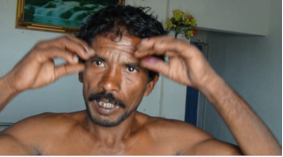 Mr Bharat Mondal was an agrarian labourer before losing his lands to erosion by the river. This is a problem also faced by many of Bharat’s neighbours, and like them, Bharat had no means of livelihood or income to support his family of six. Although Bharat has a job entitlement card under the Mahatma Gandhi National Rural Employment Guarantee Act 2005 scheme, he did not get any work, and so had to allegdly resort to cross-border smuggling of cattle for income.
It is reported that around 8am on 30 December 2011, Bharat attempted to smuggle seven or eight head of cattle across the border when the Border Security Forces (BSF) jawans apprehended him. They roughly handled him, stripped him naked and assaulted him severely. The BSF hit him repeatedly with wooden sticks and rifle butts and also kicked him with boot clad feet. Bharat’s left arm was broken as a result of the violent assault. Bharat bled profusely and lost consciousness, whereupon the BSF jawans left him to die.
When Bharat’s wife, Ms Chintamoni Mondal, heard about the torture and critical condition of her husband, she rushed to the scene with a few neighbours and brought Bharat to Godhanpara Block Primary Health Centre for treatment. The doctor who attended to Bharat at GBPHC referred Bharat to the Domkal Sub-Divisional Hospital and Baharampur New General Hospital because of the severity of Bharat’s condition. Bharat’s family had him admitted into Baharampur NGH where the victim is currently undergoing medical treatment. Although his family desperately needs the inome, Bharat’s condition precludes the possibility of returning to work.
The BSF personnel subsequently warned Bharat’s family and neighbours against registering a complaint at the police station or disclosing details of the incident to others. Yet the aggrieved family somehow plucked up the courage to make a written report before the Superintendent of Police of Murshidabad on 23 March 2012 and forwarded a copy of that complaint to the Officer-in-Charge of Raninagar Police Station. Individuals who had witnessed the incident include Mr Sri Nath Mondal (son of Mr Amir Chand Mondal), Mr Panchanan Mondal (son of Mr Dhananjay Mondal), Ms Sumitra Mondal (wife of Mr Sri Nath Mondal) and other residents of the Char Sahebnagar Village, Harudanga Post Office under the jurisdiction of Raninagar Police Station in Murshidabad. Despite the effort to pursue the matter through established branches of the justice system, the police have to date not taken any action to investigate and prosecute the BSF jawans responsible for the senseless, unprovoked and violent attack on Bharat.
The above case highlights several systemic failures in the administration of Murshidabad in West Bengal:
1. The lack of transparency, accountability and discipline in the operation of armed forces, which breeds impunity and disregard for the law;
2. The pervasive, excessive , and oftentimes senseless, use of violence by provincial authorities against individuals within their jurisdiction;
3. The lack of enforcement and/or poor communication by India’s central government and judiciary of basic protocol (for making arrests, interrogating, detaining and trying suspects) amongst law enforcement agencies and paramilitary forces such as the BSF;
4. The lack of responsiveness of the police to aggrieved locals
Smuggling is, without doubt, a crime that Bharat might eventually have to answer for. Yet graver still are crimes committed by state-sponsored agencies such as the BSF and the police. Who should and could, in the name of justice, take up the responsibility to prosecute the BSF for their criminal brutality against Bharat? Who should have clearly communicated the purposes and fundamental principles of law to the state’s law enforcement and paramilitary agencies? The only ones capable of disciplining rogue actors at the legal and geographical periphery appear unwilling to do so. They are powerful groups and actors from within the Central Government who are callous to or complicit in the atrocities committed against the very people upon which their authority, legitimacy and power rest. Yet without state intervention, it is unlikely that Bharat and his family will ever see their BSF tormentors brought to justice. As such, we urge the authorities to act upon these findings and move quickly to assist Bharat and his family. By demonstrating impartiality, objectivity and respect for procedures established by law, the authorities can set important precedent for the BSF and the police to follow, thereby improving the functionality of the justice institutions around India.
ADDITIONAL INFORMATION:
There can never be any justification for torture because the practice outrages the inherent dignity of a human being. Not only has Bharat been robbed of his rights to security of person and against torture and cruel, inhuman treatment, but he has also been denied, through his extensive injuries, access to work and an adequate standard of living for himself and his family. Inaction by the police has also violated his right to equal protection by the law and exposes cowardice, collusion with the BSF, or an execrable apathy to the victim’s plight.
Paramilitary forces are to enforce the law and to be moral exemplars to the community they police. Minimally, therefore, these armed forces should adhere to state law. In addition, they are to adhere to codes and practices stipulated by acts and ordinances created specifically to regulate their activities and prevent abuses of authority, for instance the Border Security Force Act, 1968. Armed forces ought to also be subjected to monitoring by an independent and impartial party. Ideally, such organisations should adopt and internalise the fundamental principles upon which statues are enacted (i.e. the spirit, as opposed to only the letter, of the law), principles such as justice, compassion and the inherent dignity of a human being. Assault is a cognizable criminal offence, and there are legal ramifications resulting from such blatant contempt of rule of law by forces armed, funded and, theoretically, directed by the Central Government. And with great power comes great responsibility – armed forces are to react in a measured manner to all situations, to discharge their duties and to be legally and morally beyond reproach.
The Border Security Force Act, 1968 and its Rules 1969, was designed to regulate the conduct of the BSF. Section 41 (f) of the Act mandates that a BSF officer who commits any offence against the property or person of any inhabitant of, or resident in, the country in which he is serving to be punished with seven years of imprisonment. The Indian Penal Code of 1860 also provides punishment for voluntarily causing hurt, and without grave provocation (Section 321 and 353). Section 326 of the Code prescribes punishment by way of imprisonment for a term of ten years to a person who voluntarily causes hurt by dangerous weapons or means. In addition, Article 21 of the Constitution guarantees protection of life and personal liberty of every citizen. There is, however, an obvious lack of discipline and commitment to duty, as well as a culture of violence and impunity, within the BSF. This case once again illustrates how the BSF operates, and is permitted to operate, with impunity and in utter defiance of these three legal documents.
Bharat’s case adds to a growing corpus of casework that evidences serious institutional flaws in the Indian justice system. The AHRC has documented substantial number of BSF atrocities in India over the years. AHRC and MASUM have reported in detail over 800 cases of custodial violence committed by the BSF over the past eight years and have called for action on the part of the Indian authorities. The AHRC has noted the absolute impunity with which the BSF acts, a fact evidenced by the lack of disciplinary action taken against their criminal offences by the relevant BSF superiors and police personnel. Critically, many of these cases reveal a troubling unresponsiveness, and sometimes complicity, in parts of the legal system to patent injustices committed against individuals by the BSF. Not only is the legitimacy and integrity of the Indian justice system threatened, but so is its border and national security. Contempt for the law is criminal, disruptive and dangerous. A broken chain of command and contravention of commands from the centre threatens the entire Indian nation.
When the BSF bloodied Bharat, they also demonstrated disregard for international law. As state-endorsed paramilitary forces, this has severe implications for the reputation of India amongst the international community. The 1948 Universal Declaration of Human Rights (UDHR) speaks of the rights of individuals to life, liberty and security of person (Article 3), against torture and other cruel, inhuman and degrading treatment (Article 5), to equal protection under the law without discrimination (Article 6 and 7) and to be heard fairly and publicly by an independent and impartial tribunal (Article 10). These are entitlements inherent in Bharat’s person, but entitlements that were denied him.
In 1979, India acceded to the 1966 International Covenant on Civil and Political Rights (ICCPR), which reiterated many of the fundamental rights of the individual laid out in the UDHR and legally bound state parties to act on their belief in these rights. Some of the rights and liberties included in the ICCPR include the right against torture and other cruel, inhuman and degrading treatment (Article 7). Article 9(2) requires that law enforcement agents inform the person under arrest of the reasons for his arrest. Article 14 confirmed the principle of “innocent until proven guilty” and the right to fair and public hearing before an impartial and independent tribunal. 14(3) emphasises the necessity of informing the individual under arrest of the charges being brought against him, of providing the individual adequate time and facilities to prepare for his defence, the right to be tried without delay and no not be compelled to confess guilt. In 14(5), every individual convicted has a right to having his conviction and sentence reviewed by a higher tribunal. The Indian state is bound by international law to upholding these rights. Yet none of these legal safeguards and constitutional guarantees was afforded to Bharat.
It remains to be seen if another right enumerated in the UDHR to effective remedy by competent national tribunals for acts violating fundamental rights granted by the constitution and by law (Article 8) will be secured for Bharat, only one in a long string of people long terrorised by the BSF. This right is yet more specifically stated in the ICCPR as constituting an enforceable compensation if the individual had been a victim of unlawful arrest (Article 9(5)). The violence toward Bharat has cost his family its breadwinners, thereby worsening whatever situation pushed him into the illegal business of smuggling in the first place. The state is not addressing the root of the matter, which is its own failure to provide and protect these individuals who are not only living below the poverty line but exploited by other actors against the state itself.
The state has a moral and legal responsibility to provide for its people. India acceded to the International Covenant on Economic, Social and Cultural Rights (ICESCR) in 1979, yet has not fulfilled its promises to take appropriate steps toward realise individuals’ rights to work freely chosen or accepted, to an adequate standard of living for himself and his family, including adequate food, clothing and housing, and to the continuous improvement of living conditions and to the enjoyment of the highest attainable standard of physical and mental health (Articles 6, 11 and 12 of the ICESCR). Bharat allegdly resorted to smuggling because the state had failed him. The state had failed to plan for the environmental degradation of family lands. The state failed to implement measures that would ensure alternative forms of work and income for the individuals affected, or schemes that would help relocate the families. Such institutional and technocratic deficiencies in fact exacerbate existing hunger and desperation, conditions that contribute to crime and other social ills (in this case, smuggling). These illegal activities are furthermore met, not by a realisation of those original governmental inadequacies but with equally criminal brutality, perpetuated quite ironically by agents of law enforcement. If the government is itself unwilling or unable to transcend this vicious and violent cycle, it is hardly like individuals like Bharat will be able to escape it on their own.
SUGGESTED ACTION:
Please write to the authorities mentioned below demanding an investigation into this case. Mr Bharat Mondal should be immediately compensated for medical fees incurred and the loss of wages as a result of his severe beating at the hands of the BSF. Bharat and his family must be protected against recriminations and be provided for. Local authorities should act to manage unemployment, and recognise Bharat and other unemployed individuals have a right to training to increase their employability. The entire community must furthermore be assured that such acts of violence and impunity will not occur again in the future, or, if they do, that they will be capably checked by mechanisms built into the justice system to address such abuse of authority.
The AHRC is also writing separate letters to the UN Special Rapporteur on Torture and other Cruel, Inhuman and Degrading Treatment calling for further intervention in this case.
To support this appeal, please click here:
To support this case, please click here: SEND APPEAL LETTER
SAMPLE LETTER
Dear __________,
INDIA: Please investigate violence against Mr Bharat Mondal on 30 December 2011 in an agrarian field at Mourashi by four BSF personnel from the Mourashi Camp of Chowki No. 2 under Outpost No. 2 of 105th Battalion of the BSF
Name of victim: Mr Bharat Mondal, son of Mr Kutub Mondal, 40 years old, an agrarian labourer from the Scheduled Caste community and a resident of Char Sahebnagar Village of Harudanga Post Office under the jurisdiction of Raninagar Police Station, Murshidabad, West Bengal
Names of alleged perpetrators: Four officers of Border Security Force (BSF) in camouflage uniforms attached to the Mourashi Camp of Chowki No. 2 under Outpost 2 of 105th Battalion of the BSF.
Date of incident: Around 8am on 30 December 2011
Place of incident: Agrarian field at Mourashi, near Mourashi Camp of Chowki No. 2 under Outpost No. 2 of 105th Battalion of the BSF, Harudanga Post Office under the jurisdiction of Raninagar Police Station, Murshidabad, West Bengal
I am writing to express concern regarding another case of violence against Mr Bharat Mondal around 8 am on 30 December 2011 by four personnel from the Mourashi Camp of Chowki No. 2 under Outpost No. 2 of the 105th Battalion of the BSF.
Mr Bharat Mondal was an agrarian labourer before losing his lands to erosion by the river. This is a problem also faced by many of Bharat's neighbours, and like them, Bharat had no means of livelihood or income to support his family of six. Although Bharat has a job entitlement card under the Mahatma Gandhi National Rural Employment Guarantee Act 2005 scheme, he did not get any work, and so had to allegdly resort to cross-border smuggling of cattle for income.
It is reported that around 8am on 30 December 2011, Bharat attempted to smuggle seven or eight head of cattle across the border when the Border Security Forces (BSF) jawans apprehended him. They roughly handled him, stripped him naked and assaulted him severely. The BSF hit him repeatedly with wooden sticks and rifle butts and also kicked him with boot clad feet. Bharat's left arm was broken as a result of the violent assault. Bharat bled profusely and lost consciousness, whereupon the BSF jawans left him to die.
When Bharat's wife, Ms Chintamoni Mondal, heard about the torture and critical condition of her husband, she rushed to the scene with a few neighbours and brought Bharat to Godhanpara Block Primary Health Centre for treatment. The doctor who attended to Bharat at GBPHC referred Bharat to the Domkal Sub-Divisional Hospital and Baharampur New General Hospital because of the severity of Bharat's condition. Bharat's family had him admitted into Baharampur NGH where the victim is currently undergoing medical treatment. Although his family desperately needs the inome, Bharat's condition precludes the possibility of returning to work.
When Bharat's wife, Ms Chintamoni Mondal, heard about the torture and critical condition of her husband, she rushed to the scene with a few neighbours and brought Bharat to Godhanpara Block Primary Health Centre for treatment. The doctor who attended to Bharat at GBPHC referred Bharat to the Domkal Sub-Divisional Hospital and Baharampur New General Hospital because of the severity of Bharat's condition. Bharat's family had him admitted into Baharampur NGH where the victim is currently undergoing medical treatment. Although his family desperately needs the inome, Bharat's condition precludes the possibility of returning to work.
The BSF personnel subsequently warned Bharat's family and neighbours against registering a complaint at the police station or disclosing details of the incident to others. Yet the aggrieved family somehow plucked up the courage to make a written report before the Superintendent of Police of Murshidabad on 23 March 2012 and forwarded a copy of that complaint to the Officer-in-Charge of Raninagar Police Station. Individuals who had witnessed the incident include Mr Sri Nath Mondal (son of Mr Amir Chand Mondal), Mr Panchanan Mondal (son of Mr Dhananjay Mondal), Ms Sumitra Mondal (wife of Mr Sri Nath Mondal) and other residents of the Char Sahebnagar Village, Harudanga Post Office under the jurisdiction of Raninagar Police Station in Murshidabad. Despite the effort to pursue the matter through established branches of the justice system, the police have to date not taken any action to investigate and prosecute the BSF jawans responsible for the senseless, unprovoked and violent attack on Bharat.
The above case highlights several systemic failures in the administration of Murshidabad in West Bengal:
1. The lack of transparency, accountability and discipline in the operation of armed forces, which breeds impunity and disregard for the law;
2. The pervasive, excessive , and oftentimes senseless, use of violence by provincial authorities against individuals within their jurisdiction;
3. The lack of enforcement and/or poor communication by India's central government and judiciary of basic protocol (for making arrests, interrogating, detaining and trying suspects) amongst law enforcement agencies and paramilitary forces such as the BSF;
4. The lack of responsiveness of the police to aggrieved locals
Smuggling is, without doubt, a crime that Bharat might eventually have to answer for. Yet graver still are crimes committed by state-sponsored agencies such as the BSF and the police. Who should and could, in the name of justice, take up the responsibility to prosecute the BSF for their criminal brutality against Bharat? Who should have clearly communicated the purposes and fundamental principles of law to the state's law enforcement and paramilitary agencies? The only ones capable of disciplining rogue actors at the legal and geographical periphery appear unwilling to do so. They are powerful groups and actors from within the Central Government who are callous to or complicit in the atrocities committed against the very people upon which their authority, legitimacy and power rest. Yet without state intervention, it is unlikely that Bharat and his family will ever see their BSF tormentors brought to justice. As such, we urge the authorities to act upon these findings and move quickly to assist Bharat and his family. By demonstrating impartiality, objectivity and respect for procedures established by law, the authorities can set important precedent for the BSF and the police to follow, thereby improving the functionality of the justice institutions around India.
There can never be any justification for torture because the practice outrages the inherent dignity of a human being. Not only has Bharat been robbed of his rights to security of person and against torture and cruel, inhuman treatment, but he has also been denied, through his extensive injuries, access to work and an adequate standard of living for himself and his family. Inaction by the police has also violated his right to equal protection by the law and exposes cowardice, collusion with the BSF, or an execrable apathy to the victim's plight.
Paramilitary forces are to enforce the law and to be moral exemplars to the community they police. Minimally, therefore, these armed forces should adhere to state law. In addition, they are to adhere to codes and practices stipulated by acts and ordinances created specifically to regulate their activities and prevent abuses of authority, for instance the Border Security Force Act, 1968. Armed forces ought to also be subjected to monitoring by an independent and impartial party. Ideally, such organisations should adopt and internalise the fundamental principles upon which statues are enacted (i.e. the spirit, as opposed to only the letter, of the law), principles such as justice, compassion and the inherent dignity of a human being. Assault is a cognizable criminal offence, and there are legal ramifications resulting from such blatant contempt of rule of law by forces armed, funded and, theoretically, directed by the Central Government. And with great power comes great responsibility – armed forces are to react in a measured manner to all situations, to discharge their duties and to be legally and morally beyond reproach.
The Border Security Force Act, 1968 and its Rules 1969, was designed to regulate the conduct of the BSF. Section 41 (f) of the Act mandates that a BSF officer who commits any offence against the property or person of any inhabitant of, or resident in, the country in which he is serving to be punished with seven years of imprisonment. The Indian Penal Code of 1860 also provides punishment for voluntarily causing hurt, and without grave provocation (Section 321 and 353). Section 326 of the Code prescribes punishment by way of imprisonment for a term of ten years to a person who voluntarily causes hurt by dangerous weapons or means. In addition, Article 21 of the Constitution guarantees protection of life and personal liberty of every citizen. There is, however, an obvious lack of discipline and commitment to duty, as well as a culture of violence and impunity, within the BSF. This case once again illustrates how the BSF operates, and is permitted to operate, with impunity and in utter defiance of these three legal documents.
Bharat's case adds to a growing corpus of casework that evidences serious institutional flaws in the Indian justice system. The AHRC has documented substantial number of BSF atrocities in India over the years. AHRC and MASUM have reported in detail over 800 cases of custodial violence committed by the BSF over the past eight years and have called for action on the part of the Indian authorities. The AHRC has noted the absolute impunity with which the BSF acts, a fact evidenced by the lack of disciplinary action taken against their criminal offences by the relevant BSF superiors and police personnel. Critically, many of these cases reveal a troubling unresponsiveness, and sometimes complicity, in parts of the legal system to patent injustices committed against individuals by the BSF. Not only is the legitimacy and integrity of the Indian justice system threatened, but so is its border and national security. Contempt for the law is criminal, disruptive and dangerous. A broken chain of command and contravention of commands from the centre threatens the entire Indian nation.
When the BSF bloodied Bharat, they also demonstrated disregard for international law. As state-endorsed paramilitary forces, this has severe implications for the reputation of India amongst the international community. The 1948 Universal Declaration of Human Rights (UDHR) speaks of the rights of individuals to life, liberty and security of person (Article 3), against torture and other cruel, inhuman and degrading treatment (Article 5), to equal protection under the law without discrimination (Article 6 and 7) and to be heard fairly and publicly by an independent and impartial tribunal (Article 10). These are entitlements inherent in Bharat's person, but entitlements that were denied him.
In 1979, India acceded to the 1966 International Covenant on Civil and Political Rights (ICCPR), which reiterated many of the fundamental rights of the individual laid out in the UDHR and legally bound state parties to act on their belief in these rights. Some of the rights and liberties included in the ICCPR include the right against torture and other cruel, inhuman and degrading treatment (Article 7). Article 9(2) requires that law enforcement agents inform the person under arrest of the reasons for his arrest. Article 14 confirmed the principle of "innocent until proven guilty" and the right to fair and public hearing before an impartial and independent tribunal. 14(3) emphasises the necessity of informing the individual under arrest of the charges being brought against him, of providing the individual adequate time and facilities to prepare for his defence, the right to be tried without delay and no not be compelled to confess guilt. In 14(5), every individual convicted has a right to having his conviction and sentence reviewed by a higher tribunal. The Indian state is bound by international law to upholding these rights. Yet none of these legal safeguards and constitutional guarantees was afforded to Bharat.
It remains to be seen if another right enumerated in the UDHR to effective remedy by competent national tribunals for acts violating fundamental rights granted by the constitution and by law (Article 8) will be secured for Bharat, only one in a long string of people long terrorised by the BSF. This right is yet more specifically stated in the ICCPR as constituting an enforceable compensation if the individual had been a victim of unlawful arrest (Article 9(5)). The violence toward Bharat has cost his family its breadwinners, thereby worsening whatever situation pushed him into the illegal business of smuggling in the first place. The state is not addressing the root of the matter, which is its own failure to provide and protect these individuals who are not only living below the poverty line but exploited by other actors against the state itself.
The state has a moral and legal responsibility to provide for its people. India acceded to the International Covenant on Economic, Social and Cultural Rights (ICESCR) in 1979, yet has not fulfilled its promises to take appropriate steps toward realise individuals' rights to work freely chosen or accepted, to an adequate standard of living for himself and his family, including adequate food, clothing and housing, and to the continuous improvement of living conditions and to the enjoyment of the highest attainable standard of physical and mental health (Articles 6, 11 and 12 of the ICESCR). Bharat allegdly resorted to smuggling because the state had failed him. The state had failed to plan for the environmental degradation of family lands. The state failed to implement measures that would ensure alternative forms of work and income for the individuals affected, or schemes that would help relocate the families. Such institutional and technocratic deficiencies in fact exacerbate existing hunger and desperation, conditions that contribute to crime and other social ills (in this case, smuggling). These illegal activities are furthermore met, not by a realisation of those original governmental inadequacies but with equally criminal brutality, perpetuated quite ironically by agents of law enforcement. If the government is itself unwilling or unable to transcend this vicious and violent cycle, it is hardly like individuals like Bharat will be able to escape it on their own.
I therefore demand that:
1. The assault on Bharat by the four BSF officers is properly and transparently investigated by a neutral agency appointed by the National Human Rights Commission;
2. The four BSF personnel who so viciously attacked Bharat be disciplined under the Indian Penal Code for voluntarily causing hurt without grave provocation;
3. The four BSF personnel be internally investigated for failure to comply with standard criminal procedures;
4. Bharat is compensated for the medical fees incurred and the income lost as a result of the assault;
5. Bharat is given training or some form of employment so that he will no longer have to resort to illegal activities for economic survival;
6. The victim and his family assured by the authorities that their security will not be compromised by retaliatory attacks from the BSF;
7. The central government reiterate the importance of legal, constitutional and human rights during the training and briefing of police officers, members of the judiciary and the paramilitary forces' personnel
Yours sincerely,
_____________
PLEASE SEND YOUR LETTERS TO:
1. Director General BSF
Block 10, CGO Complex
Lodhi Road, New Delhi -03
INDIA
Fax: +91 11 24360016
E-mail: probsf@yahoo.com, bsfhq@bsf.nic.in, bsf_hq@hub.nic.in, bsf_hq@bsf.delhi.nic.in
2. Director General & Inspector General of Police
Government of West Bengal
Writers Buildings, Kolkata-1
West Bengal
INDIA
Fax: +91 33 2214 4498 / 2214 5486
Email: dgp_westbengal@gmail.com
3. Chief Secretary
Government of West Bengal
Writers' Building, Kolkata, West Bengal
INDIA
Fax: + 91 33 2214 4328
Email: chiefsec@wb.gov.in
4. Additional Chief Secretary (Home)
Government of West Bengal
Writers' Building, Kolkata, West Bengal
INDIA
Email: sechome@wb.gov.in
5. Ms. Mamata Banerjee
Chief Minister
Government of West Bengal
Writers' Building, Kolkata, West Bengal
INDIA
Fax: + 91 33 22144328
Email: cm_wb@nic.in
6. Chairperson
National Human Rights Commission
Faridkot House, Copernicus Marg
New Delhi 110001
INDIA
Fax: + 91 11 2338 4863
E-mail: chairnhrc@nic.in
7. Superintendent of Police
Murshidabad
BMP Police Office
Berhampore 742101, Murshidabad District
West Bengal State
INDIA
Thank you
Urgent Appeals Programme
Asian Human Rights Commission (ua@ahrc.asia)
