
Dear Friends,
The Asian Human Rights Commission (AHRC) writes to inform you that a man arbitrarily arrested by the police in General Santos City was tortured while in custody for seven days. The police had him severely beaten, subjected him to suffocation using a plastic bag and burned his thumb with lit cigarettes. When carrying out the arrest, the police neither showed him the arrest orders nor explained to him the nature of the charges. The police unit who tortured him has in the past been accused of involvement in torture and forcible disappearances.
CASE NARRATIVE: (According to information received from the Task Force Detainees of the Philippines (TFDP) – Mindanao)
On April 4, 2010, Anuar Hasim was riding his motorcycle near Champaca Street in General Santos City when two persons riding on another motorcycle stopped him. He described the two persons as wearing plain clothes. One of them grabbed his left arm and sternly warned him, “Come with us, do not attempt to run otherwise you will be killed”.
When Hasim asked the two men of what he had done wrong and why he was being arrested they told him to: “just come with us”. At that time, the two persons had Hasim’s hands handcuffed. One of them also took over his motorcycle. After that he was taken to a place near the City Hall building, two other persons arrived a few minutes later.
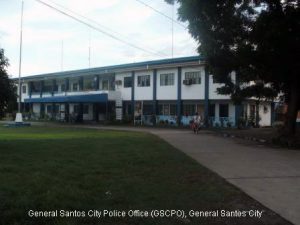 Those who had arrested him (whom he later came to know as policemen attached to the General Santos City Office (GSCPO)) took him to the police headquarters. While in police custody, those questioning him slapped him hard several times about his face. He was interrogated and questioned about the incident (the victim did not elaborate the details of the incident) that took place in Maasim town, in Sarangani province. He was also forced to admit that he is a commander of a rebel group, the Moro Islamic Liberation front (MILF); and when he refused to answer they slapped him.
At 7pm that day, he was brought to the GSCPO’s Police Station No. 6 located in Barangay (village) Bula where he was severely tortured. Once again, the policemen forced him to admit perpetrating the crime that took place in Maasim town. The police punched him hard in his stomach several times. There were five persons wearing in plain clothes who were questioning and torturing him.
While inside the Bula police station, he was kicked three times on his chest and burn his left thumb with lit cigarettes several times (he could still feel the pain and torture marks were visible when he was interviewed on April 14). He was also suffocated for moments at a time when they wrapped cellophane around his face and head. Every time he refused to admit what the police were accusing of they repeated the procedure. This happened on several occasions.
The torture included blindfolding and strangulation. He was also forced to squat, handcuffed in an position so that they could punch and kick him. His ordeal went on until 3am the following day.
The following day, April 5, at 10am his mother visited him at the Police station. When his mother hugged him, the police grabbed him and hid him inside a car, depriving them of the opportunity to talk and tell his mother about his condition. At about 1pm that day, the police subjected Hasim to another interrogation and slapped him repeatedly. By 8pm, the police took him back to the Police Station No. 6 in Barangay Bula.
On April 6, Hasim was taken back to the headquarters. He was asked about whether he knew the names of persons the police are asking from him, but every time he replied in the negative his shirt would be removed to blindfold him. On one occasion, he heard them say, “Why don’t we just will kill this person and dump him at the sea”. On April 6, Hasim’s family had seen him and his wife at the police station. His wife was able to take photographs of the visible torture marks on his chest. He was held there until April 11.
It was only on April 12, 2010 at 2:30pm that Hasim was remanded to the Provincial jail in Alabel, Sarangani Province. He later learned that he had been charged with Double Murder with criminal case nos. 3043-08 and 3044-08; for Destructive Arson, criminal case no. 3045-08; Arson, criminal case no. 3046-08; and Robbery with Violence and/or Intimidation of persons criminal case nos. 3047-08 and 3048-08, before the Regional Trial Court (RTC) Branch 38 in Alabel, Sarangani Province.
BACKGROUND INFORMATION:
The AHRC has in the past documented cases of persons having been illegally arrested, detained, tortured and forcibly disappeared by policemen attached to the General Santos City Police Office (GSPO).
 On 24 April 2002, the same police unit arrested three men whom they accused of having been involved in the bombing of a mall on 21 April 2002 in General Santos City (UA-74-2005). The police claimed the three were responsible for the bomb attack, but they nevertheless did not charge them for the bomb blast. One of the three victims was sexually and verbally humiliated for being a homosexual. All the victims were Muslims and political activists who are affiliate members of Bayan Muna, a political party.
Also in 12 December 2005, a man was arrested, tortured and held for three days in the same police headquarters without charges (UA-251-2005). The police arrested Haron Abubakar Buisan, a 25-year-old man over allegations that he was the same person whom they claimed to have been responsible in robbing a passenger bus. But despite Buisan family’s showing documentary proof that he is not the person the police accused him to be, the prosecutor pursued on prosecuting him for robbery.
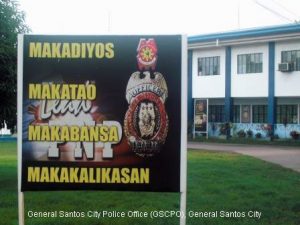
The placard reads: “God-fearing, for the people, for the country, for the environment”
Also on 27 May 2007, another victim, Arnold Aliman, had been forcibly abducted and disappeared by persons who were seen using the police service vehicle (UA-198-2007). According to the witnesses’ accounts, those who had forcibly abducted Aliman were seen using the vehicle belonging to the office of the Criminal Investigation Branch (CIB), a unit attached to the same police unit.
ADDITIONAL INFORMATION:
In the Philippines, torture is a criminal offense following the enactment of the “Anti-Torture Act of 2009” in November 2009. Under Section 4 of this Law, the following acts of torture committed against Hasim would have had a penalty of Reclusion Temporal (twelve to twenty years imprisonment) once the perpetrator is prosecuted and convicted.
(1) Systematic beating, head banging, punching, kicking, striking with truncheon or rifle butt or other similar objects, and jumping on the stomach;
(4) Cigarette burning;
(12) The use of plastic bag and other materials placed over the head to the point of asphyxiation;
Mental/Psychological Torture refers to include (2) Threatening a person(s) or his/her relative(s) with bodily harm, execution or other wrongful acts; (4) Prolonged interrogation; (11) Deliberately prohibiting the victim to communicate with any member of his/her family;
SUGGESTED ACTION:
Please write letters to the concerned authorities below requesting them to conduct an investigation into the victim’s allegation of torture. The policemen involved must be identified and that they should imposed with sanctions or restriction while they are subjected to an investigation to ensure its impartiality.
The AHRC has also written letters to the Special Rapporteur on the Question of Torture for his intervention.
To support this case, please click here: SEND APPEAL LETTER
SAMPLE LETTER
Dear _________,
Re: PHILIPPINES: Police torture, burn a man with lit cigarette in General Santos City
Name of the victim: Anuar T. Hasim, married, 30 years old and a tricycle (rickshaw) driver. He is presently detained at the provincial jail in Alabel, Sarangani
Alleged perpetrators: Five police officers attached to the General Santos City Police Office (GSCPO), General Santos City
Date and place of incident: From April 4 to 11, 2010 inside the Police Station No. 6 in Barangay (village) Bula and in the headquarters of the GSCPO in General Santos City
I am writing to draw your attention to the torture of a tricycle driver, Anuar Hasim, whom the police officers attached to the General Santos City Police Office (GSCPO), arbitrarily arrested, detained and tortured while in their custody for seven days. The forced him to admit a crime in which the victim denied any involvement.
On April 4, 2010, Hasim was riding on his motorcycle in Champaca Street in the same city when two persons wearing plain clothes, which he later learned were police officers attached to the GSCPO, had blocked his way. The two persons at the time did not identify themselves and did not explain to him the reason for holding him, nor show him any documents ordering for his arrest. The policemen had instead told him to come with them, and threatened to kill him if he refused to do so.
Following his arrest, he was taken to Camp Firm G. Lira, the headquarters of the GSCPO. There he was repeatedly slapped while being questioned by the policemen who accused him of committing a criminal offense in which the victim however did not elaborate the nature of the charge when he was interviewed. The police reportedly forced him to falsely claim to being a commander of a rebel group, Moro Islamic Liberation Front (MILF).
In the evening of that day, he was taken to the Police Station No. 6 in Barangay Bula, also in the same city, where they had him tortured and detained for the succeeding seven days. While being held there, they subjected him to suffocation by wrapping his head with a cellophane, burned his left thumb with lit cigarette butts, wrapped his head with adhesive tapes after putting a handkerchief on it to blindfold him, severely assaulted and beat him. They also threatened to throw him dead into the sea.
When Hasim’s mother visited him at the same police station in the morning of April 5, he was prevented from speaking to her. Police took him back to the GSCPO headquarters where they had him detained until noontime.
It was only on the following day, April 6 that Hasim was able to see his wife when the policemen took him back from their headquarters to the Bula Police Station No. 6. His wife was able to photograph the injuries that Hasim had suffered at the time. In fact, when Hasim was interviewed by a staff member of the Task Force Detainees of the Philippines (TFDP) – Mindanao on April 14, two days after he was remanded to the provincial jail in Alabel, Sarangani, the cigarette burns to his left thumb could still be seen. Also, Hasim complained of having body pain at that time due to the torture.
I am urging for your immediate intervention to ensure that Hasim’s allegation of torture is thoroughly investigated in accordance with the provision of the Anti-Torture Act of 2009. Under section 4 of this law, the systematic beating, cigarette burning, suffocation with plastic bag, the deprivation of jail visits from the victim’s families and threatening to kill the victim, are criminal offenses that are punishable by Reclusion Temporal (twelve to twenty years imprisonment).
I am deeply concerned by yet another case of illegal arrest, detention and torture of arrested persons by policemen attached to this police unit. The AHRC has documented cases of torture and forcible disappearance involving the same policemen attached to the same unit.These include the torture of Haron Abubakar Buisan in December 2005, whom the policemen arbitrarily arrested and prosecuted in a case of mistaken identity; the torture of three men, namely Jejhon Macalinsal, Aron Salah and Abubakar Amilhasan in April 2002, over allegations that they were involve in a bomb blast in April 2002; and the forcible disappearance of Arnold Aliman in May 2007.
Although policemen involved in these previous cases had already been subjected to an investigation by the regional office of the Commission on Human Rights (CHR); none of the inquiries have resulted in the perpetrators being prosecuted and punished.
I am deeply concerned that the failure to have those involved prosecuted and punished for the criminal acts that they have committed has resulted in continuing impunity. Therefore, I urge you to ensure that Hasim’s allegations of torture are thoroughly investigated and that those responsible are identified and held to account.
Respectfully yours,
——————–
PLEASE SEND YOUR LETTERS TO:
1. Mrs. Gloria Macapagal-Arroyo
President
Republic of the Philippines
Malacanang Palace
JP Laurel Street, San Miguel
Manila 1005
PHILIPPINES
Fax: +63 2 736 1010
Tel: +63 2 735 6201 / 564 1451 to 80
2. Ms. Leila De Lima
Commissioner
Commission on Human Rights
SAAC Bldg., Commonwealth Avenue
U.P. Complex, Diliman
Quezon City
PHILIPPINES
Fax: +63 2 929 0102
Tel: +63 2 928 5655 / 926 6188
E-mail: mtm_rodulfo@yahoo.com
3. Deputy Director General Jesus A. Verzosa
Chief, Philippine National Police (PNP)
Camp General Rafael Crame
Quezon City
PHILIPPINES
Fax: +63 2724 8763
Tel: +63 2 726 4361/4366/8763
E-mail: ruth_cossid@yahoo.com
4. Mr. Alberto Agra
Acting Secretary
Department of Justice (DoJ)
DOJ Bldg., Padre Faura
1004 Manila
PHILIPPINES
Fax: +63 2 521 1614
E-mail: raulgonzalez_doj@yahoo.com
5. Mr. Emilio Gonzalez
Deputy Ombudsman
Office of the Deputy Ombudsman for the Military
and Other Law Enforcement Offices
3rd Floor, Ombudsman Bldg., Agham Road, Diliman
1104 Quezon City
PHILIPPINES
Fax: +63 2 926 8747
Tel: +63 2 926 9032
6. Mr. Quinciano V. Bueno
Regional Director
Commission on Human Rights (CHR), Region 12
Pascua Bldg., Arellano Street
Koronadal City
PHILIPPINES
Tel: +63 83 5538887
Thank you.
Urgent Appeals Programme
Asian Human Rights Commission (ua@ahrc.asia)
