
Dear friends,
The Asian Human Rights Commission (AHRC) has closely followed and issued appeals on many of the cases that arose from the September 2007 nationwide protests against military dictatorship in Burma. Here we bring you details of a number of related cases that were among the large numbers of those decided late in 2008. The defendants were accused over having travelled to Thailand and met groups there illegally and having printed and distributed fliers during the protests. They were sentenced in closed trials, without lawyers or admissible evidence against them.
CASE DETAILS
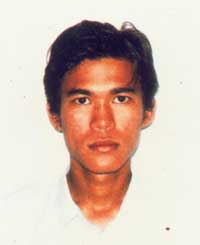 On 11 November 2008 a court in Rangoon sentenced Pyi Phyoe Hlaing and eight others to prison terms of eight to 24 years for their alleged parts in the 2007 protests against the military dictatorship in Burma. According to the allegations, the nine young men were variously involved in having contact with banned groups based outside the country, with printing and distributing unregistered documents, and with upsetting public tranquility. (The details of the charges and sentencing are given in the sample letter, below.)
However, as in other cases of their type, the cases against these nine too were full of errors in law and procedure. First, there was no substantial admissible evidence against the accused, in part because the supposed evidence was obtained from a military intelligence officer and after the accused had been detained and interrogated in army custody, which is against the law. Second, one of the charges did not match the allegations against the accused and was groundless. Third, virtually all the witnesses against the accused were police. Fourth, the trials were held in closed courts. Fifth, the charges against the accused under one law were separated and they were penalized twice when they should have been joined together and only one penalty should have been imposed.
During the trials, the accused withdrew power of attorney from their lawyers as they saw that the trials were a sham, and they were unrepresented in the final stages and for sentencing.
Like other persons convicted in cases like these, the defendants were sentenced to prisons far from their relatives and homes. There are grave concerns for the health and wellbeing of these detainees and others like them being kept in prisons in Burma, especially given that for the last few years the International Committee of the Red Cross has been unable to access inmates there.
ADDITIONAL INFORMATION:
The AHRC has been documenting cases of illegal arrest, detention and prosecution since the nationwide protests in Burma during September 2007 and a year after those events its sister organisation issued a special report, “Saffron Revolution imprisoned, law denied” (article 2, vol. 7, no. 3) detailing many of these cases. Since then, it has issued appeals on a number of other cases and made related statements at a time that a very large number of these cases were disposed of through the courts, including blogger Nay Phone Latt (AHRC-UAU-070-2008), monk U Gambira and ten others (AHRC-UAC-248-2008), political activist Daw Win Mya Mya and four others (AHRC-UAC-246-2008), Zaw Min, charged with sending news abroad (AHRC-UAC-223-2008), the related case of comedian Zarganar (AHRC-UAU-061-2008), three persons jailed in another evidence-free case (AHRC-UAC-007-2009), 14 persons convicted over supposedly throwing rocks at security forces (AHRC-UAC-004-2009), and 13 persons convicted over allegedly being part of an illegal organization (AHRC-UAC-002-009). While some like Nay Phone Latt and Zarganar have had their sentences reduced on appeals, others have had more charges and years added (AHRC-UAU-006-2009).
The two lawyers who had been representing some of these accused, including Pyi Hypoe Hlaing and Ne Lin Aung, were themselves imprisoned for four months for contempt of court and have only recently been released: http://campaigns.ahrchk.net/burma-lawyers/
See also the comprehensive report on Burma: “Burma, political psychosis and legal dementia” issued by the AHRCs sister organisation and the 2008 AHRC Human Rights Report chapter on Burma.
SUGGESTED ACTION:
Please write to the persons listed below to call for the charges against the nine persons to be reviewed and for them to be released without delay. Please note that for the purpose of the letter, the country should be referred to by its official title of Myanmar, rather than Burma, and Rangoon as Yangon.
Please be informed that the AHRC is writing a separate letter to the UN Special Rapporteurs on Myanmar, independence of judges and lawyers, and human rights defenders, as well as the UN Working Group on arbitrary detention and the regional human rights office for Southeast Asia, calling for interventions into this case.
To support this case, please click here: SEND APPEAL LETTER
SAMPLE LETTER
Dear ___________,
MYANMAR: Nine people wrongly convicted without admissible evidence over protests
Convicted persons:
1. Pyi Phyoe Hlaing, (a.k.a. Athay Lay, Maung Win), resident of Sanchaung Township, Yangon; convicted under Felony Nos. 99-102/08 (as below) to 24 years in prison; interned at Buthidaung Prison, Rakhine State
2. Ne Lin Aung (a.k.a. Lin Lin), convicted under Felony Nos. 99-102/08 to 22 years
3. Phyoe Maung Maung Soe (a.k.a. Soe Gyi), resident of Sanchaung Township, Yangon; convicted under Felony Nos. 99, 100, 102/08 to 8 years
4. Aung Myo Paing (a.k.a. Ayoe, Ko Hpone), resident of Tamwe Township, Yangon; convicted under Felony Nos. 99, 100, 102/08 to 10 years
5. Thiha Aung (a.k.a. Aung Aung), resident of Bogalay town, Ayeyarwaddy Division; convicted under Felony Nos. 99, 100, 102/08 to 10 years
6. Myat Lin Htun (a.k.a. Pyaung Gyi), resident of Bogalay town, Ayeyarwaddy Division; convicted under Felony Nos. 99, 100, 102/08 to 10 years
7. Pyi Phyoe Aung (a.k.a. Hnanmu), resident of Pathein town, Ayeyarwaddy Division; convicted under Felony Nos. 99, 100, 102/08 to 10 years
8. Thiha Thet Zin, convicted under Felony Nos. 99, 100, 102/08 to 8 years
9. Thein Zaw, convicted under Felony Nos. 99, 100, 102/08 to 10 years
Primary officials involved:
1. Police Captain Myo Thant, Special Branch (complainant after Pol. Maj. Ye Nyunt)
2. Police Major Ye Nyunt, Special Branch (initial complainant)
3. Major Min Naing, Directorate of Military Affairs Security
4. Inspector Myint Aye
5. Inspector Myo Naing
6. Inspector Htay Mya
7. Sub Inspector Htun Naing
8. Sub Inspector Htun Naing Zaw
9. Sub Inspector Soe Naing
10. Sub Inspector Aung Naing Oo
11. U Kyaw Htay, Press Scrutiny and Registration Division, Printers and Publishers Central Registration Board, Ministry of Information
Charges and trials: In Sanchaung Township Court, Judge Win Myint (Special Power) presiding, decided on 11 November 2008,
1. Felony No. 99/2008, membership of an unlawful association, under section 17(1) of the Unlawful Associations Act 1908 (2 years)
2. Felony No. 100/2008, illegal exit and entry to the country, under section 13(1) of the Immigration (Emergency Provisions) Act 1947
3. Felony No. 101/2008, printing and publishing without registration, under sections 17 & 20 of the Printers & Publishers Registration Law 1962 (as amended under Law 16/89) (7 years per offence)
4. Felony No. 102/2008, upsetting public tranquility, under section 505(b) of the Penal Code (2 years)
I regret to have learned of another nine persons in Myanmar who were wrongly imprisoned over the events of August and September 2007 and I am appealing to you for an immediate review of their case and release.
According to what I have learned, the nine have been accused of a range of offences, as noted above, for purportedly having had contact with banned groups outside the country, having travelled in and out illegally, having produced and distributed a few hundred fliers without government approval, and having upset the public tranquility.
However, the cases against them were, like others of their type, full of errors in law and procedure, including the following:
1. The oral and material evidence against the accused was, as recorded in court, obtained from the interrogations and searches of the bureau of military intelligence, in violation of the Evidence Act, sections 25 & 26. It also did not come up to the minimum standards of the burden of proof as required by that law and repeatedly established in Supreme Court verdicts in Myanmar.
2. The accused were charged under section 505(b) over their having allegedly received training for political activities outside of Myanmar and then having re-entered the country but these are not the elements of this charge and nor were any of the elements satisfied in the allegations against them.
3. Apart from witnesses to the seizure of some material evidence, all the witnesses were police or government officials.
4. The trials were held in closed court in violation of section 2(e) of the Judiciary Law 2000.
5. The two accused under sections 17 and 20 of the Printers and Publishers Registration Law were sentenced to the maximum seven years under each section for the single offence, thus 14 years in total, whereas the charges should have been joined into a single charge as per section 234 of the Criminal Procedure Code, and even if tried separately sentencing should have provided for the two terms to be served concurrently rather than consecutively.
As during the trials the accused withdrew power of attorney from their lawyers because they said that they had no faith in the judicial process, they were unrepresented in the final stages and for sentencing.
In view of the patent flaws in this case, I call for the Minister of Home Affairs and the Attorney General and other concerned officials to review it promptly with a view to seeing the nine persons released without delay.
I also take this opportunity strongly urge the Supreme Court of Myanmar to issue orders that all courts comply with the terms of the Judiciary Law and administer justice independently according to law rather than according to the dictates of the military intelligence and police; work within the framework of law for the settlement of cases, rather than decide them on the basis of executive policy and without regard to evidence or criminal procedure; conduct trials in open courts in every instance; guarantee in all cases the right of defence by ensuring that defence attorneys are able to perform their jobs without interruption and harassment and by taking into account the cases they present, rather than reaching foregone conclusions about the guilt of the accused; and, by aiming at reforming moral character in meting out punishment to offenders, in other words, by wherever possible handing down minimum rather than maximum sentences and by compounding penalties and allowing them to be served concurrently rather than consecutively.
Finally, I take this opportunity to remind the Government of Myanmar of the need to allow the International Committee of the Red Cross access to places of detention and not least of all, access to those persons and forcibly disrobed monks and nuns who have been held in violation of criminal procedure and without charge or trial since September 2007.
Yours sincerely
—
PLEASE SEND YOUR LETTERS TO:
1. Maj-Gen. Maung Oo
Minister for Home Affairs
Ministry of Home Affairs
Office No. 10
Naypyitaw
MYANMAR
Tel: +95 67 412 079/ 549 393/ 549 663
Fax: +95 67 412 439
2. Lt-Gen. Thein Sein
Prime Minister
c/o Ministry of Defence
Naypyitaw
MYANMAR
Tel: + 95 1 372 681
Fax: + 95 1 652 624
3. U Aung Toe
Chief Justice
Office of the Supreme Court
Office No. 24
Naypyitaw
MYANMAR
Tel: + 95 67 404 080/ 071/ 078/ 067 or + 95 1 372 145
Fax: + 95 67 404 059
4. U Aye Maung
Attorney General
Office of the Attorney General
Office No. 25
Naypyitaw
MYANMAR
Tel: +95 67 404 088/ 090/ 092/ 094/ 097
Fax: +95 67 404 146/ 106
5. Brig-Gen. Khin Yi
Director General
Myanmar Police Force
Ministry of Home Affairs
Office No. 10
Naypyitaw
MYANMAR
Tel: +95 67 412 079/ 549 393/ 549 663
Fax: +951 549 663 / 549 208
Thank you.
Urgent Appeals Programme
Asian Human Rights Commission (ua@ahrc.asia)
