
Dear friends,
The Asian Human Rights Commission (AHRC) has learned that police in Chilaw illegally arrested, tortured and falsely accused a three-wheeler driver of carrying drugs. After ejecting the passengers, beating the driver and searching the vehicle the officers then forced him to give them a free ride. The man was later hospitalised. After a large demonstration by three wheeler drivers the officer in charge of Chilaw police station announced that the incident was a mistake and promised compensation and the transfer of the perpetrators. Neither action has taken place and a criminal investigation has not been opened despite various complaints having been filed.
CASE DETAILS:
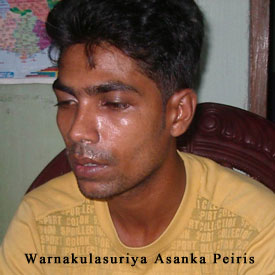 Warnakulasuriya Asanka Peiris, 30, was transporting a couple in his three-wheeled taxi on 14 February 2010 at about 11.20am when another three-wheeler overtook and stopped him. Four men in civil clothing surrounded his vehicle and started to beat him around the head and chest. As his customers left the scene the assailants claimed to be police and told them not to use Asanka’s services because he carries drugs.
The men beat and threatened the victim while they illegally searched his vehicle. They then told him to take them to Daduru Oya Tank, which is also against police procedure. When Asanka told them that he was too injured to drive they reportedly threatened to sue him under section 54 of the Anti Drugs Act. At Daduru Oya Tank they disembarked without paying.
The victim went to find his brother and soon began to experience vomiting. He was taken to Chilaw Hospital and examined by a number of doctors, including a judicial medical officer; hospital police took his statement on 15 February. Although he was discharged on 16 February Asanka’s symptoms returned again that evening and he spent another night in hospital. His assault by police amounts to torture under Act 22 of 1994.
The case prompted a large scale local protest on 15 February, when approximately three hundred three-wheeler drivers demonstrated in the centre of Chilaw Town. Though the officer in charge of Chilaw police station told the demonstrators that the incident had been a mistake and assured them that the perpetrators would be transferred immediately and that Rs25000 would be paid to the victim in compensation, no such actions have been taken. Identification of only two officers has been possible, of a Mr. Harsha and a Mr. Kumara, with a third identified by his Chilaw station police number 83206; however no information has been released.
The actions of police violated the victim’s right to safety, security, movement and livelihood, and involved various illegal actions including the baseless arrest and torture. A complaint has since been sent to the National Human Rights Commission and was followed with written complaints to the Inspector General of Police, the Deputy Inspector General of North Western Province, the Senior Superintendent of Police in Putalam and the Headquarters Inspector of Chilaw on 24 February. Despite this the victim has not been informed of any further action or the launch of an investigation.
As seen in our past appeals this is one of many incidents of police impunity being reported from across Sri Lanka. Such violations will continue undiminished while the government lacks the political will to tackle the issue and continues to drag its feet on much needed, credible police reforms.
SUGGESTED ACTION:
A simple transfer is not an adequate response to allegations of police assault which amounts to torture under international and domestic laws. Please write to the authorities listed below reminding them of their obligation to respond with a criminal investigation under act 22 of the 1994 penal code, and to bring any officers proven to have perpetrated violence before the law. Please also request for adequate compensation to be paid to the victim.
The AHRC has written to the Special Rapporteur on the question of torture, informing him of this case.
To support this case, please click here: SEND APPEAL LETTER
SAMPLE LETTER
Dear __________,
SRI LANKA: Police assault a three wheeler driver and force him to carry them for free
Name of victim:
Warnakulasuriya Asanka Peiris, 30; resident of No.11/14 B Ratna Uyana Chilaw and a three wheel taxi driver by profession.
Name of alleged perpetrators:
1. Mr. Harsha
2. Mr. Kumara
3. Officer no. 83206
All officers of Chilaw Police station, Chilaw Division, North Western Range; full names and ranks unknown.
Date of incident: 14 February 2010
Place of incident: Near Chilaw Railway Gate Puttalam Rd, Chilaw
I am deeply concerned to hear that police in Chilaw illegally and baselessly arrested, tortured and falsely accused a three-wheeler driver of carrying drugs.
According to the information I have received Warnakulasuriya Asanka Peiris was transporting a couple in his three-wheel taxi on 14 February 2010 when another three-wheeler overtook and stopped him. Four men in civil clothing surrounded his vehicle and started to beat him around the head and chest. As his customers left the scene the assailants claimed to be police and told them not to use Mr. Peiris’ services because he carries drugs.
The men beat and threatened the victim while they illegally searched his vehicle. They then told him to take them to Daduru Oya Tank, which is also against police procedure. When Mr. Peiris told them that he was too injured to drive they reportedly threatened to sue him under section 54 of the Anti Drugs Act. At Daduru Oya Tank they disembarked without paying.
The victim soon began to experience vomiting and was taken to Chilaw Hospital and examined by a number of doctors, including a judicial medical officer; hospital police took his statement on 15 February. Although he was discharged on 16 February Mr. Peiris symptoms returned again that evening and he spent another night in hospital. As you are certainly aware, his assault by police amounts to torture under Act 22 of 1994.
The case prompted a large scale local protest on 15 February, when approximately three hundred three-wheeler drivers demonstrated in the centre of Chilaw Town. Though the officer in charge of Chilaw police station told the demonstrators that the incident had been a mistake and assured them that the perpetrators would be transferred immediately and that Rs25000 would be paid to the victim in compensation, these actions have not happened.
The actions of police violated the victim’s right to safety, security, movement and livelihood, and involved various illegal actions including the baseless arrest and torture. Though a complaint has been sent to the National Human Rights Commission and to the Inspector General of Police, the Deputy Inspector General of North Western Province, the Senior Superintendent of Police in Putalam and the Headquarters Inspector of Chilaw on 24 February, the victim has not been informed of any further action or the launch of an investigation.
As I am sure you are aware, a simple transfer is not an adequate response to allegations of police assault which amounts to torture under international and domestic laws, and which in this case hospitalised a man. This is one of many incidents of police impunity being reported from across Sri Lanka. Such violations will continue undiminished while the government lacks the political will to tackle the issue and continues to drag its feet on much needed, credible police reforms.
I would like to remind the relevant authorities of their obligation to respond with a criminal investigation under act 22, and to bring any officers proven to have perpetrated violence before the law. I also urge you to intervene to ensure that adequate compensation is paid to the victim.
Yours sincerely,
—————-
PLEASE SEND YOUR LETTERS TO:
Mr. Mahinda Balasuriya
Inspector General of Police (IGP),
New Secretariat,
Colombo 1,
SRI LANKA
Fax: +94 11 2 440440
Email: igp@police.lk
Mr. Mohan Peiris
Attorney General
Attorney General’s Department,
Colombo 12,
SRI LANKA
Fax: +94 11 2 436421
Secretary,
National Police Commission,
3rd Floor Rotunda Towers,
109 Galle Road,
Colombo 03,
SRI LANKA
Tel/Fax: +94 11 2 395960
Email: polcom@sltnet.lk
Secretary,
Human Rights Commission of Sri Lanka,
No 108 Barnes Place,
Colombo 07
SRI LANKA
Tel: +94 11 2 694 925 / 673 806
Fax: +94 11 2 694 924 / 696 470
Email: sechrc@sltnet.lk
Senior Superintendent of Police (SSP)
Office of the Senior Superintendant of Police
Chilaw
SRI LANKA
Fax: +94 32 2222925
—————-
Thank you.
Urgent Appeals Programme
Asian Human Rights Commission (ua@ahrchk.org)
