
Dear friends,
The Asian Human Rights Commission (AHRC) is seriously concerned that some key perpetrators of recent cases of torture and cruel and inhuman treatment in Thailand remain at large, despite disciplinary action having been taken against some of the officers involved.
The officers of particular concern are:
1. Police Major Kriangsak Tipjol, formerly of Lumpini Police Station, Bangkok (Ref: UA-153-2004)
2. Police Lieutenant-Colonel Suebsak Pinsaeng, formerly of Phra Nakhon Si Ayutthaya Police Station, Ayutthaya province (north of Bangkok) (Ref: UA-153-2004)
3. Seven unidentified officers of Tanyong Police Station, Narathiwat province (southern Thailand) (Ref: UA-94-2004)
According to the information available to date, Pol. Maj. Kriangsak has been temporarily dismissed after keeping a young couple in detention for over one hundred days, during which time the young woman of the two gave birth unattended in the police station cells. Although investigations are ongoing into his case, he has not yet been formally charged and detained or required to post bail. Meanwhile, the police have already submitted papers to arraign the young couple on theft charges, despite the fact that the court released them already. It is disturbing to note the speed with which the police authorities have acted to secure a court case against the victims in this instance, as opposed to their own officer. The AHRC has also been informed that the superintendent at the station, Pol. Col. Suwat, has been transferred to the south of Thailand, which is completely unacceptable: neither Pol. Col. Suwat nor his deputy Lt-Col. Rangsan should now hold positions of authority within the police force. Rather, they should be subjected not only to serious disciplinary action but also thorough investigations to establish whether or not they were complicit in the maltreatment of detainees in the station, and whether or not they should also be charged with criminal offences.
Very disturbing reports have been coming regarding Pol. Lt-Col. Suebsak since he was removed from duty pending inquiries 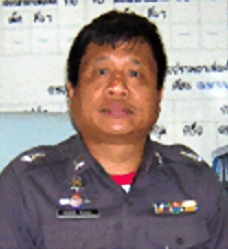 into the horrendous torture of a man in his custody who was also later released without charge. Further information has reached the AHRC to suggest that Lt-Col. Suebsak is a mentally unbalanced serial torturer who led the abuse committed against persons in detention at Phra Nakhon Si Ayutthaya Police Station. Another officer named as being behind the abuses at the station is Pol. Sgt-Maj. Winai Kampaeng. It is reported that detained persons coming to the station were first beaten without any questions being asked, before being taken to a torture chamber on the third floor. The police are alleged to have kept equipment there for routine extreme torture, which included stripping detainees naked, tying them down and electrocuting sensitive parts of their bodies. During these torture sessions, the officers drank alcohol. Persons aware of what was taking place inside the police station have stated that they believe Lt-Col. Suebsak is mentally unstable, as he appeared to relish the opportunity to torture. If this is in fact the case then it raises more serious questions about the role of his superiors, particularly the superintendent Pol. Col. Atthapol Dedduang, in either tacitly or openly approving the use of torture under their command. In this regard, it is also notable that of the 23 officers believed directly connected with this case, all of them are ranking police holding the position of sergeant or higher. This fact in itself speaks to the deep institutionalisation of the practice.
Pol. Lt-Col. Suebsak
In other recent news on the same case, the victim has identified four police and one police volunteer from Uthai Police Station, in the same province, as also having tortured him. Internal disciplinary action is proceeding against the officers. However, to the knowledge of the AHRC, no criminal charges have yet been laid against the alleged perpetrators. The victim is continuing to get medical treatment, but does not yet know whether or not he will be permanently sterile due to electrocution of his penis and testicles. Doctors have also said that his toes may require tissue implants after the same treatment. Meanwhile, the public prosecutor has been instructed to form a special team to investigate the case. The victim is currently under 24-hour protection after receiving death threats when he refused to accept money in exchange for withdrawing his complaint. In fact, he and the couple from the Lumpini station case are the first persons to obtain security under a new law for witness protection in Thailand.
The actions of the officers in Bangkok and Ayutthaya again draw attention to the serious torture of five detainees at Tanyong Police Station, Narathiwat province, by as yet unidentified personnel. The five men were allegedly beaten, strangled, electrocuted and urinated upon by police officers. Although a senate committee obtained a photograph of one or more of the suspect officers, the police department has reportedly refused to comply with its request to identify those in the picture. When the lawyer representing the five men, Mr Somchai Neelaphaijit, took the case to higher authorities in Bangkok he was subsequently disappeared (see FA-06-2004 and numerous subsequent updates and statements). His body has not been found. A trial is pending against five police who allegedly removed Mr Somchai from his vehicle, however, they have not been charged with abduction (see UP-58-2004 and UP-61-2004). One of the accused in that case is believed to have been among those responsible for torturing the men at the Tanyong Police Station. However, a lack of cooperation from the responsible authorities has meant that no one has been positively identified, investigated or charged.
Meanwhile, a senior police officer has also said on national television that torture is acceptable. Police Lieutenant-General 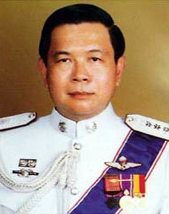 Amarin Niamsakul, the Commissioner of the Immigration Bureau, said on a popular talk show that the police everywhere beat up people or torture them to extract information and confessions, so it is also alright for this to be the practice in Thailand. He also said that more important than the law itself is the ability of the police to punish bad people, for which torture is again necessary. Although the Minister of Justice spoke out against the officer’s remarks, the AHRC believes that this is in no way sufficient, and that Pol. Lt-Gen. Amarin should be sacked in order to prevent the possibility that other senior officers will feel free to comment similarly.
In a positive development, the Attorney General has announced that he will set up a special task force to work with police on important cases, rather than leaving the investigations completely in the hands of police as they are at present. This is a good early step in leading towards new procedures that may reduce the possibility of torture, but it will only be effective if accompanied by strong action against known torturers and those who defend them, including the officers named above.
Police Lieutenant-General Amarin Niamsakul
SUGGESTED ACTION:
We again urge you to write to the Minister of Justice calling on him to ensure that swift action be taken against the police torturers mentioned above. Please also remind him of the need to have the UN Convention against Torture ratified by Thailand and introduced into the domestic law without delay, and for medical support, protection and compensation for the victims of torture.
To support this case, please click here: SEND APPEAL LETTER
SAMPLE LETTER
Dear Mr Pongthep
Re: Request for immediate criminal action against police torturers
I am gravely concerned by reports that a number of police officers in Thailand who have been identified as causing serious abuse to persons in their custody have not yet been charged with criminal offences. In particular, I have been informed of the following officers:
1. Police Major Kriangsak Tipjol, formerly of Lumpini Police Station, Bangkok
2. Police Lieutenant-Colonel Suebsak Pinsaeng, formerly of Phra Nakhon Si Ayutthaya Police Station, Ayutthaya province
3. An unidentified officer or officers of Tanyong Police Station, Narathiwat province
According to the information I have received, although Pol. Maj. Kriangsak has been temporarily dismissed and investigations are ongoing into his case, he has not yet been formally charged. By contrast, the police have quickly lodged reports to arraign his two young victims to appear in court for theft. I am disturbed by the speed with which the police authorities have acted to secure a court case against the victims in this instance, as opposed to the police officer accused of having maltreated them.
I am also deeply disturbed by the information I have been given about Pol. Lt-Col. Suebsak. I understand that he was removed from duty pending inquiries into the horrendous torture of a man in his custody. I have been informed that he may be a mentally unbalanced serial torturer. It is reported that detained persons coming to his station were first beaten without any questions being asked, before being taken to a torture chamber on the third floor. The police are alleged to have kept equipment there for routine extreme torture, which included stripping detainees naked, tying them down and electrocuting sensitive parts of their bodies. During these torture sessions, the officers drank alcohol, and Lt-Col. Suebsak reportedly appeared to relish the opportunity to torture.
I also note with concern the role of Sgt-Maj. Winai Kampaeng from Phra Nakhon Si Ayutthaya Police Station and the officers from Uthai Police Station identified by Mr Ekkawat as having tortured him.
I understand that you have indicated that the Ministry of Justice would ensure that full investigations are conducted and criminal prosecutions undertaken against the offenders in the above cases. I look forward to hearing news that action is now under way. I trust that this will also take into account the role of the superintendents and deputy superintendents in charge of the police stations where the abuses are alleged to have occurred.
The actions of these officers draw attention to the serious torture of five detainees at Tanyong Police Station, Narathiwat province, by as yet unidentified personnel. Although a senate committee obtained a photograph of one or more of the suspect officers, the police department has reportedly refused to comply with its request to identify those in the picture. I urge you to take the necessary steps to investigate this case and bring criminal action against the offenders without further delay.
I note with appreciation that a number of the victims in these cases have been given witness protection, and also remind you that all the victims should be entitled to full compensation, medical treatment and physical and mental rehabilitation for the damage caused to them by the torture.
Additionally, I am outraged by comments from Police Lieutenant-General Amarin Niamsakul, Commissioner of the Immigration Bureau, that torture is acceptable. Although I am aware that you spoke out against the officer’s remarks, I urge you to call for the dismissal of Pol. Lt-Gen. Amarin. His comments are not only offensive to basic human rights principles, but also the Constitution of Thailand and the International Covenant on Civil and Political Rights, to which Thailand is a party. They are also bound to damage Thailand’s international reputation.
Finally, I again urge you to take the necessary steps for Thailand to ratify and implement immediately the UN Convention against Torture and Other Cruel, Inhuman or Degrading Treatment or Punishment, in order that police torturers in Thailand be dealt with in accordance with the standards of international law.
Yours sincerely,
——————————–
PLEASE SEND YOUR LETTER TO:
Mr Pongthep Thepkanjana
Minister of Justice
Office of the Ministry of Justice
Ministry of Justice Building
22nd Floor
Chaeng Wattana Road
Pakkred, Nonthaburi
Bangkok 11120
THAILAND
Tel: +66 2 502 6776/ 8223
Fax: +662 502 6699/ 6734/ 6884
PLEASE SEND COPIES TO:
1. Dr Thaksin Shinawatra
Prime Minister
Government House
Pissanulok Road, Dusit District
Bangkok 10300
THAILAND
Tel: +662 280 1404/ 3000
Fax: +662 282 8631/ 280 1589/ 629 8213
Email: thaksin@thaigov.go.th, govspkman@mozart.inet.co.th
2. Dr Bhokin Bhalakula
Minister of Interior
Office of the Ministry of Interior
Thanon Atsadang
Bangkok 10200
THAILAND
Tel: +662 224-6320/ 6341
Fax: +662 226-4371/ 222 8866
Email: webteam@moi.go.th
3. Pol. Gen. Kowit Wattana
Commissioner-General
Royal Thai Police
1st Bldg, 7th Floor
Rama I , Patumwan,
Bangkok 10330
THAILAND
Tel. +662 205-1313/ 205-220/ 205-1840-9
Fax: +662 251-5956/ 205 3738/ 255 1975-8
4. Professor Saneh Chamarik
Chairperson
National Human Rights Commission of Thailand
422 Phya Thai Road
Pathurn Wan District
Bangkok 10300
THAILAND
Fax: +66 2 219 2940
Email: commission@nhrc.or.th
5. Professor Theo C. van Boven
Special Rapporteur on the Question of Torture
Attn: Mr. Safir Syed
C/o OHCHR-UNOG
1211 Geneva 10
SWITZERLAND
Tel: +41 22 917 9174
Fax: +41 22 917 9006/ 9016/ 9018
E-mail: ssyed@ohchr.org
Thank you.
Urgent Appeals Programme
Asian Human Rights Commission (AHRC)
