
Dear friends,
The Asian Human Rights Commission (AHRC) writes to inform you that the whereabouts of an activist who disappeared on 17 September 2008 remains unknown. The victim’s disappearance took place after he had shared with his family that he noticed vehicles routinely following him from his house to his work.
CASE DETAILS: (According to information from the Cordillera People’s Alliance (CPA))
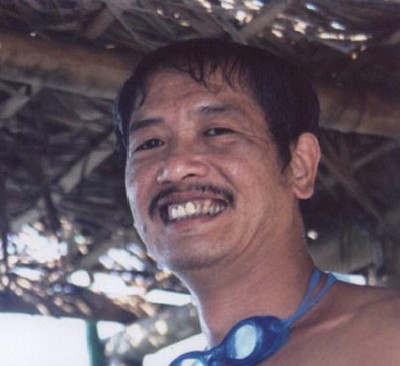 At 7am on 17 September 2008, James Balao left his residence in Fairview, Baguio City to go to his family’s residence in La Trinidad, Benguet. A few minutes before he left, using SMS (short message service), he informed his family that he would be coming to La Trinidad that day.
James never reached his destination and could not be located by family or friends since leaving for Benguet. They could not contact him by any means. He was last seen near the Tacdian Elementary School in La Trinidad.
James is of medium build, 5’7 to 5’9 foot tall. He was last seen wearing a black jacket, brown pants, black hiking boots and eyeglasses. He was carrying a yellow and blue backpack with a red travelling bag. He belongs to the indigenous tribes of Ibaloi and Kankanaey of Benguet
Prior to his disappearance, sometime in the first week of June 2008, James had already told his family that he was under surveillance. He said he observed a blue and white van following him every day as he left his house.
CPA information claimed that James was listed in the dossier of the Armed Forces of the Philippines (AFP’s.) He had been described as the head of the Education Bureau of the Communist Party of the Philippines’ (CPP) in the Ilocos and Cordilleras regions.
The Balao family, after having been assisted by the local human rights group and their lawyers, traveled to various headquarters of the military and the police in the province of Ilocos Sur. They hoped that the victim would be found in their custody, but to no avail.
They went to the Philippine Army’s headquarters in Lagangilang, Abra and to the Regional Police Office (RPO) in Ilocos in San Fernando City, La Union, but they still could not locate James in any of these places.
In the Philippines, the family members of a victim of an enforced disappearance have to assume the responsibility themselves to locate their loved ones in police or military headquarters or camps. Some victims, though, are later found to be found in the custody of security forces. Once again in James’ case they were not successful.
SUGGESTED ACTION:
Please write letters to the concerned authorities below requesting their immediate intervention in locating the whereabouts of the missing victim. They should inform his family and involve them in the investigation and efforts to locate his whereabouts.
The AHRC is writing letters to the United Nations Working Group on Enforced or Involuntary Disappearances, Special Rapporteur on human rights defenders and the Independent Expert on Minority Issues.
To support this case, please click here: SEND APPEAL LETTER
SAMPLE LETTER
Dear _________,
PHILIPPINES: Human rights activist disappears; subject of overt surveillance
Name of victim: James M. Balao, 47 years old, a member of the Cordillera People’s Alliance (CPA); president of the Oclupan Clan Association. He belongs to the indigenous tribes of Ibaloi and Kankanaey of Benguet
Alleged perpetrators: unidentified persons
Place of incident: somewhere between his residence in Fairview, Baguio City and his family’s residence in La Trinidad, Benguet
Date of incident: 17 September 2008
I am writing to draw your attention to the case of James Balao, an activist who disappeared on 17 September 2008. He had been the subject of overt surveillance prior to his disappearance from Baguio City.
It was learned that before James’ disappearance, a blue and white van followed him routinely from his residence to his work. He had informed his immediate family members and relatives of this surveillance activity.
At the time James was reported to have disappeared, he was on his way to his family’s residence in La Trinidad, Benguet, a municipality near to where he was living. However, after informing his family that he was on his way to La Trinidad, he never reached there. He was last seen at the Tacdian Elementary School in La Trinidad.
According to his family, it was unusual for James not to properly inform his family of his whereabouts. He usually told them of the places where he was going just as he did before he left Baguio for La Trinidad–by sending SMS to his family of his destinations.
It is of grave concern that James’ disappearance may be connected with the targeted attacks on human rights and social activists in the country. While the reasons for his disappearance have not been ascertained as yet, previous incidents indicate that activists have been targeted because of their work.
Mr. Balao is the second member of the Cordillera People’s Alliance (CPA) to have disappeared. In 1987, his colleague Ama Daniel Ngayaan was abducted. The latter’s whereabouts, according to information received, remains unknown and the case unsolved.
I therefore urge you to exhaust all means to locate the victim’s whereabouts. I also request you to have his family properly informed and involved in any inquiry or intervention done in his case. Also, please consider affording the necessary assistance, without delay, to the Balao family.
Yours sincerely,
—————–
PLEASE SEND YOUR LETTERS TO:
1. Mrs. Gloria Macapagal-Arroyo
President
Republic of the Philippines
Malacanang Palace
JP Laurel Street, San Miguel
Manila 1005
PHILIPPINES
Fax: +63 2 736 1010
Tel: +63 2 735 6201 / 564 1451 to 80
E-mail: corres@op.gov.ph
2. Ms. Leila De Lima
Commissioner
Commission on Human Rights
SAAC Bldg., Commonwealth Avenue
U.P. Complex, Diliman
Quezon City
PHILIPPINES
Fax: +63 2 929 0102
Tel: +63 2 928 5655 / 926 6188
E-mail: chr.delima@yahoo.com or mtm_rodulfo@yahoo.com
3. Deputy Director General Jesus A. Verzosa
Chief, Philippine National Police (PNP)
Camp General Rafael Crame
Quezon City
PHILIPPINES
Fax: +63 2724 8763
Tel: +63 2 726 4361/4366/8763
E-mail: bluetree73@gmail.com
4. Mr. Raul Gonzalez
Secretary
Department of Justice (DoJ)
DOJ Bldg., Padre Faura
1004 Manila
PHILIPPINES
Fax: +63 2 521 1614
E-mail: raulgonzalez_doj@yahoo.com
5. Lt. Gen. Alexander Yano
Chief of Staff
Armed Forces of the Philippines (AFP)
AFP-GHQ Offices, Camp Gen. Emilio Aguinaldo
Quezon City
PHILIPPINES
Fax: +63 2 911 6436
Tel: +63 2 911 6001 to 50
Thank you.
Urgent Appeals Programme
Asian Human Rights Commission (ua@ahrchk.org)
