
Dear friends,
The Asian Human Rights Commission has learned that twenty days after the abduction of a high profile scientist in the North West Frontier Province (NWFP), no official investigation has been held into his disappearance. Political agents in the federally administered tribal area have told the man’s family not to lodge a criminal complaint, and his abduction is not being dealt with within the law. The area is under tight military control and no insurgents have claimed responsibility for the crime or issued demands. A government enquiry is immediately necessary and if the professor has been arrested his safety must be accounted for, his case made available for legal scrutiny, and those responsible for the events must be held accountable.
CASE DETAILS:
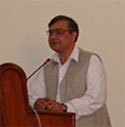 According to information we have received from the victim’s family, Dr. Lutfullah Kakakhel was kidnapped on 6 November 2009 along with his driver and another employee. Dr. Kakakhel is the Vice-Chancellor of the Kohat University of Sciences and Technology (KUST) and former advisor to the NWFP governor.
On the day of his abduction the professor was traveling from Peshawar through Darra Adam Khel, a known militant stronghold, at around 6pm. The car was near a graveyard, a madrassa and an Islamic machinery school when it was stopped by seven armed men, who took the passengers’ cell phones. Ten other people reportedly joined the armed group and demanded to know the identity of the professor. He and the two men were driven away in their car by the armed men shortly after, though the two employees were released 30 minutes later along the road. The whereabouts of Dr. Kakakhel remain unknown.
The family wanted to register a case with the police, but have been repeatedly advised not to by both the area’s federal government’s representative (the political agent of Orakzai) and the governor of the NWFP. Both have claimed that efforts are being made to find the doctor outside of the legal mechanism. No progress has been seen by the family and the political interference in the complaints procedure is illegal. The family must be allowed to exercise their right to file a case of disappearance through the courts and the authorities must be seen to be doing their utmost to locate the doctor and secure his safe release from detention, according to the law.
ADDITIONAL INFORMATION:
The area from which the Vice Chancellor was abducted has recently undergone severe military operations; many of its buildings have been demolished by artillery, soldiers patrol the streets and security checkpoints are frequent. Two months ago the government and army agencies announced that Darra Adam Khel had been cleared of militants.
Dr. Kakakhel is a renowned professor who has helped establish universities of science and technology across the province, particularly during his former role as advisor to the provincial government. Students and professors from various universities have held numerous protests against the clear lack of official action being taken in the case.
SUGGESTED ACTION:
Please write to the authorities below demanding that a lawful investigation be immediately launched into the professor’s abduction, and urging his safe recovery.
The AHRC has written a separate letter to the Chairperson of the UN Working Group on Enforced or Involuntary Disappearances.
To support this case, please click here: SEND APPEAL LETTER
SAMPLE LETTER
Dear ___________,
Re: PAKISTAN: A university vice chancellor is abducted; authorities prevent an official investigation
Name of the victim: Dr. Lutfullah Kakakhel, Vice Chancellor, Kohat University of Science and Technology, 4- Shaheen Towm, House # 5, P.O. Tehkal Bala, Peshawar, North West Frontier Province (NWFP).
Date of incident: November 6, 2009
Place of incident: Darra Adam Khel, NWFP
I am writing to voice my deep concern regarding the lack of open investigation into the abduction and disappearance of Dr. Lutfullah Kakakhel, Vice Chancellor of the Kohat University of Science and Technology. I am told that Dr. Kakakhel was abducted on November 6, 2009 and that no case has been lodged regarding his disappearance.
I am shocked to hear that the NWFP authorities have not taken decisive action to search for him, or investigated the area from which he was abducted, though they claim that the perpetrators are unidentifiable. The area, Darra Adam Khel, remains under the tight control of security forces since operations there two months ago.
Furthermore I am told that the area’s federal government’s representative and the governor of the NWFP have both advised the family not to register a case with the police. Both have claimed that efforts are being made to locate the doctor outside of the law.
I consider the response of the authorities, and the political interference with the legal process highly questionable. Please intervene to bring this case into the open and to launch a lawful investigation that will ensure the safe recovery of Dr. Lutfullah Kakakhel, and criminal sanctions against those responsible for his abduction.
Yours sincerely,
—————-
PLEASE SEND YOUR LETTERS TO:
1. Mr. Asif Ali Zardari
President
President’s Secretariat
Islamabad
PAKISTAN
Fax: +92 51 9922 1422, 4768/ 9920 1893 or 1835
E-mail: (please see: http://www.presidentofpakistan.gov.pk/WTPresidentMessage.aspx)
2. Mr. Syed Yousaf Raza Gillani
Prime Minister
Prime Minister House
Islamabad
PAKISTAN
Fax: +92 51 9922 1596
Tel: +92 51 9920 6111
3. Mr. Rehman Malik
Minister of Interior
Room No. 404, 4th Floor, R Block,
Pak Secretariat
Islamabad
PAKISTAN
Fax: +92 51 920 2624
Tel: +92 51 9921 2026
E-mail: minister@interior.gov.pk
4. Minister of Law, Justice and Human Rights
S Block Pakistan Secretariat
Islamabad -PAKISTAN
Fax: +92 51 9920 2628
E-mail: minister@molaw.gov.pk or naelaw786@hotmail.com
5. Mr. Amir Haider Khan
Chief Minister
Government of North West Frontier Province
Peshawar PAKISTAN
FAX: +92-91-9210707
6. Mr. Basheer Ahmed Bilor
Senior minister
Government of North West Frontier Province
Peshawar
Pakistan
Fax: +92 91 921 2533
______________________
Thank you.
Urgent Appeals Programme
Asian Human Rights Commission (ua@ahrchk.org)
