
Dear friends,
The Asian Human Rights Commission (AHRC) has received information that an attempt was made to abduct Mr. Shantha Wijesuriya, a journalist for Lanka-e-news, Sri Lanka’s most widely read online news publication. Shortly after the publication of a controversial article in which 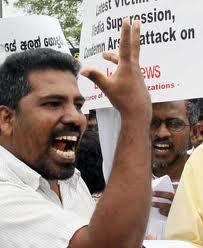 Mr. Wijesuriya highlighted the link between a known criminal and the Rajapaksa family, two men in a white van tried to pull Mr. Wijesuriya into their vehicle as he traveled in Nugegoda, a suburb of Colombo.
Immediate steps must be taken to investigate this abduction attempt, and provide for Mr. Wijesuriya’s safety, as well as the safety of his family. In light of previous attacks on local journalists, it is imperative that action is taken to preserve Mr. Wijesuriya’s safety. Indeed, Mr. Wijesuriya’s colleague, Prageeth Eknaligoda, of Lanka-e-news, was abducted and disappeared on 24 January 2010. The offices of Lanka-e-news have survived several arson attacks.
As well as Lanka-e-news, Mr. Wijesuriya has written for the Mawubima newspaper, writing about judicial corruption, miscarriages of justice and the necessity of judicial independence. Since he is not a member of the elite classes, these brave attempts to defend the basic rights of working-class people are all the more admirable. Mr. Wijesuriya is concerned with reporting news in a transparent and trustworthy manner, even if this leads to his arbitrary arrest and detention. He has been an active organizer of and participant in public events held to protect and promote the human rights of the Sri Lankan people. He works courageously, with full awareness of the danger that he and his family members might face. The AHRC calls on the Sri Lankan government to immediately provide forces to protect a journalist who works towards the goal of a pluralist, independent media. This case is yet another illustration of the exceptional collapse of the rule of law in the country.
CASE NARRATIVE:
According to information that the Asian Human Rights Commission has received, an attempt was made to abduct Mr. Shantha Wijesuriya, a well-known journalist and respected human rights defender, on the evening of 5 July 2012 at Nugegoda in the Colombo District. The incident was covered by the BBC Sinhala Service.
Reportedly, the incident occurred at Nugegoda, a suburb of Colombo. Mr. Wijesuriya noticed that he was being followed by a white van, and changed his route so as to avoid the vehicle. As he changed lanes, two people jumped out of the van and tried to pull him into the vehicle. One man caught Mr. Wijesuriya’s shirt and tried to drag him into the van, but Mr. Wijesuriya managed to kick him and escape on foot. Mr. Wijesuriya immediately reported the incident to the local police station, as well as to local and international media organizations.
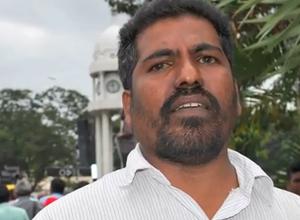 Mr. Wijesuriya has written for several print and online publications, and is a well-respected journalist. He has written numerous articles regarding corruption and governmental mismanagement. Recently he wrote an article about the connection between the Rajapaksa family and Julampitiya Amare, aka, Geegana Gamage Amarasena, a criminal who has been evading warrants for many years perhaps through a close relationship with a number of government officials.
In his article, Mr. Wijesuriya explained that Mr. Amare is suspected of around 24 murders, 15 robberies and 20 arson attacks. He has acquired approximately 100 acres of land by force, and recently sold 20 acres of this plot. Mr. Wijesuriya went on to illuminate the connection between Mr. Amare and the Rajapaksa family. The abduction attempt took place a few days after the article was published. A copy of the article, written in Sinhala, can be found here.
This incident is one in a series of recent incidents in which members of the local media have been the target of violence for disseminating the truth of their societies. Last week, the AHRC reported that several people were arrested by a unit within the Ministry of Defense, allegedly for the possibility of committing a crime. The members of the unit entered their work premises, inspected and confiscated two computers. The eight arrested employees were produced before a magistrate who granted them bail. According to court documents, the magistrate criticized the unit, stating that it was not acceptable for an arrest to take place on the grounds that a group of people are suspecting of committing a crime in the future.
These attempts of abduction and arbitrary arrest are part of a series of actions on the part of the Sri Lankan government to attack and silence web publications. It is vital that attention is drawn to this pertinent issue. In a country where local print publications are suppressed by intimidation and attacks, web journalism has become an important alternative within the media spectrum, providing information that is not otherwise available to the public. An investigation into this attempted abduction must be carried out immediately in a transparent and ethical manner.
ADDITIONAL COMMENTS:
The Asian Human Rights Commission has observed that physical attacks against journalists have fallen overall since 2010, but threats and acts of intimidation continue to be common in Sri Lanka without judicial authorities taking interest in these instances.
Since 2008, the AHRC has observed that four journalists have been murdered in Sri Lanka. Each of these journalists spoke out against prevailing state forces. None of the cases has been solved. The well-known cartoonist, Prageeth Eknaligoda, has been missing since January 2010. Over the past few years, more than 50 journalists and activists have fled Sri Lanka, fearing for their lives.
SUGGESTED ACTION:
Please send a letter to the authorities listed below expressing your concern about this case and requesting an immediate investigation into the allegations of assault against the journalist by the unidentified gang, and the prosecution of those proven to be responsible under the criminal law of the country.
Please note that the AHRC has also written a separate letter to the Special Rapporteur on the promotion and protection of the right to freedom of opinion and expression on this regard.
To support this appeal, please click here:
To support this case, please click here: SEND APPEAL LETTER
SAMPLE LETTER
Dear ________,
SRI LANKA: An attempt is made to abduct a journalist and human rights defender
Name of the victim: Mr. Shantha Wijesuriya of Lankaenews online news web
Alleged perpetrator: Unidentified group of people
Date of incident: 5 July 2012
Place of incident: Nugegoda Police Division in Colombo District
I am writing to express my serious concern over the case of Mr. Shantha Wijesuriya, a well-known journalist and respected human rights defender, on the evening of 5 July 2012 at Nugegoda in the Colombo District. The incident was covered by the BBC Sinhala Service.
Reportedly, the incident occurred at Nugegoda, a suburb of Colombo. Mr. Wijesuriya noticed that he was being followed by a white van, and changed his route so as to avoid the vehicle. As he changed lanes, two people jumped out of the van and tried to pull him into the vehicle. One man caught Mr. Wijesuriya’s shirt and tried to drag him into the van, but Mr. Wijesuriya managed to kick him and escape on foot. Mr. Wijesuriya immediately reported the incident to the local police station, as well as to local and international media organizations.
Mr. Wijesuriya has written for several print and online publications, and is a well-respected journalist. He has written numerous articles regarding corruption and governmental mismanagement. Recently he wrote an article about the connection between the Rajapaksa family and Julampitiya Amare, aka, Geegana Gamage Amarasena, a criminal who has been evading warrants for many years perhaps through a close relationship with a number of government officials.
In his article, Mr. Wijesuriya explained that Mr. Amare is suspected of around 24 murders, 15 robberies and 20 arson attacks. He has acquired approximately 100 acres of land by force, and recently sold 20 acres of this plot. Mr. Wijesuriya went on to illuminate the connection between Mr. Amare and the Rajapaksa family. The abduction attempt took place a few days after the article was published. A copy of the article, written in Sinhala, can be found here.
This incident is one in a series of recent incidents in which members of the local media have been the target of violence for disseminating the truth of their societies. Last week, the AHRC reported that several people were arrested by a unit within the Ministry of Defense, allegedly for the possibility of committing a crime. The members of the unit entered their work premises, inspected and confiscated two computers. The eight arrested employees were produced before a magistrate who granted them bail. According to court documents, the magistrate criticized the unit, stating that it was not acceptable for an arrest to take place on the grounds that a group of people are suspecting of committing a crime in the future.
These attempts of abduction and arbitrary arrest are part of a series of actions on the part of the Sri Lankan government to attack and silence web publications. It is vital that attention is drawn to this pertinent issue. In a country where local print publications are suppressed by intimidation and attacks, web journalism has become an important alternative within the media spectrum, providing information that is not otherwise available to the public. An investigation into this attempted abduction must be carried out immediately in a transparent and ethical manner.
I request your urgent intervention to ensure that the authorities listed below instigate an immediate investigation into the allegations of assault against the journalist by the unidentified perpetrators, and the prosecution of those proven to be responsible under the criminal law of the country.
Yours sincerely,
---------------------
PLEASE SEND YOUR LETTERS TO:
1. Mr. N K Illangakoon
Inspector General of Police
New Secretariat
Colombo 1
SRI LANKA
Fax: +94 11 2 440440 / 327877
E-mail: igp@police.lk
2. Ms. Eva Wanasundara
Attorney General
Attorney General's Department
Colombo 12
SRI LANKA
Fax: +94 11 2 436421
E-mail: ag@attorneygeneral.gov.lk
3. Secretary
National Police Commission
3rd Floor, Rotunda Towers
109 Galle Road
Colombo 03
SRI LANKA
Tel: +94 11 2 395310
Fax: +94 11 2 395867
E-mail: npcgen@sltnet.lk or polcom@sltnet.lk
4. Secretary
Sri Lanka Human Rights Commission
No. 108
Barnes Place
Colombo 07
SRI LANKA
Tel: +9411 2694925, +9411 2685980, +9411 2685981
Fax: +9411 2694924 (General) +94112696470 (Chairman)
E-mail: sechrc@sltnet.lk
Thank you.
Urgent Appeals Programme
Asian Human Rights Commission (ua@ahrc.asia)
