
Dear friends,

After the Manokwari District Police in West Papua arrested peaceful protesters following a flag raising event on 14 December, 2010, seven persons were charged with rebellion. The detainees were ill-treated and denied medical care for weeks resulting in serious health conditions. Police forced the victims to sign the dossier of the case before its transfer to the prosecutor without access to a lawyer. The Asian Human Rights Commission (AHRC) is concerned about the serious flaws in the criminal process, demands the immediate release of the victims, and an investigation into the illegal practices of the Manokwari police. West Papua suffers from a lack of fair trial for political activists, violence by security forces and the stigmatisation of political protesters. Peaceful protesters are frequently charged with rebellion and imprisoned for years.
CASE NARRATIVE:
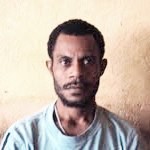
According to information from LP3BH a, local legal aid group based in Manokwari, on 14 December 2010, activists organized a rally at the Penerangan Sanggeng field in Manokwari to mark the 22nd anniversary of the Proclamation of West Melanesia. According to Melki Bleskadit who led the demonstration, the activity had already been registered with the police and thus was legal. A second group of activists conducted a peaceful protest march against human rights violations by the Indonesian security forces against Papuans and other justice issues. The peaceful march continued until the participants met with the people celebrating the anniversary of West Melanesia. During the ceremony, Melki Bleskadit raised the Morning Star Flag, a symbol of West Papuan independence. The riot control forces of the Manokwari District Police immediately dispersed the crowd and arrested at least eight persons, including Simon Banundi, a member of the local legal aid organization, LP3BH from Manokwari, who was at the location to monitor the actions of the security forces against protesters. He was released 12 hours later. (photo: detained activist Jhon Raweyai, source: LP3BH)
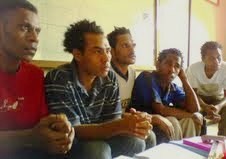
The police then questioned seven detainees without legal counsel, five of which were students attending the protest march: Jhon Wilson Wader, Penehas Serongon, Yance Sekenyap, Alex Duwiri and Jhon Raweyai, who conducted the peaceful march joining the anniversary rally. Police arrested two more political activists from the anniversary celebration, Melki Bleskadit and Daniel Yenu. The police charged them with rebellion based on article 106 of the Indonesian Criminal Code concerning an attempt undertaken with intent to bring the territory of the state wholly or partially under foreign domination or to separate part thereof, and article 107 of the Criminal Code concerning an attempt undertaken with intent to cause a revolution. They were also charged with incitement to disobedience against the public authority as mentioned in article 160 jo, (in conjunction with) Article 55 and 56 of the Criminal Code. (photo: the 5 student protesters charged with rebellion in court, source: LP3BH)
During detention the victims had to sleep on a wet floor with poor hygienic conditions and were given stale foods. These detention conditions resulted in the contraction of malaria by all the victims and a significant loss of weight. The victims’ families were denied access and the victims themselves were not allowed to receive food from their families. Melki Bleskadit reported that his repeated calls and requests for medical attention were ignored by the guards. The five student protesters were given access to medical treatment at the Manokwari provincial hospital only on January 9, 2011, and the two other activists on 12 February 2011.
Their condition has since improved but all medical fees had to be paid by the families of the victims despite their entitlement to the coverage of the costs by the government according to Indonesian law.
 On 12 April 2011, the prosecutor accepted the case file from the Manokwari District Police after the case had already been rejected twice. No reason was given for the sudden acceptance of the case. At the intelligence division office of the public prosecutor, six members of the Manokwari District Police (Gerianto Pabuang, Raden Fidelis, three persons from the intelligence division and one person from the fighter interceptor unit (BUSER)] forced the victims to sign the dossier of the case before transferring it to the prosecutor without legal counsel being present which the victims tried to refuse. After ongoing intimidation from the six Manokwari police personnel, the victims signed the dossier of the case under pressure. On 6 June and 14 June, 2011, five of the victims from the protest march faced their first and second hearings, during which their defence counsel questioned the judicial competence of the court regarding the case. (photo: the trial in Manokwari, source: LP3BH)
BACKGROUND INFORMATION:
Only in recent years have the Indonesian authorities reacted to peaceful flag raising events in West Papua with arrests and long prison sentences based on the outdated rebellion charge in the country’s old Penal Code which stems largely from its colonial past. Peaceful political activists that openly criticize the lack of the implementation of laws, corruption, violence by security forces or the political status of Papua are stigmatized as violent rebels. Despite the lack of sufficient evidence, local authorities in West Papua frequently apply rebellion charges.
Indonesian criminal procedure law entitles all detainees with the right to obtain legal assistance and medical treatment and to contact and receive visits from persons who have family or other relationships with the suspect. However, these rights are often denied by the authorities.
SUGGESTED ACTION:
Please join us in writing to the authorities listed below, in particular the Attorney General, to thoroughly review the charges filed against Melki Bleskadit and the other victims. The prosecutor should consider dismissing the complaint and the victims who were ill-treated should receive full compensation.
Please be informed that the AHRC is sending letters on this case to the UN Working Group on Arbitrary Detention, the Special Rapporteur on the promotion and protection of the right to freedom of opinion and expression, and the Special Rapporteur on the rights of indigenous peoples calling for their strong interventions.
To support this case, please click here: SEND APPEAL LETTER
SAMPLE LETTER
Dear _____,
Indonesia: Police ill-treat peaceful protesters and charge them with rebellion in a flawed process
Name of the victim: Jhon Raweyai, Penehas Serongan, Yance Sekenyab, Alex Duwiri, John Wilson Wader, Melki Bleskadit and Daniel Yenu
Alleged perpetrator: Gerianto Pabuang, Raden Fidelis and other members of the Manokwari District Police who arrested the victims and examined the case, guards of the detention cell of the Manokwari District Police
Date of incident: 14 December 2010, April 2011
Place of incident: Manokwari, Papua, Indonesia
I am writing to express my serious concern regarding the rebellion (makar) charges against seven activists, namely Jhon Raweyai, Penehas Serongan, Yance Sekenyab, Alex Duwiri, Jhon Wilson Wader, Melki Bleskadit and Daniel Yenu in Manokwari, Papua.
According to the information I have received from the Asian Human Rights Commission, activists organized a rally at the Penerangan Sanggeng field in Manokwari to mark the 22nd anniversary of the Proclamation of West Melanesia on 14 December 2010. According to Melki Bleskadit who led the demonstration, the activity had already been registered with the police and was therefore legal. A second group of activists conducted a peaceful protest march against human rights violations by the Indonesian security forces against Papuans and other justice issues. The peaceful march continued until its members met with the anniversary ceremony of West Melanesia. During the ceremony, Melki Bleskadit raised the Morning Star Flag, a symbol for West Papuan independence. The riot control forces of the Manokwari District Police immediately dispersed the crowd and arrested at least eight persons, including a member of the local legal aid organization, LP3BH from Manokwari, who was released 12 hours later.
I am also informed that the police then questioned seven of the detainees without legal counsel, five of which were students attending the protest march: Jhon Wilson Wader, Penehas Serongon, Yance Sekenyap, Alex Duwiri and Jhon Raweyai, who conducted the peaceful march joining the anniversary rally. Police arrested two more political activists from the anniversary celebration, Melki Bleskadit and Daniel Yenu. The police charged them with allegations of rebellion based on article 106, 107 and 160 jo (in conjunction with), Article 55 and 56 of the Criminal Code.
I know that during their detention the victims had to sleep on a wet floor with poor hygienic conditions and were given stale food. These conditions resulted in the contraction of malaria by all the victims and a significant loss of weight.
It is also very disturbing to know that all the medical fees had to be paid by the families of the victims despite their entitlement to the coverage of the costs by the government according to Indonesian law. The victims’ families also were denied access and the victims were not allowed to receive food from them.
I also wish to point out that the prosecutor accepted the case file from the Manokwari District Police after it had been rejected twice. The prosecutor accepted the same case at the third submission without giving any reason. Moreover, the victims were forced to sign the dossier of the case before its transfer to the prosecutor without their legal counsel being present. International law and the Indonesian criminal procedure law provide the right to legal assistance.
The manner in which the complaint was filed by the Manokwari police against the victims also deeply concerns me. The process appears arbitrary and highly questionable and so far I am not aware of any investigation conducted on the allegations of the behaviour of the Manokwari authorities. No action has been taken despite the gravity of the allegations. I believe that the rebellion charges, that appear politically motivated, should be dropped and the protesters immediately released or charged with an internationally recognized crime.
I therefore urge you to ensure that the case against the victims be withdrawn, particularly in the absence of sufficient evidence.
Yours sincerely,
———————
PLEASE SEND YOUR LETTERS TO:
1. The Minister of Law and Human Rights of the Republic of Indonesia
Jl. H.R. Rasuna Said Kav. 6-7
Kuningan, Jakarta 12940
Indonesia
Phone: +62 21 5253006, 5253889, 5264280
Fax: +62 21 5253095
2. Head of Indonesian Police
Markas Besar Kepolisian Indonesia
Jl. Trunojoyo No. 3
Kebayoran Baru
South Jakarta 12110
Indonesia
Phone: +62 21 3848537, 7260306, 7218010
Fax: +62 21 7220669
Email : info@polri.go.id
3. Mr. Basrief Arief
The Attorney General of Indonesia
Jl. Sultan Hasanudin No. 1
Kebayoran Baru, Jakarta 12160
Indonesia
Phone: +62 21 7221337, 7397602.
Fax: +62 21 7250213
4. The Directorate General of Corrections — Department of Law and Human Rights
Jalan Veteran No.11
Jakarta Pusat, Indonesia
Phone : +62 21 385 7611
Fax : +62 21 345 2155 or 21 231 2140
5. Head of Papua Regional Police
Jl. Dr. Sam Ratulangi No. 8
Jayapura
Phone : +62 967 531834
Fax : +62 967 533763
6. Head of Division of Profession and Security of Papua Regional Police
Jl. Dr. Sam Ratulangi No. 8
Jayapura
Phone : +62 967 531834
Fax : +62 967 533763
7. Head of National Commission on Human Rights of Indonesia
Jalan Latuharhary No.4-B,
Jakarta 10310
Indonesia
Phone :+62 21 392 5227-30
Fax :+62 21 392 5227
E-mail : info@komnas.go.id
Thank you.
Urgent Appeals Programme
Asian Human Rights Commission (ua@ahrc.asia)
