
Dear friends,
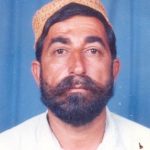 The Asian Human Rights Commission (AHRC) has learned that a man who went missing nine months ago near Karachi has resurfaced this month in the custody of the Frontier Corp (FC). The man’s family were prevented from filing a report by police when he was abducted and so acted through the Balochistan High Court, where his case has been pending since August 2009. The man’s name has featured in various a government-issued lists of disappeared persons, yet in a press conference on 27 March FC representatives produced him as a recent arrestee, who had been caught crossing the border from Afghanistan in to Balochistan carrying explosives, and foreign currencies and SIM cards. They have proceeded to charge him with the murder of six Chinese engineers.
We have also learned that four relatives who went to visit him in detention were arbitrarily arrested and kept in a police station by the FC for three days.
CASE DETAILS:
According to information received from the Voice of Balochistan an NGO for missing persons –
and the victim’s family, Mr. Murad Khan Marri, 45, was arrested by uniformed and plain clothed persons near the Aachar Hotel in Hub Chowki, Balochistan on 27 June 2009.
On Sakran Road he was seen being loaded into a red Toyota that had no number plate. The next day his son went to file a case at the Hub Chowki police station with other relatives, where the police reportedly refused to comply and denied Murri’s arrest.
After other attempts to file the case with the police failed, the victim’s mother Mrs. Nazi filed a constitutional petition in the High Court of Balochistan on 17 August 2009. The petition made allegations of arbitrary arrest, and challenged the ministry of interior in Islamabad, military intelligence agencies, the commander of the Inter Services Intelligence agency (ISI) and of the Federal Investigation unit (FIU), and the government of Balochistan, through the ministry of interior and the FC. Military int
elligence and government representatives denied that Marri was in their custody and the petition is pending in the high court before the Chief Justice of Balochistan.
While hearing petitions on disappearances in January the Supreme Court ordered the police to allow families of the disappeared to file their complaints. After further obstacles we are told that Mrs Nazi was able to file an FIR for Marri’s disappearance on 10 February at the HITE (Hub Industrial and Trading Estate) police station, which is near the area of his abduction. Police have yet to launch an investigation.
Marri’s name has since appeared in various lists of missing persons, including the latest list (of 65 persons) issued by National Crises Management Cell of the government, and in a Balochistan list of the disappeared (at No. 1060, seen pictured here along with a press statement made by the victims mother on 28 March 2010).
However on 27 March Marri was produced at a press conference, called by Colonel Asad Shehzad Khatak of the FC. The colonel claimed that Marri was captured crossing the Afghan border illegally while carrying Indian rupees, explosives and a number of cell phones bearing SIM cards from of Afghanistan, India and Pakistan. He claimed that Marri has confessed to involvement in the murder of six Chinese engineers as an active member of the Balochistan Liberation Army (BLA), a banned organisation. The detainee’s family report that he looked thin, unwell and scared; journalists noted that he was not able to walk properly and appeared to be in pain. He was not allowed to speak with them. The situation bears strong signs of illegal detention and torture among other violations, and the AHRC is extremely doubtful that he will be given a fair trial.
ADDITIONAL INFORMATION:
Disappearances have become endemic in Balochistan, even after military offensives were suspended in 2008 by the current government. The list of the missing maintained by the NCMC shows that 65 persons have disappeared since the civilian government took power, when law and order was largely handed to the FC. The AHRC has reported many of these cases, including UAC-041-2009 http://www.ahrchk.net/ua/mainfile.php/2009/3145/, in which three political activists were arrested by the FC from the office of a lawyer and days later, were found brutalized and murdered in a remote area; a year on, no one has been held to account for their deaths. In Balochistan the hallmarks of such arbitrary arrests are plain clothed persons in red or white Toyotas without number plates.
BACKGROUND INFORMATION:
In July last year during a meeting with the Indian prime minister in Egypt, the Pakistan prime minister announced its conviction that India is involved in the Balochistan independence movement, something it has often hinted. Many of the recent disappearances and false arrests appear to be linked to the increased pressure felt by law enforcement agents to provide evidence to support this claim. Please read more about the issue from the uncovering of secret torture cells to violations committed against the Baloch student population in our statements, such as STM-157-2009, STM-019-2010 and STM-158-2008
SUGGESTED ACTION:
Please write to the authorities below insisting on a thorough, transparent and impartial investigation into the operation of the Frontier Corp in Balochistan, holding to account the persons responsible for the arbitrary arrest and detention of Mr. Murad Khan Marri.
The AHRC is writing a separate letter to the UN Working Group on Enforced and Involuntary Disappearances, the working group on arbitrary detention, calling for his intervention into this case.
To support this case, please click here: SEND APPEAL LETTER
SAMPLE LETTER
Dear __________,
PAKISTAN: The Frontier Corp bring a disappeared person in front of the media after nine months under fabricated circumstances
Name of victim:
Mr. Murad Khan Marri, son of Wazir Marri, 45. Resident of Sakran Road, Hub Chowki,
Lasbela District, Balochistan province.
Name of alleged perpetrators:
Colonel Asad Shehzad Khatak and officers of the Frontier Corp, Quetta; police officers at the HITE, Hub Chowkie and Airport police stations, Quetta, Balochistan.
Date of incident: June 27, 2009 and March 27, 2010
Place of incident: Quetta; and Hub Chowki, Lasbella in Balochistan
I am writing to voice my deepest concern regarding the implication of a missing person in false cases of murder and terrorism, nine months after he was seen being abducted.
According to my information Mr. Marri was arrested by uniformed and plain clothed persons on Sakran Road near the Aachar Hotel in Hub Chowki, Balochistan on 27 June 2009; he was reportedly loaded into a red Toyota that had no number plate.
Attempts to file an FIR at the Hub Chowki police station were denied his family and the victim’s mother Mrs. Nazi filed a constitutional petition in the High Court of Balochistan on 17 August 2009. Mr. Marri’s name has since appeared in various lists of missing persons, including the latest list (of 65 persons) issued by National Crises Management Cell of the government, and in a Balochistan list of the disappeared (No. 1060).
I understand that while hearing petitions on disappearances in January the Supreme Court ordered the police to allow families of the disappeared to file their complaints, and – after further obstacles Mrs Nazi filed an FIR on 10 February at the HITE police station. I’d like to know why police failed to launch an investigation.
Furthermore it has surprised me greatly to hear that on 27 March Mr. Marri was produced at a press conference called by Colonel Asad Shehzad Khatak of the FC, in which the colonel claimed that the detainee was captured crossing the Afghan border illegally while carrying Indian rupees, explosives and a number of cell phones bearing SIM cards from Afghanistan, India and Pakistan.
According to the colonel Marri has confessed to involvement in the murder of six Chinese engineers as an active member of the Balochistan Liberation Army (BLA), a banned organization.
The detainee’s family report that he looked thin, unwell and scared; journalists noted that he was not able to walk properly and appeared to be in pain. He was not permitted to speak with them. The situation bears strong signs of illegal detention and torture among other violations, and I have little faith that the administration of justice in this case will ensure a fair trial.
I demand to know where Mr. Marri has been kept for nine months, and on what grounds, and hope you will ensure that the suspicious circumstances of his arrest and likely torture are thoroughly and credibly investigated by an independent authority. He must not become a victim of political posturing under the guise of national security concerns.
I also ask that you join me in requesting an explanation for the arrest of four of Mr. Marri’s relatives on March 28, who I understand were kept in Airport police station, Quetta by the FC for three days after they tried to visit the detainee.
I’m sure that you are aware how little the events in this case bear resemblance to the criminal proceedings of the criminal court of Pakistan, or indeed any procedure at all. I trust that this incident will be investigated and resolved according to the international norms and standards that Pakistan, through the ratification of numerous human rights laws and conventions, has pledged to uphold.
Yours sincerely,
—————-
PLEASE SEND YOUR LETTERS TO:
1. Prime Minister
Prime Minister House
Islamabad
PAKISTAN
Fax: +92 51 922 1596
Tel: +92 51 920 6111 +92 51 920 6111 +92 51 920 6111 +92 51 920 6111 +92 51 920 6111 +92 51 920 6111 +92 51 920 6111 +92 51 920 6111
E-mail: secretary@cabinet.gov.pk
2. Mr.Syed Mumtaz Alam Gillani
Federal Minister for Human Rights
Ministry of Human Rights
Old US Aid building
Ata Turk Avenue
G-5, Islamabad
PAKISTAN
Fax: +9251-9204108
Email: sarfraz_yousuf@yahoo.com
3. Dr. Faqir Hussain
Registrar
Supreme Court of Pakistan
Constitution Avenue, Islamabad
PAKISTAN
Fax: + 92 51 9213452
E-mail: mail@supremecourt.gov.pk
4. Minister of Law
Government of Punjab
Punjab Secretariat
Ravi Road
Lahore
PAKISTAN
Fax: +92-42-99212004
E-mail: law@punjab.gov.pk
5. Nawab Aslam Raisani
Chief Minister of Balochistan
Chief Minister House, Quette,
PAKISTAN
Fax: +92 81 920 2240
Tel: +92 81 449582 / 440661
E-mail: mirlashkari@yahoo.com
6. Nawab Zulfiqar Magsi
Governor of Balochistan
Governor House Balochistan,
Quetta- Balochistan province,
PAKISTAN
Fax: +92 81 920 2992
7. Chief Secretary
Government of Balochistan
Quetta, Balochistan province
PAKISTAN
Fax: +92 81 9202132
——————————————————–
Thank you.
Urgent Appeals Programme
Asian Human Rights Commission (ua@ahrchk.org)
